The Youth Bridge Foundation, a youth-led NGO committed to positive youth development in Ghana, with support from the Youth Climate Council Ghana and the Center for Sustainability Empowerment (CCSE), held a youth consultation on the youth’s role in the implementation of Ghana’s Nationally Determined Contributions (NDC) 3.0, which is currently under review.
This was on the back of the annual Youth Climate Adaptation Day 2025, convened globally by the Global Center on Adaptation (GCA) and YBF’s role as the In-country Focal Point in Ghana.
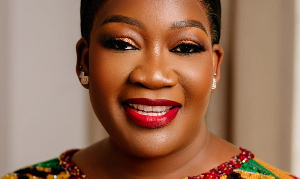
During the event, Climate Change and Health Officer at YBF, Emmanuella Manchaya Kalari, shared practical measures the youth can adopt to combat climate change, especially under the Youth Adaptation programme.
Speaking under the theme, "Accessing and Strengthening Engagement, Advancing NDCs and Driving Climate Innovation towards COP 30," Emmanuella noted that the youth should be given equal opportunity to lead initiatives that resonate with them.
"Youth can lead in adaptation, so we should be given the opportunity to lead in the formation of the adaptation that best suits us. And that is what the Global Center on Adaptation has given us the opportunity to do by creating the Youth Adaptation Network, where youth come together, and we find solutions together. With support, we can bring on board adaptation strategies that can really help fight against climate change."
"Yes, we can bring all the big technologies, but in our homes, we all know how our local systems work. We should be able to come up with adaptations that are owned by the people, that the people can easily relate to. So that is a key important thing to look at in adaptation creations," she said.
Emmanuella further called on Ghanaians to stay informed about the country’s Nationally Determined Contributions (NDCs), adding that doing so would make it easier for them to receive funding when their climate initiatives align with national priorities.
"I think the key thing is to know what's in the documents. I realise a lot of Ghanaians don't read. We have NDC 1, NDC 1.0, NDC 2.0, and now we are about to publish 3.0. And Ghanaians don't even know what's in the document. So read first. If you don't read the document, how are you going to even engage with the document in the first place?"
"And what is most important — what are the country's priorities? Is it mitigation, or is it adaptation? And in each sector, what can I do? How do I tap into these various sectors? I think it has more life, more light, and it is easier for you to even get funders to support you, rather than bring out something that is not a priority for Ghana."
She also urged the younger generation to take advantage of existing opportunities by using social media strategically to identify and solve problems in their communities.
"I think young people should, by themselves, find solutions. Because when you identify a gap or a problem, you find solutions. There are numerous funding opportunities out there. It might not be easy at the beginning, but eventually, you break through, and then you're able to find the support that you need for your community."
"It's also important that we use the tool of social media wisely. You realise that when you go online, there are lots of trending issues that have nothing to do with the importance of where we are going and where we are headed right now," she added.
Also speaking at the event held at KNUSTFORD University, the Director in charge of Climate Vulnerability and Adaptation at the Environmental Protection Authority, Dr. Nana Antwi-Boasiako Amoah, shared insights on how the youth can take actionable steps to combat climate change.
He also emphasised how the government can involve and empower young individuals to take up leadership roles and leverage technology in climate adaptation efforts.
"I took them through how they can be aware of what is there to be implemented. I also encouraged them to have the needed capacity to address the issues as they are, and also the issue of inclusivity on the part of the government to be able to bring all these young people on board."
"I also advised them to take advantage of technology because of their age... It is happening at their time, so they should take advantage and utilise it to gain the maximum result for the country and their careers," he said.

The Youth Climate Adaptation Action Day, organized by the Global Center on Adaptation (GCA), is the largest-running annual youth adaptation event taking place in over 100 countries around the world.
The Youth Climate Adaptation Action Day's main focus is to target youth-led organisations, students, and grassroots groups to organise consultations on Nationally Determined Contributions (NDCs), National Adaptation Plans (NAPs), youth, and adaptation.
NDCs are plans submitted by countries under the Paris Agreement outlining their climate action goals. The theme of “NDCs, Youth, and Adaptation” emphasises the role young people play in building resilient economies and achieving these national commitments. The outcomes of these youth consultations will be presented at COP30 in Belém, Brazil.
The Youth Climate Adaptation Action Day also aims to build the youth adaptation movement with schools, universities, and youth organizations.
It also raises awareness and increases the knowledge of young people on climate adaptation.
General News of Thursday, 16 October 2025
Source: Mawuena Azumah, Contributor
Young Ghanaians empowered to lead in climate change fight
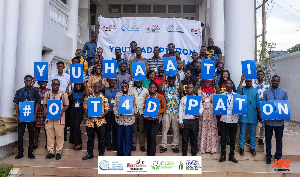 Stakeholders within the climate change industry, at Youth Climate Adaptation Action Day programme


Entertainment
Nana Aba Anamoah replies Esther Smith's ex-husband

Opinions