The ECOWAS Parliament has strict rules governing the replacement of its members, making it illegal for Member States to arbitrarily recall or substitute their representatives before the end of their term, except under limited circumstances provided by law.
The rules are contained in the Supplementary Act A/SA.1/12/16, adopted in December 2016, which enhanced the powers of the regional legislature and secured the independence of its members.
According to Article 18 (2) of the Act, Members of the ECOWAS Parliament are elected for a four-year mandate, which lasts until the end of the legislature.
Their tenure is protected from national political interference, party reshuffles, or changes in government once they are sworn in.
The Speaker and Deputy Speakers also hold office for the life of the legislature as provided under Articles 24 and 25.
“Article 18 (2) of the Supplementary Act clearly states that Members of the ECOWAS Parliament shall be elected for four (4) years from the date of the inauguration of the ECOWAS Parliament.
“This mandate shall last until the last day of the legislature. This fixed term is protected and cannot be interrupted arbitrarily by national authorities. Once a Member is duly elected and sworn in, their mandate is independent of national political changes or internal reassignments.
“Based on Articles 24 and 25 of the Supplementary Act, the tenure of the Speaker and Deputy Speakers shall be for the life of the Legislature.”
Also, “Replacement of a Member can only occur under the specific circumstances outlined in Article 18 (3) of the Supplementary Act and further clarified in the Rules of Procedure of the Parliament.”
The law allows for the replacement of a member only under specific conditions, including:
Death of the Member,
Voluntary resignation submitted in writing,
Certified mental or physical incapacity,
Incompatibility of office as defined in the Act,
Removal for misconduct or disrepute, following parliamentary rules, and
Non-re-election at the end of the term.
Political disagreements or decisions by national legislatures do not qualify as valid grounds for replacement.
Article 19 also prohibits Members from holding positions that could create a conflict of interest, such as serving as government ministers, judges, or officials of other international organizations.
The ECOWAS Parliament has, in several instances, rejected attempts by national authorities to replace their representatives outside the legal framework.
Togo (2002): The attempt to replace Dahuku Péré with Solitoki Esso was declared illegal.
Liberia (2025): A move by the Liberian House of Representatives to recall three MPs—
Samuel R. Enders Sr., Taa Z. Wongbe, and Moima Briggs Mensah—was rejected in a letter dated 7 March 2025, citing Article 18.
Guinea Bissau (2025): A request to replace Hon. Manuel do Nascimento Lopes, who is facing trial in Portugal, was dismissed because pending legal proceedings are not grounds for replacement.
The Supplementary Act was designed to strengthen the independence and credibility of the ECOWAS Parliament.
According to the authority, allowing arbitrary recalls or replacements, experts warn, would undermine its autonomy and expose it to political manipulation.
The ECOWAS Parliament has consistently maintained that once a member is sworn in, their mandate can only be terminated under the specific conditions provided by law.
AM/KA
GhanaWeb Special: The gold market that fuels galamsey
General News of Wednesday, 23 July 2025
Source: www.ghanaweb.com
What the rule says about the replacement of members of ECOWAS Parliament
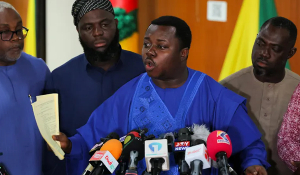
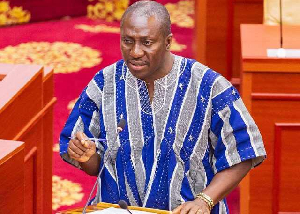
 A photo of the ECOWAS parliament


Entertainment