Ghana’s Ambassador to the United States, Victor Smith, has strongly condemned alleged incidents of vote-buying that characterised the just-ended National Democratic Congress (NDC) parliamentary primaries in the Ayawaso East Constituency, warning that such practices threaten the very foundation of democratic governance.
In a statement issued from Washington, DC, the ambassador urged party members and the wider Ghanaian electorate to “reject the politics of gifts and embrace the politics of conscience,” arguing that corruption in public life often begins long before individuals assume public office.
“Corruption in our national life does not begin in the office - it begins in the campaign,” Ambassador Smith stated.
He further noted that the distribution of money, food, electrical appliances, motorcycles, or other inducements to influence voters should be called what it is: corruption in its earliest form.
According to him, vote-buying is neither generosity nor kindness, but an “investment” made with the expectation of future returns once political power is secured.
“The tragedy is predictable. Once such a person gains appointment or public office, governance is no longer about service. It becomes a mission of recovery - recovering campaign expenses, rewarding financiers, and securing personal benefit before the next election cycle,” he stated.
Ambassador Smith also warned that when campaign inducements are normalised, the public purse ultimately becomes a reimbursement account for private political spending, leading to systemic corruption after elections.
He stressed that Ghana cannot credibly fight corruption in public procurement and government contracts while turning a blind eye to corruption at the ballot box.
“We deceive ourselves if we fight corruption only in government contracts while tolerating corruption during elections. The seed determines the harvest. A corrupted mandate produces corrupted governance,” he added.
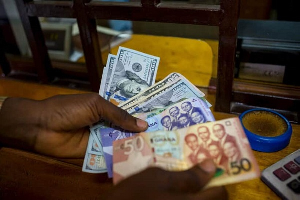
Referring specifically to developments during the Ayawaso East National Democratic Congress primaries, Victor Smith said reports of aspirants or their agents openly distributing televisions, motorcycles, and cash to voters should be treated as criminal acts rather than accepted campaign tactics.
“What happened at Ayawaso East must never be allowed to happen again,” he said, calling on law enforcement agencies to take appropriate actions against those involved.
He further cautioned against the growing monetisation of politics, insisting that leadership must never be purchased and that public office must not be reduced to a business venture.
“Our democracy must not be transactional. Leadership must not be purchased,” he stressed.
He added that accepting inducements weakens accountability, while giving inducements destroys integrity.
Ambassador Smith concluded by urging both politicians and voters to take responsibility for the quality of leadership produced by the democratic process.
“If we truly want honest leadership, then both the voter and the politician must reject the politics of gifts and embrace the politics of conscience,” he said, warning that “a nation that sells its votes will eventually pay for its government - many times over.”
Read his full statement below:
“Reject the politics of gifts and embrace the politics of conscience.”
Ambassador Victor Smith, Washington, DC
Corruption in our national life does not begin in office — it begins in the campaign.
When money, gifts, food, or favours are distributed to influence voters, we must call it what it truly is: corruption in its earliest form. It is not generosity. It is not kindness. It is an investment — an investment made with the expectation of profit.
The tragedy that follows is predictable.
Once such a person gains appointment or public office, governance is no longer about service. It becomes a mission of recovery — recovering campaign expenses, rewarding financiers, and securing personal benefit before the next election cycle. The public purse then becomes a reimbursement account for private political spending.
In this way, vote-buying does not merely distort elections; it manufactures corruption after elections.
We therefore deceive ourselves if we fight corruption only in government contracts and procurement while tolerating corruption at the ballot box. The seed determines the harvest. A corrupted mandate produces corrupted governance.
Our democracy must not be transactional. Leadership must not be purchased. Public office must never become a business venture whose profits are extracted from the suffering of citizens.
The time has come for a national understanding: accepting inducements undermines accountability, and giving inducements destroys integrity.
If we truly want honest leadership, then both the voter and the politician must reject the politics of gifts and embrace the politics of conscience.
A nation that sells its votes will eventually pay for its government — many times over.
What happened at Ayawaso East must never be allowed to happen again. The open distribution of televisions, motorcycles, and money by aspirants or their agents to voters should be recognised as corruption in the electoral process, and law enforcement agencies must take appropriate action.
“Elections should never be auctions.”
Lee Kuan Yew
Politics of Sunday, 8 February 2026
Source: www.ghanaweb.com
What happened at Ayawaso East must never happen again – Victor Smith
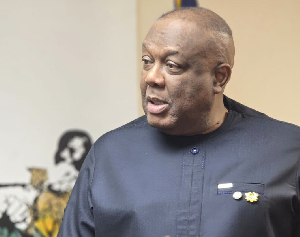 Victor Smith is Ghana's Ambassador to the United States