Child Rights International Executive Director Bright Appiah has called for stronger institutional mechanisms to address child abuse in schools, warning that focusing on individual offenders without fixing weaknesses in the system will not deliver lasting change.
He said Ghana’s response to abuse involving children had been too slow and concentrated largely on individual cases instead of strengthening the institutions responsible for preventing such offences.
“The approach is a bit slow because it’s not really helping us to identify the issues the way we should,” he said in an interview on Citi FM.
Appiah argued that the absence of effective institutional mechanisms had created conditions in which perpetrators could take advantage of weaknesses in the system.
According to him, public attention often shifts to individual allegations, with committees established to investigate particular incidents, while the broader failures that enable abuse remain unresolved.
He said the approach made sustained advocacy difficult because it failed to establish systems capable of preventing similar cases from occurring.
“This all boils down to the fact that the mechanisms are not in place, and we tend not to call for institutional strengthening, but we normally focus on individual activities that are carried out against children,” he said.
Appiah maintained that Ghana already had strong laws protecting children, but the challenge was ensuring that institutions responsible for enforcing them had the capacity and mechanisms to act effectively.
He called for a shift towards building systems that could consistently identify abuse, investigate allegations and ensure appropriate consequences, regardless of the individuals involved.
“Our laws are very strong,” he said, adding that the country must use existing legislation as a foundation for establishing effective child protection mechanisms.
He stressed that the objective should be to ensure that no one could abuse a child and expect to escape accountability because of their position or influence.
“It is time for us to also ride at their back to call for system establishment to ensure that, no matter who you are, you cannot just take a child for granted and carry out any activity whatsoever and think that you can go free,” he said.
General News of Wednesday, 21 October 2026
Source: www.ghanaweb.com
Weak systems are enabling child abuse in schools – Bright Appiah
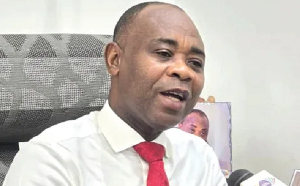 Bright Appiah is the Executive Director of Child Rights International






Opinions