For motorists accustomed to jumping traffic lights, speeding through built-up areas, parking wherever convenient or treating road signs as mere suggestions, Ghana's roads are entering a new era of enforcement.
A traffic offence could now follow a driver home in the form of an electronic ticket, attract a fine of up to GH¢360, and, after repeated violations, put a driving licence at risk for at least 12 months.
The introduction of the Road Traffic Regulations, 2026 (L.I. 2519) and the nationwide implementation of the automated traffic enforcement system, TraffiTech-GH, from November 1, 2026, mark a significant change in how traffic offences are detected and punished in Ghana.
Unlike traditional enforcement, which often depends on a police officer stopping a vehicle and issuing a ticket, the new system uses cameras, sensors and other electronic devices to identify motorists who violate traffic regulations.
The evidence is reviewed by the Ghana Police Service before an Electronic Notice of Violation (ENV) is sent to the registered owner of the vehicle.
For drivers, this means that escaping a roadside police checkpoint does not necessarily mean escaping punishment. A camera could capture the offence, record the vehicle's registration number and trigger a fine without the driver ever being stopped.
Six offences could put your driving licence at risk
One of the most consequential provisions under L.I. 2519 concerns repeated offences captured by automated traffic enforcement devices.
Under Regulation 242, motorists face graduated fines depending on the number of violations recorded.
The first, second and third offences attract a fine of GH¢120 each, equivalent to 10 penalty units. A fourth offence increases the amount to GH¢180 (15 penalty units), while a fifth attracts GH¢240 (20 penalty units).
However, the consequences become considerably more serious when a motorist commits a sixth offence within 24 months.
The sixth violation can lead to court proceedings and the suspension or revocation of the driver's licence for at least 12 months. The motorist may also be required to undergo retraining and retesting before being allowed back on the road.
This graduated penalty system is intended to discourage habitual traffic violations rather than allow motorists to repeatedly pay small fines and continue breaking the law.
It also means that a driver who considers GH¢120 a manageable cost for jumping a red light or exceeding the speed limit could eventually face a much more damaging consequence.
From red-light violations to illegal parking: Offences that could cost you
The regulations go beyond speeding and running red lights. They prescribe penalties for several everyday driving practices that have become common on Ghanaian roads.
Motorists who jump red lights or ignore STOP and YIELD signs face fines ranging from GH¢120 to GH¢360, imprisonment for up to 30 days, or both.
Street racing and participating in speed competitions attract fines ranging from GH¢120 to GH¢300, with a possible jail term of up to 30 days.
Overtaking at pedestrian crossings is also punishable by a fine of GH¢120 to GH¢300 or imprisonment for up to 30 days.
The regulations further target improper parking, including double parking and parking close to junctions. Such violations can attract fines ranging from GH¢120 to GH¢300, imprisonment for up to 30 days, or both.
Commercial drivers are not exempt. Trotro and taxi drivers who stop outside designated stations or authorised stopping points also face fines within the GH¢120 to GH¢300 range, with possible imprisonment of up to 30 days.
Parking in spaces reserved for persons with disabilities carries a fine of up to GH¢300, imprisonment for up to eight months, or both.
Other prohibited practices include watching a television monitor while driving, which attracts a fine of up to GH¢300 or imprisonment for up to 30 days.
Washing or repairing vehicles on public roads is also an offence, punishable by a fine of GH¢300 or imprisonment for up to 30 days.
These amounts are based on the applicable penalty units, with one penalty unit currently valued at GH¢12. The precise punishment imposed may depend on the applicable provision and the court's determination.
How TraffiTech-GH will catch offending motorists
At the centre of the new enforcement regime is TraffiTech-GH, an automated traffic monitoring and enforcement system developed by the Ghana Police Service.
The system is designed to improve compliance with road traffic regulations and reduce crashes, deaths and injuries by making it more difficult for motorists to escape detection.
It uses fixed cameras, mobile and in-vehicle devices, as well as laser speed-measurement equipment to capture violations.
When an offence is detected, photographs and video footage are transmitted to a central back office, where the evidence is reviewed and validated by the Police.
Once the violation is confirmed, an Electronic Notice of Violation is issued through SMS to the registered owner of the vehicle.
The system is expected to cover offences such as speeding, running red lights, wrongful overtaking, failure to wear seatbelts, driving with expired licences, expired roadworthiness certificates, operating uninsured vehicles and the misuse of sirens.
An ENV is expected to contain a ticket number, vehicle registration details, the location, date and time of the offence, a description of the violation, the amount payable and the deadline for payment.
Importantly, the Police say camera-generated notices are sent to the registered vehicle owner. Where an MTTD officer apprehends a driver during a roadside operation and uses a handheld Personal Digital Assistant (PDA), the notice may be issued directly to the driver.
Received a traffic fine by SMS? Here is what to do
Receiving an electronic traffic ticket does not automatically mean a motorist must appear in court.
Drivers who receive an ENV are required to review the evidence and either pay the prescribed fine or challenge the notice within 14 days of its issuance.
The Ghana Police Service directs motorists to the official TraffiTech-GH payment and evidence portal, https://traffitech-ghpay.nib.com.gh, where they can enter their ticket number to access the details and available photographs or video footage.
Those who accept the violation can settle the fine through Ghana.gov using MTN Mobile Money, Telecel, AirtelTigo, debit cards or credit cards. Payments can also be initiated by dialling 7100#.
However, motorists who believe a notice was wrongly issued have the right to contest it.
The challenge must first be initiated online within the 14-day period. During the process, the motorist selects a preferred MTTD regional police station and an appointment date.
The Police will subsequently contact the applicant to arrange an appointment. The motorist must provide the ticket reference number, vehicle registration details, valid identification and any supporting documents.
Following the police appointment, the matter may be scheduled for a court hearing.
Motorists should therefore not ignore a notice simply because they disagree with the allegation. The prescribed process must be followed within the stipulated period.
Ignore the deadline and your fine will keep increasing
For motorists who receive an ENV but fail to pay within the 14-day period, the financial consequences do not end with the original fine.
Under the Police's published TraffiTech-GH guidelines, an additional penalty of one per cent of the original fine is added for every day of default after the payment deadline.
For example, a motorist who fails to settle a GH¢120 fine will accumulate an additional GH¢1.20 for every day of default. After 30 days, that would amount to GH¢36 in additional penalties, bringing the total to GH¢156, excluding any other applicable charges.
A GH¢240 fine would attract an additional GH¢2.40 daily, while a GH¢300 fine would attract GH¢3 daily.
There are also consequences beyond the accumulation of money.
The Ghana Police Service warns that motorists with outstanding TraffiTech-GH fines may be denied certain services at the Driver and Vehicle Licensing Authority (DVLA).
Until outstanding fines are cleared, the DVLA may refuse to renew a driver's licence, transfer or register a vehicle, re-register a vehicle, lay off a vehicle or conduct its roadworthiness inspection.
This makes ignoring an electronic traffic ticket potentially more expensive and inconvenient than paying the original fine.
Sold your car? You could still be responsible for its traffic offences
One aspect of the new enforcement system that could catch many vehicle owners off guard is the responsibility attached to vehicle registration.
Under L.I. 2519, an ENV generated by a camera is sent to the registered phone number of the vehicle owner. The registered owner remains liable for the violation, even if another person was driving at the time.
This means that lending a vehicle to a friend, allowing a relative to use it or employing a driver does not automatically transfer responsibility for camera-detected offences.
The situation could be even more frustrating for people who have sold their vehicles without completing the official change-of-ownership process.
According to the Police, anyone who sells a vehicle must ensure that the transaction is properly registered with the DVLA, including updating the ownership details and associated telephone number.
Until this is done, the previous owner may continue receiving notices and remain responsible for violations committed with the vehicle, including late-payment penalties.
For stolen vehicles or number plates, owners are expected to report the incident to the Police, the MTTD and the DVLA, as well as their insurance company.
A written police report showing that the vehicle or number plates were stolen before the alleged violation can be used as supporting evidence when contesting the notice.
The Police also advise people who receive notices for vehicles they have never owned to contact the TraffiTech-GH Call Centre immediately. Deliberately making false reports, however, attracts additional penalties.
Can you challenge a camera's speed reading?
Questions about the accuracy of automated speed-detection equipment are also addressed under the Police's guidelines.
The Ghana Police Service says all speed-enforcement devices operating under its authority are type-approved and periodically calibrated by the Ghana Standards Authority (GSA) in accordance with internationally accepted standards.
Nevertheless, motorists who believe their vehicles were wrongly recorded as speeding have the right to challenge the notice within the prescribed 14-day period.
The absence of a warning sign announcing an enforcement camera does not automatically invalidate an offence. According to the Police, there is no legal requirement to announce every enforcement operation or camera location.
Drivers are therefore expected to know and observe the prescribed speed limits even when there is no speed-limit sign immediately visible.
Know the speed limits before the camera catches you
Under the new regulations, Ghana's general speed limits vary according to the type of road and the environment.
The Police have outlined the following limits:
30km/h: Within schools, playgrounds, health facilities, churches, mosques, markets, shopping centres, processions and other areas where human activity is predominant.
50km/h: Urban and built-up areas.
90km/h: Highways.
100km/h: Motorways.
These limits are intended to account for the different levels of risk associated with particular road environments.
A driver travelling at a speed considered reasonable on a motorway could still be committing an offence when driving through a school zone or a busy market area.
How to check outstanding traffic fines and avoid scams
Motorists who want to establish whether their vehicles have outstanding traffic fines can dial *220# and follow the prompts.
The service allows vehicle owners and prospective buyers to check outstanding obligations using a vehicle registration number or driver's licence number.
This could be particularly useful for people intending to purchase second-hand vehicles, as unpaid traffic fines may affect subsequent transactions at the DVLA.
The Police have also cautioned motorists to be vigilant against fraudsters who may exploit the introduction of the electronic enforcement system.
A genuine ENV should carry the sender identification GPS-MTTD. Motorists are advised not to click suspicious links or send money to personal Mobile Money numbers or individuals claiming to represent the Police.
For security, motorists should independently access the official payment portal rather than follow suspicious links received through text messages.
The Police have provided 059 692 2402 as the TraffiTech-GH Call Centre number. Suspicious messages can also be reported through the emergency numbers 191 and 18555.
A new test of discipline on Ghana's roads
Beyond the fines and possible imprisonment, the introduction of TraffiTech-GH represents a shift in the country's approach to traffic enforcement.
The system is intended to reduce dependence on physical police patrols, improve the documentation of violations and encourage motorists to take greater responsibility for their conduct.
However, its effectiveness will ultimately depend on more than the presence of cameras. Accurate evidence, transparent enforcement, accessible complaint procedures and public confidence in the system will be equally important.
For motorists, the message is straightforward: road traffic regulations are no longer rules that can easily be ignored when a police officer is nowhere in sight.
With automated detection, escalating fines, daily late-payment penalties and possible licence suspension, the cost of indiscipline could extend far beyond a single traffic ticket.
EA
General News of Monday, 2 November 2026
Source: www.ghanaweb.com
TraffiTech-GH: What Ghanaian drivers must know about L.I. 2519
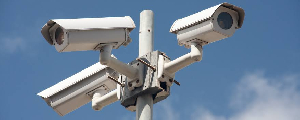 TraffiTech-GH aims to make traffic enforcement safer and more transparent