Former President Nana Addo Dankwa Akufo-Addo’s eight-year administration witnessed both notable achievements and deep national crises.
While he championed major reforms such as Free Senior High School and industrialisation under the One District, One Factory initiative, his presidency was also marked by some of the most difficult moments in Ghana’s recent history.
Below are ten of the darkest hours that tested the Akufo-Addo administration:
1. Debt Restructuring and Default (2022–2023)
Ghana’s historic default on its external debt in December 2022, and the painful restructuring under the G20 Common Framework, represented one of the lowest points of Akufo-Addo’s tenure.
Although intended to restore fiscal stability, the process led to massive financial losses for investors and pensioners. Former President Akufo-Addo later described it as “one of the darkest and most painful” episodes of his presidency.
2. Economic downturn and rising inflation
Rising inflation, a rapidly depreciating cedi, and escalating living costs created severe hardship for ordinary Ghanaians.
Between 2022 and 2023, inflation soared above 50 percent, food and fuel prices surged, and public discontent reached record levels, triggering protests and business closures nationwide.
3. IMF bailout and mounting debt
Mounting public debt and fiscal deficits forced the government to seek a bailout from the International Monetary Fund (IMF) in 2022, Ghana’s 17th IMF programme since independence.
The programme came with strict austerity measures, which deepened economic hardship and fueled criticism over fiscal mismanagement and loss of government credibility.
4. Pensioner ‘haircut’ protests
The Domestic Debt Exchange Programme (DDEP) became one of the most controversial policies under Akufo-Addo.
The decision to reduce bond yields and defer payments triggered public outcry, most notably from elderly pensioners, including former Chief Justice Sophia Akuffo, who protested at the Finance Ministry in early 2023. Their demonstrations became symbolic of the human cost of economic policy failure.
Prof. Mike Oquaye calls for institutionalized presidential debates in Ghana
5. Galamsey scandal and environmental damage
Despite Akufo-Addo’s vow to end illegal small-scale mining (galamsey), the practice worsened during his presidency, devastating rivers and forest reserves.
Reports of political interference and alleged complicity by officials undermined the government’s credibility and raised serious concerns about its commitment to environmental protection.
6. Corruption allegations
From the collapse of the Power Distribution Services (PDS) concession deal to procurement irregularities exposed by the Auditor-General, corruption allegations marred the administration.
While some cases were investigated, few led to prosecutions, reinforcing perceptions of selective justice and weakening the President’s anti-corruption credentials.
7. COVID-19 expenditure controversy
Although Ghana’s early response to the pandemic was widely praised, later audits uncovered significant irregularities in the management of COVID-19 funds.
Overspending, inflated contracts, and unaccounted-for expenditures triggered public outrage and renewed demands for transparency and accountability.
8. E-Levy backlash
The introduction of the Electronic Transactions Levy (E-Levy) in 2022 faced intense public opposition.
Many citizens viewed the tax as burdensome, especially during a period of economic strain. Its underperformance in revenue generation further called into question the economic rationale behind the policy.
9. 2020 election violence
Although the December 2020 elections reaffirmed Ghana’s democratic credentials, they were marred by violence that claimed several lives.
The killing of civilians during what should have been a peaceful electoral process cast a dark shadow over the victory and dented Ghana’s reputation for electoral stability.
10. Parliamentary stalemate and political tensions
Following the 2020 elections, the near-equal distribution of seats in Parliament led to heightened partisanship and legislative gridlock.
Heated debates, walkouts, and even physical confrontations between Members of Parliament reflected deep political divisions and complicated the passage of key government policies.
Why the NPP will boycott IEA’s presidential debate - Miracles Aboagye explains
These moments defined the most turbulent years of Akufo-Addo’s presidency.
They stand as stark reminders of the challenges that confronted his leadership, and offer enduring lessons on accountability, fiscal prudence, and the importance of public trust in governance.
MRA/EB
Meanwhile, catch the highlights of Sarkodie x Shatta Wale's epic performance at Rapperholic Homecoming on GhanaWeb TV below:
Politics of Saturday, 4 October 2025
Source: www.ghanaweb.com
Top 10 defining moments of Akufo-Addo’s presidency
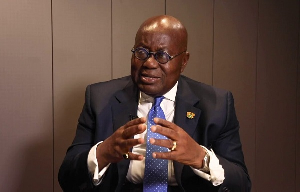 Nana Addo Dankwa Akufo-Addo is a former president of Ghana