Ghana's political landscape witnessed a weekend of leadership upheavals, internal party tensions and fresh exchanges over the economy, with the NDC's regional elections, Sir Sam Jonah's controversial political proposal and criticism of the 2027 Budget dominating discussions.
From Benjamin Danso's defeat of incumbent Emmanuel Nii Ashie-Moore in Greater Accra to an election dispute in the Northern Region, the weekend offered an early glimpse into the political battles and realignments that could shape the run-up to the 2028 general elections.
Here are five major political developments you may have missed.
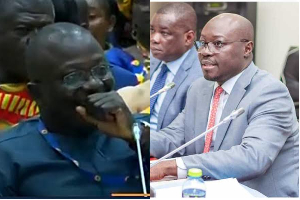
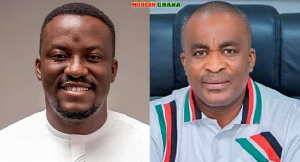
1. Danso ends Ashie-Moore's reign in major NDC Greater Accra upset
The NDC's Greater Accra Regional Chairman, Emmanuel Nii Ashie-Moore, has lost his position after Benjamin Danso defeated him in a decisive regional executive election, ending his nearly four-year tenure.
Mr Danso secured 515 votes against Mr Ashie-Moore's 295 in the election held on Saturday, November 14, 2026. Michael Tetteh Kwetey polled 161 votes, while Ibrahim Jajah received 63.
The result represents one of the most significant leadership changes in the NDC's regional elections, particularly given Greater Accra's importance to the party's electoral fortunes.
Mr Ashie-Moore was elected regional chairman in November 2022 after defeating then-incumbent Joseph Ade Coker. He had sought another term, expressing confidence before the election that delegates would reward his performance.
However, the delegates opted for a change in leadership, handing Mr Danso the responsibility of steering the party's affairs in the region for the next four years.
Mr Danso, a former Krowor Constituency Chairman, had campaigned on strengthening the party's grassroots structures and improving coordination across Greater Accra's 34 constituencies.
Other elected executives include William Vinyo, who secured the First Vice-Chairmanship with 483 votes, and Thomas Ashong, who won the Second Vice-Chairmanship with 280 votes.
Amos Blessing Amorse was elected Regional Secretary with 475 votes, defeating Emmanuel Laryea, who obtained 380. Maaida Osman won the Deputy Regional Secretary position with 532 votes against Millicent Agbeyome's 239.
The leadership change comes as the NDC begins positioning its regional structures ahead of the December 2028 general elections. Danso will therefore face the task of consolidating the party's support base, managing internal interests and maintaining its electoral strength in the capital.
Why it matters: Danso's victory is more than a change of regional chairman. It marks a significant shift in the NDC's Greater Accra leadership and raises questions about the internal alliances, delegate expectations and organisational priorities that shaped the contest.
2. One arrested as NDC Northern Region election erupts over six-vote defeat
One person has been arrested following a confrontation at the NDC's Northern Regional delegates conference after supporters of a defeated candidate rejected the results of the Regional Treasurer election.
The disagreement erupted after Mohammed Suhuyini Sulemana was declared winner with 298 votes, defeating his closest contender, Alhassan Osman Gomda, who secured 292 votes.
The six-vote difference triggered protests from supporters of Mr Gomda, who questioned the declaration and expressed dissatisfaction with the outcome.
The situation reportedly escalated, resulting in the destruction of chairs and tables at the conference venue. Some agitated supporters also reportedly clashed with security personnel, who intervened to restore order.
One person was arrested, while others reportedly fled the scene to avoid arrest.
The declaration process was suspended for approximately five minutes before calm returned and proceedings resumed.
The incident unfolded against the backdrop of the NDC's wider regional reorganisation, which is expected to culminate in the party's national executive elections.
Meanwhile, Godfred Apasinaba Wumbei won the Northern Regional Chairmanship with 328 votes, defeating Tanko Maida, who obtained 236 votes. Abdul-Hamid Alhassan Gbewaa received 27 votes.
Professor Abukari Wumbei also won the Regional Secretary position with 317 votes, beating Abdallah Baba Abukari, who polled 272.
Why it matters: The incident exposes the tensions that can accompany internal party elections, particularly where contests are closely fought. With the NDC preparing for another round of internal elections, the party will have to address grievances and ensure that disagreements over results do not undermine its organisational cohesion.
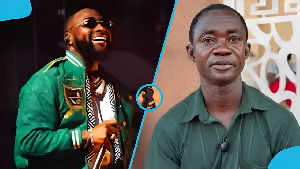
3. Sam Jonah revives Acheampong's Union Government debate, questions winner-takes-all politics
Business magnate and University of Cape Coast Chancellor, Sir Sam Jonah has reopened one of Ghana's most controversial political debates, arguing that the country must reconsider its winner-takes-all political system and aspects of former military ruler General Ignatius Kutu Acheampong's Union Government proposal.
Speaking at the second General I. K. Acheampong Memorial Lecture on Friday, November 13, Mr Jonah questioned whether Ghana's current multiparty arrangement sufficiently promotes national consensus and gives communities a meaningful stake in governance when their preferred political party loses an election.
He argued that the country continues to struggle with political divisions, policy discontinuity and the tendency for successive governments to abandon projects and appointments associated with their predecessors.
Mr Jonah maintained that Acheampong was not necessarily wrong to question the winner-takes-all arrangement, although he acknowledged that the former military ruler's approach to addressing the problem was deeply flawed.
He put his position bluntly:
"I do not believe Kutu Acheampong was wrong to ask whether a young, ethnically plural nation, fifteen years into self-rule, could really afford a politics in which the loser gets nothing and owes the winner nothing in return."
He added, "Where he went wrong was not the question. It was almost everything about how he tried to answer it."
Mr Jonah was careful to distinguish his argument from an endorsement of military rule, insisting that Ghana's democratic institutions, elections, accountability and free press must remain protected.
"I am not making the case for soldiers. This continent has had its fill of strongmen, and most of them delivered neither bread nor freedom," he said.
To support his argument, he cited Malaysia and Singapore as examples of countries that have adopted political arrangements intended to accommodate different communities while maintaining regular elections.
He described Malaysia's longstanding coalition arrangements and Singapore's Group Representation Constituencies as examples of how political competition could coexist with broader representation.
"That, at its heart, was the promise of Union Government, and it is a promise worth revisiting," he stated.
The historical context
Acheampong came to power on January 13, 1972, after overthrowing the democratically elected government of Prime Minister Kofi Abrefa Busia.
His Union Government proposal emerged in 1976 amid growing demands for a return to constitutional rule. It sought to establish a system involving civilians, soldiers and police officers, with candidates contesting elections as individuals rather than strictly along conventional party lines.
The proposal was put to a national referendum on March 30, 1978, and officially declared to have won. However, it was fiercely opposed, with critics raising concerns about military influence, intimidation and the credibility of the referendum.
Acheampong was removed from power in July 1978, before the proposed arrangement could be fully implemented. He was executed on June 16, 1979, following the military takeover by the Armed Forces Revolutionary Council.
Mr Jonah's intervention has reopened questions about whether Ghana's political system encourages national development or entrenches partisan competition at the expense of long-term policy continuity.
His argument is particularly relevant to ongoing debates about the politicisation of public institutions, changes in government appointments and the abandonment or rebranding of projects whenever power changes hands.
However, his proposal also raises difficult questions about how Ghana can pursue broader political inclusion without weakening democratic competition, accountability and the right of citizens to choose their leaders.
4. Minority says Mahama's 2027 Budget will leave Ghanaians paying more
The Minority in Parliament has accused the Mahama administration of shifting the financial burden of its economic policies onto ordinary Ghanaians, warning that the 2027 Budget could leave households paying more while receiving less support from key social intervention programmes.
The opposition's criticism centres on projected increases in government fees and charges, reductions in allocations for social protection and what it describes as inadequate measures to address unemployment.
Addressing a press conference in Accra on Friday, November 13, Ranking Member of Parliament's Finance Committee and former Finance Minister Dr Mohammed Amin Adam argued that the government's economic recovery narrative did not adequately reflect the financial realities confronting households.
He acknowledged improvements in some macroeconomic indicators but questioned whether those gains were translating into better living conditions.
"The Finance Minister celebrates the paper economy—inflation at 5.5 per cent, a primary surplus, lower Treasury bill rates, and better credit ratings. We acknowledge those gains," he said.
"But the budget's own tables show the pocket economy being asked to pay more in 2027, while support for the poorest is cut."
Dr Amin Adam claimed that allocations for three major social intervention programmes — the Livelihood Empowerment Against Poverty (LEAP), the School Feeding Programme and the Capitation Grant—had fallen from GH¢3.46 billion in 2026 to GH¢2.26 billion in 2027.
That represents an approximately 35 per cent reduction, according to the Minority.
He argued that the reduction could undermine the government's ability to support vulnerable households, despite an announced increase in the LEAP grant.
The Minority also raised concerns about projected revenue from fees and charges, which it said would increase from GH¢1.3 billion to GH¢6.1 billion.
The figures represent a projected increase of approximately 354 per cent, a development Dr Amin Adam believes could place additional pressure on individuals and businesses.
He further questioned the government's decision to introduce the New Economy programme, describing it as largely a rebranding of the 24-Hour Economy initiative.
According to him, six of the eight pillars of the New Economy correspond with existing programmes under the earlier initiative, while several flagship projects have been given new names and implementation timelines extending into 2028 and beyond.
He also demanded an account of the jobs created under the 24-Hour Economy, which had previously been projected to generate 1.7 million jobs.
"If the government were serious about jobs, these projects would have started in 2025, so that the jobs arrived in 2026 and 2027," he argued.
The former Finance Minister further questioned the government's projected domestic borrowing of GH¢85 billion and the reduction in the primary surplus target from 1.5 per cent to 0.5 per cent of GDP.
He also cited debt-servicing obligations of approximately GH¢61 billion, arguing that the amount exceeded the combined allocations to several sectors, including agriculture, energy, infrastructure, youth development, industry and tourism.
The bigger economic question
The Minority's concerns come amid a wider national debate about whether improving macroeconomic indicators are translating into meaningful relief for households.
Inflation, exchange-rate stability, borrowing costs and public debt are important measures of economic performance. However, their impact on ordinary citizens is also assessed through food prices, transport fares, utility bills, employment opportunities and the cost of running businesses.
It is important to note that the figures and conclusions presented here are the Minority's assessment of the 2027 Budget. They should not be treated as independently established evidence that every household will experience an equivalent increase in costs.
The government will face the task of defending its spending priorities and explaining how the proposed revenue measures and social interventions are expected to affect citizens.
5. 'Ghanaians are waiting to show you the exit' - NPP fires at Mahama over cedi stability
The New Patriotic Party (NPP) has taken a swipe at President John Dramani Mahama's government, questioning why Ghanaians continue to struggle financially despite claims of improved economic stability, particularly the performance of the cedi.
The party's Volta Regional Secretary, Shabanton Moses Kwesi Dutsrogbe, challenged the government's economic recovery narrative, arguing that improvements in currency stability had not translated into meaningful relief for ordinary citizens.
He made the remarks on Saturday, November 14, while delivering the NPP's solidarity message at the NDC Volta Regional Delegates Conference.
Mr Dutsrogbe questioned the apparent disconnect between the government's economic indicators and the daily experiences of households, insisting that the true measure of economic recovery should be the impact on people's living conditions.
He took a direct swipe at the governing party, claiming that the NDC was the only political party in Ghana's history to have stabilised the cedi "on paper" while ordinary citizens continued to experience hardship.
"This we find very strange, and Ghanaians are waiting to show you the exit," he said.
His comments were particularly striking because they were delivered at an event organised by the NDC, where the opposition had been invited to demonstrate solidarity with the governing party.
Despite the criticism, Mr Dutsrogbe commended the NDC for extending the invitation to the NPP, describing the gesture as a demonstration of democratic values and peaceful relations between political parties.
He also called for political tolerance, insisting that Ghanaians must be allowed to exercise their democratic rights without discrimination based on religion, ethnicity or other social differences.
Turning to the NPP's political future, he outlined the party's ongoing reorganisation, which he said had progressed from polling station executives and electoral coordinators to constituency and regional structures, with the national stage still ahead.
He described the process as evidence of the party's determination to rebuild its structures and challenge the NDC in the next general election.
"Change is happening. Change is happening. Change will arise," he declared.
For the opposition, the challenge will be to convince voters that its economic alternative can deliver tangible improvements in living conditions, while the government will be under pressure to demonstrate that its reported economic gains are reaching households.
EA
General News of Monday, 16 November 2026
Source: www.ghanaweb.com
The weekend wrap: 5 political stories you missed
 A photo of Benjamin Danso and Emmanuel Nii Ashie-Moore