Correspondence from the Eastern Region
Stakeholders in Ghana’s agriculture, research, and environmental sectors have renewed calls for stronger policy support and sustained collaboration to tackle plastic pollution, as the FRESHPPACT project concluded its three-year implementation with a closing workshop in Fiesta Royale Hotel in Accra.
The event, held on March 19, 2026, brought together government officials, industry players, researchers, farmers, and development partners to reflect on the project’s achievements and outline the next phase of action.
The workshop featured presentations on the project’s journey, innovative solutions, and future prospects under a proposed “FRESHPPACT 2.0” framework.
Delivering the opening address, Dr Ebenezer Laryea, who also serves as a Reader at Aston University, described the initiative as a bold response to the growing challenge of plastic pollution in food systems. He noted that the project was built on the conviction that environmental challenges, no matter how complex, can be addressed through collaboration and innovation.
“This project has shown that sustainability is not merely a slogan, but a system to be designed,” he said, highlighting the importance of linking research with practical, on-the-ground applications in farming, manufacturing, and policy development.
Over its lifespan, FRESHPPACT facilitated partnerships across academia, industry, and local communities, leading to the development and testing of alternative packaging and mulching materials aimed at reducing dependence on harmful single-use plastics.
According to Dr Laryea, the project successfully moved ideas from concept through innovation and testing to practical demonstrations, laying a strong foundation for sustainable transitions in Ghana’s agricultural value chains.
A key highlight of the workshop was a presentation by representatives of Blue Skies, who shared findings from the Holistic Mulch Project. The initiative explored the use of organic waste materials, such as coconut residues, to develop environmentally friendly alternatives to conventional plastic mulch widely used in farming.
Project contributors explained that while the engineering process was complex, the results demonstrated significant promise. Field trials, they noted, provided valuable insights and reinforced the potential of locally developed solutions to address environmental challenges while supporting agricultural productivity.
However, speakers also stressed that innovation alone is insufficient without the right policy environment. One presenter pointed out that many sustainable alternatives remain more expensive than traditional plastics, limiting their adoption.
“It is not an innovation problem, but a policy problem,” the speaker said, explaining that without supportive policies to reduce production costs or incentivise adoption, consumers are unlikely to switch to more expensive alternatives.
The workshop further highlighted the need for governments to create enabling frameworks that support green innovation, including subsidies, regulatory incentives, and market development strategies.
Stakeholders emphasised that aligning policy with innovation would be critical to scaling solutions and achieving long-term impact.
Looking ahead, discussions on “FRESHPPACT 2.0” focused on expanding research, refining existing solutions, and strengthening partnerships to accelerate the transition toward sustainable materials in Ghana and beyond.
In his closing remarks, Dr Laryea urged stakeholders to view the end of the project not as a conclusion, but as the beginning of a broader movement.
“We must not ask whether we have finished, but what we have begun,” he said. “The solutions of tomorrow can be developed, tested, and scaled right here in Ghana.”
The event concluded with a renewed commitment from partners, including representatives from the Environmental Protection Agency Ghana, to build on the progress made and ensure that the project’s legacy translates into tangible improvements in environmental sustainability, agricultural resilience, and livelihoods across the country.
Regional News of Tuesday, 24 March 2026
Source: www.ghanaweb.com
Sustainability gains highlighted as FRESHPPACT ends three-year initiative
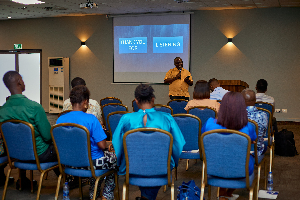 speakers stressed that innovation alone is insufficient without the right policy environment



Entertainment