Sickle cell anemia is one of a group of inherited disorders known as sickle cell disease.
It affects the shape of red blood cells, which carry oxygen to all parts of the body.
Red blood cells are usually round and flexible, so they move easily through blood vessels.
In sickle cell anemia, some red blood cells are shaped like sickles or crescent moons.
These sickle cells also become rigid and sticky, which can slow or block blood flow.
CAUSE
People with sickle cell disease inherited two hemoglobin gene variants one from each parent.
These genes make a faulty hemoglobin protein called hemoglobin "S".
Sickle cell disease can also occur when a child inherits a gene for hemoglobin "S" (a sickle cell gene) from one parent and a gene for a different type of faulty hemoglobin, such as beta (β) thalassemia or hemoglobin "C", from the other parent.
People who have sickle cell trait make about 60% normal hemoglobin (hemoglobin A) and 40% sickle hemoglobin (hemoglobin S).
They may be called carriers because they can pass on the gene for sickle hemoglobin when they have children.
SYMPTOMS
Symptoms of sickle cell anemia usually appear around 6 months of age. They vary from person to person and may change over time. Symptoms can include:
* Anemia. Sickle cells break apart easily and die.
Typical red blood cells usually live for about 120 days before they need to be replaced. But sickle cells usually die in 10 to 20 days, leaving a shortage of red blood cells.
This is known as anemia. Without enough red blood cells, the body can't get enough oxygen. This causes fatigue.
* Episodes of pain. Periodic episodes of extreme pain, called pain crises, are a major symptom of sickle cell anemia.
Pain develops when sickle-shaped red blood cells block blood flow through tiny blood vessels to the chest, abdomen, and joints.
The pain varies in intensity and can last for a few hours to a few days. Some people have only a few pain crises a year.
Others have a dozen or more a year. A severe pain crisis requires a hospital stay.
Some people with sickle cell anemia also have chronic pain from bone and joint damage, ulcers, and other causes.
* Swelling of hands and feet. Sickle-shaped red blood cells block blood circulation in the hands and feet, which can cause them to swell.
* Frequent infections. The spleen is important for protecting against infections. Sickle cells can damage the spleen, raising the risk of developing infections.
Babies and children with sickle cell anemia commonly receive vaccinations and antibiotics to prevent potentially life-threatening infections, such as pneumonia.
* Delayed growth or puberty. Red blood cells provide the body with the oxygen and nutrients needed for growth. A shortage of healthy red blood cells can slow growth in babies and children and delay puberty in teenagers.
* Vision problems. Tiny blood vessels that supply blood to the eyes can become plugged with sickle cells. This can damage the portion of the eye that processes visual images, called the retina, and lead to vision problems.
Speaking to EAB, a patient who has lived with Sickle Cell Disease (SCD) all her life, she recounts her experience.
She describes living with the disease as both amazing and disturbing, and full of ups and downs.
EAB recounts that the SCD affects her in various ways and denies her the privilege of enjoying a normal life.
She feels an immense amount of pain in her ribs when she walks for long, and she doesn't run or do any vigorous physical activities because it will affect her joints and break her down.
Pain and crisis occur randomly and suddenly without any notice. If she makes the mistake of doing or eating anything that her body doesn't agree with, there's a chance of having to be admitted to the hospital
She is an introvert and not able to go to parties or do any form of fun activities with her friends, not because that's who she is, she has conformed to that for fear of getting an infection or triggering the SCD.
EAB sadly says that her ordeal has made her mentally unstable, with constant panic attacks, anxiety, and suicidal thoughts. On several occasions, she questions her existence and has come to accept the fact that she might die at any time without notice.
She's only able to get through her days, thanks to her family, friends, and health care teams. She periodically visits the hospital every three months for checks, tests, and medications.
She tracks her medications, appointments, health, and does not leave anything to chance.
But there are no 24hrs sickle cell hospitals, which makes their health even more risky.
EAB urges all warriors to live life as fully as they possibly can and just make sure they take their medications seriously.
TREATMENT
Management of sickle cell anemia is usually aimed at avoiding pain episodes, relieving symptoms, and preventing complications. Treatments might include medicines and blood transfusions. For some children and teenagers, a stem cell transplant might cure the disease. Gene therapies are also being developed that may offer cures for people with sickle cell disease.
It is always advisable to consult your healthcare providers for adequate medical treatment and advice.
SCD patients should know that they are warriors, and they are fighting a great and silent battle that only a few of them have the strength to fight. They should hold their heads high and be proud, just as we are proud of them.
Research tools: EAB(SCD Patient), National Institutes of Health, and Mayo Clinic.
Meanwhile, you can watch GhanaWeb TV’s exclusive interview with the ‘queen’ of décor, making strides since Rawlings’ era
PAT/EB
Health News of Tuesday, 5 August 2025
Source: www.ghanaweb.com
Sickle Cell Disease: The silent killer
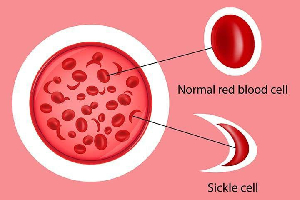 An image showing the shape of a normal red blood cell and a sickle cell