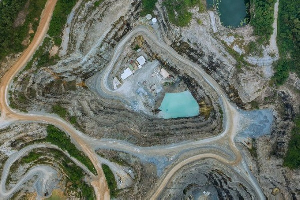
Three baseline studies on artisanal and small-scale gold mining in the Savannah Region have revealed widespread soil contamination, low regulatory compliance and weak institutional coordination, raising concerns about the environmental and health risks facing mining communities.
The studies, conducted under the European Union-funded Gold for Good (G4G) Project, found that cadmium levels exceeded international guideline values in all soil samples, while mercury levels were above recommended thresholds in about 94 per cent of the samples.
They also found that 68.64 per cent of mapped mining areas fell within the critical environmental-risk category, with women and children particularly vulnerable to exposure to toxic substances from mining and gold processing.
The assessments covered West Gonja Municipality, Bole District and Sawla-Tuna-Kalba District and examined governance, security and conflict risks; the socio-economic conditions of mining communities; and ecological and health risks.
They drew on a survey of 953 respondents across 30 communities, environmental sampling, institutional and security assessments, and the mapping of 94 mining sites.
The environmental assessment identified contaminated soil as the dominant exposure pathway.
About 46 per cent of children’s exposure scenarios exceeded acceptable non-carcinogenic health-risk thresholds, compared with 20 per cent for adults.
Cadmium accounted for more than three-quarters of the assessed health hazard, while mercury exposure and dust inhalation were also identified as major risks.
Women faced increased exposure because of their involvement in ore processing and the handling of contaminated materials, while children were vulnerable through contact with polluted soil and their proximity to residential gold-processing sites.
The studies also revealed significant gaps in mining formalisation, with only 2.92 per cent of respondents holding mining licences and about 74 per cent unaware of the regulations governing mining in their communities.
Only 15.96 per cent had registered land, while 98.33 per cent of gold transactions were conducted in cash, raising concerns about traceability and oversight.
Women, young people and migrant miners were also underrepresented in mining-related decision-making, with women largely engaged in lower-paying activities such as ore processing and transportation, the study revealed.
Dollar Power and Tinga in the Bole District were identified as priority intervention communities because of the concentration of mining activities and environmental contamination risks.
The two communities accounted for 59 mapped sites classified as posing critical environmental risks.
The findings of the studies, launched in Accra on Thursday, called for coordinated interventions to address mining governance, responsible gold sourcing, community security and environmental rehabilitation.
Alhaji Yusif Sulemana, Deputy Minister of Lands and Natural Resources, said the findings provided important evidence to strengthen Ghana’s response to illegal mining.
He said the country had debated galamsey for years with considerable passion but limited data, making the studies an important contribution to understanding the scale and nature of the problem.
He noted that three out of every four people in the study corridor were violating mining regulations they had not been adequately informed about, while soil where children played contained cadmium at more than 40 times the safe limit.
He urged stakeholders not to allow the opportunity to address the challenges to slip away, warning of their long-term consequences for communities and the environment.
Rune Skinnebach, European Union Ambassador to Ghana, said the studies reaffirmed the EU’s commitment to supporting Ghana’s efforts to address illegal mining.
He said the G4G Project sought to promote a mining sector that was lawful, environmentally responsible, socially inclusive and economically beneficial to communities.
Jonas Claes, Deputy Ambassador of the European Union to Ghana, said the research exposed a significant gap between existing mining laws and technical requirements and their implementation.
He said the immediate economic benefits of mining, including income and access to education and other services, made the activity attractive to communities, underscoring the need for sustained public education on its long-term environmental and social costs.
Rev Fr Dr Clement Aapengnuo, Country Director of Coginta Ghana and Team Leader of the G4G Project, said unregulated mining along the Black Volta tri-border frontier had also emerged as a security concern.
He said enforcement operations alone would not resolve the problem without the active involvement of mining communities and traditional authorities.
The studies recommended stronger collaboration among public institutions, traditional authorities and mining communities, with greater participation by women, young people and migrant miners.
They also called for the rehabilitation of degraded lands, mandatory backfilling of abandoned mining pits, protection of indigenous trees, dust suppression and the adoption of mercury-free gold-processing methods.
The findings are expected to guide the next phase of the G4G Project, focusing on institutional coordination, conflict prevention, mining formalisation and the rehabilitation of mining-affected lands.
The 18-month Gold for Good Project, valued at €3 million, is funded by the European Union under its NDICI Crisis Response Pillar and implemented by Coginta.
Regional News of Saturday, 7 November 2026
Source: GNA
Savannah mining communities face growing environmental and health risks - Studies
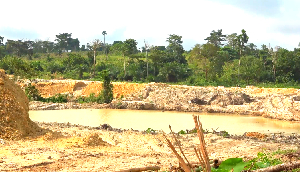 File photo of a galamsey site