The increasing carnage on the country’s roads has triggered renewed calls for urgent government action, with stakeholders demanding tougher enforcement of road safety laws and decisive measures to curb reckless driving and the growing use of motorcycles and tricycles on major highways.
The calls follow the August 13 Ofankor accident, which claimed 11 lives and injured 13 others, as concerns mount over the increasing number of preventable deaths on the country’s roads.
Among those calling for immediate action is a former United Nations governance expert, Professor Duah Agyemang, who described the tragedy as a wake-up call for the government to take pragmatic measures to stem road crashes, particularly on major highways.
He proposed an immediate ban on two- and three-wheeled motorised vehicles, including motorcycles and tricycles popularly known as “aboboyas” or “pragyia”, from using major highways.
According to Prof Agyemang, tricycles operating in high-speed lanes posed a serious danger to motorists, particularly when they stopped to pick up or drop off passengers.
He cited the Tema Motorway as an example, saying tricycles were sometimes found operating in the middle of high-speed lanes alongside speeding vehicles.
He said “aboboyas” should instead be restricted to rural areas and inner roads within communities where they would not interfere with regular highway traffic.
Prof. Agyemang lamented the loss of 11 lives on the Ofankor road, saying preventable deaths and the destruction of property continued to occur on a daily basis.
He expressed concern about the absence of an official statement on the accident and urged the authorities to treat road safety as a national emergency.
Prof Agyemang also called for the establishment of a dedicated Mobile Police Unit to patrol major highways and monitor driver behaviour.
He proposed that existing police barriers on the highways be replaced with mobile patrols whose personnel would continuously monitor the roads and swiftly deal with reckless drivers.
In a related development, Lead Resource Centre, a non-governmental organisation, called for the creation of dedicated lanes for tricycles, motorcycles and bicycles, with separate lanes reserved exclusively for other vehicles.
The Presbyterian Church of Ghana (PCG) has also joined calls for stronger enforcement of road safety regulations.
In a communiqué issued at the end of its 26th General Assembly at Abetifi-Kwahu in the Eastern Region, the Church called for the strict enforcement of the Road Traffic Regulations, 2026 (LI 2519), particularly provisions relating to speeding, dangerous driving and the operation of commercial motorcycles and tricycles.
The Assembly, the highest decision-making body of the Church, was held on the theme: “Celebrating our heritage: Building on the foundation already laid.”
The PCG said effective enforcement of LI 2519 was necessary to ensure compliance with safety requirements and ensure that offenders faced appropriate sanctions.
It expressed concern over the increasing number of alleged minors riding tricycles and urged the authorities to take firm action to safeguard lives.
The Church also called on the government to expedite the completion of major road projects, including the Accra-Kumasi and Accra-Takoradi dualisation projects and their associated bypasses.
It urged the authorities to ensure quality assurance, value for money and durability in road infrastructure projects, citing reports of the collapse of the Sataso Bridge on the Mampong-Ejura road following recent heavy rains.
The PCG further advocated the revival and expansion of the national railway network to link major cities, arguing that an efficient rail system would reduce pressure on the roads and contribute to safer transportation.
Latest figures from the National Road Safety Authority (NRSA) indicate that 2,994 people were killed in road crashes in 2025, the highest number of road deaths recorded in 35 years, while 16,714 people sustained injuries.
Between January and April this year, the NRSA recorded 1,009 road crash deaths nationwide, underscoring the urgent need for stronger enforcement and sustained interventions to reverse the trend.
General News of Wednesday, 19 August 2026
Source: ghanaiantimes.com.gh
Road Carnage: Ban 'aboboyas' from highways - Stakeholders demand
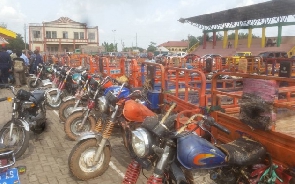 Photo of parked tricycles