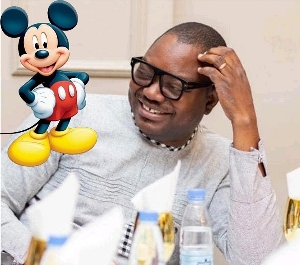
Legal practitioner, Austin Kwabena Brako-Powers, has weighed in on the growing global debate on reparations for the transatlantic slave trade, arguing that while the issue carries undeniable moral weight, it faces significant legal challenges.
In a Facebook post on Friday, March 27, 2026, he acknowledged the brutality of the slave trade, describing it as one of history’s darkest periods, marked by the suffering and dehumanisation of millions of Africans.
However, he cautioned that moral outrage alone may not be enough to sustain legal claims for reparations under international law.
“International law operates on the principle that conduct can only be judged based on the legal framework that existed at the time it occurred,” he explained.
According to him, one of the biggest hurdles is the principle against retroactivity, which prevents modern legal standards from being applied to actions that were not considered illegal at the time.
He noted that during the era of the slave trade, there was no comprehensive international legal framework banning slavery or the trade of enslaved people.
Brako-Powers also pointed to the recent resolution by the United Nations General Assembly recognising the transatlantic slave trade as a crime against humanity, describing it as an important moral statement, but one that does not automatically create enforceable legal rights to compensation.
He argued that positions taken by countries such as the United States, Israel, and Argentina in rejecting reparations-based interpretations of the resolution can be understood from a strict legal standpoint, even if they remain controversial.
For him, the key issue is the need to separate moral justice from legal responsibility, warning that blending the two could create difficult precedents in international law.
While he acknowledged that the legacy of slavery continues to shape global inequalities today, he suggested that efforts to address its impact may be more effective if they focus on forward-looking solutions, such as development partnerships, policy reforms, and institutional change, rather than relying solely on legal claims rooted in the past.
NA/VPO
Why UK and Netherlands, Ghana’s colonial masters, didn’t support resolution on slavery
General News of Friday, 27 March 2026
Source: www.ghanaweb.com
Reparations call legally flawed - Brako-Powers
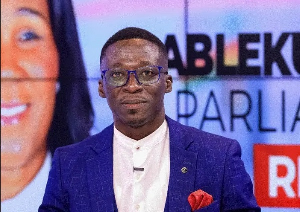 Legal practitioner, Austin Kwabena Brako-Powers





Opinions