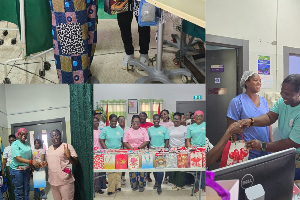
The Coalition of Parliamentarians to End Malaria in Africa (COPEMA) has concluded its two-day regional meeting in Accra, calling for formal government recognition across Africa.
Comprising parliamentarians from 11 High Burden High Impact (HBHI) countries, COPEMA seeks to strengthen collaboration between policymakers and national malaria control programmes and equip parliamentarians for effective advocacy.
The meeting aimed to validate COPEMA’s structure and strategic plan while promoting malaria prevention efforts.
Njume Peter Ambang, COPEMA Co-Chair and Founding Member, said the call formed part of their agreement on malaria elimination, dubbed the “Accra African Parliamentarian Declaration on Ending Malaria in Africa.”
“As we are going back to our various countries, we are going to cause our governments to recognize and to work in very close collaboration with COPEMA.
“Together we’ll be able to create and build synergies to gain funds locally and from international donors in the fight against malaria,” Ambang stated.
As part of the 2025 World Malaria Day, Ambang outlined key declarations from the meeting to prioritize malaria on national agendas.
These declarations include fostering a multisectoral approach, increasing national health budgets, driving malaria policy implementation, and promoting private sector engagement.
The coalition also seeks to mobilize additional domestic resources, collaborate with national malaria control programmes, and raise awareness among peers and constituents.
He said COPEMA had resolved to establish branches in member countries to foster collaboration with civil society organizations, local councils, and the business community.
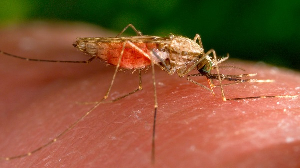
According to the World Health Organization’s 2024 Malaria Report, malaria affected 263 million people and caused approximately 597,000 deaths globally in 2023.
The African region was most impacted, accounting for 95 per cent of fatalities, with children under five representing 76 per cent of the lives lost.
Ambang said these losses could be prevented through financial investment and political commitment.
“We are going back to our various countries with the engagement and commitment to involve our governments to prioritize funding for malaria.”
“We cannot be relying on other donors only. We have to take appropriate measures to improve funding domestically to end malaria,” he emphasized.
Ambang noted that budget implementation and lack of coordination across African countries were key challenges in malaria eradication.
“So, we are also determined to go back and to work in synergy with civil society organizations, with the councils, local councils, and even the business community to attain better results.”
Despite challenges ahead, Ambang said the coalition remained optimistic.
He urged parliamentarians in and outside Africa to join COPEMA in eliminating malaria.
HBHI countries include Burkina Faso, Cameroon, the Democratic Republic of Congo, Ghana, India, Mali, Mozambique, Niger, Nigeria, Tanzania, and Uganda.
The Regional Strategic Meeting, held from Monday to Tuesday, sought to strengthen continental partnerships between policymakers and malaria control programmes with parliamentarians leading advocacy efforts.
The event was held in collaboration with the National Malaria Programmes of Ghana, Afrika Kwanza Health Impact, Hope for Future Generations, Global Fund, Africa CDC, WHO, the Pan African Parliament, and the RBM Partnership to End Malaria.
Health News of Wednesday, 30 April 2025
Source: GNA
Regional Malaria Coalition seeks government backing after Accra talks
 File photo




Entertainment