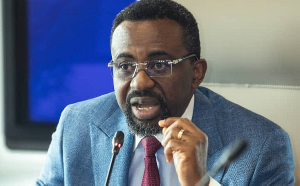
Professor Appiagyei-Atua, the Regional Director of the Africa Coalition for Academic Freedom (ACAF), has stated that academic freedom is critical to solving the pressing challenges of African societies, and media professionals have a key role in defending it.
Speaking at a one-day training workshop for journalists in Accra, Prof Appiagyei-Atua emphasized that knowledge is not produced only in universities but also in classrooms, research institutions, and the media.
“That knowledge must be protected and allowed to thrive if we are to solve societal problems and support democratic development,” he noted.
Organized by ACAF, the workshop brought together journalists from across Ghana to explore how the media can help champion academic freedom, a principle that underpins democratic governance, human rights, and sustainable development.
Participants engaged in discussions on legal frameworks, human rights perspectives, and the practical roles journalists play in safeguarding academic environments from political and institutional threats.
Prof Appiagyei-Atua highlighted that academic freedom intersects with freedom of expression, making it essential for media practitioners to understand and advocate for its protection.
“Where one is under threat, the other is likely to follow. That’s why our efforts must be connected,” he stated.
He also explained that ACAF documents violations of academic freedom and relies heavily on media reports to guide its advocacy strategies.
He pointed to contradictions in Ghana’s constitution, particularly in the appointment of university governing councils, as one of the ongoing challenges.
“Under Article 70, the President appoints members of university councils, but this contradicts Article 195, which grants that power to the institutions.
"This undermines institutional autonomy,” he explained.
Appiagyei-Atua explained the links between academic freedom and various categories of human rights, from civil liberties to social and cultural rights, arguing that academic freedom functions as both a negative and positive right.
He also referenced the Kampala Declaration of 1990 as a foundational document for academic rights in Africa, which ACAF is currently working to update.
Zakaria Musah Tanko, a lecturer at the Ghana Institute of Journalism (UNIMAC-GIJ), described journalists as “educators and watchdogs” who must be well-versed in academic freedom.
“A free academic environment fosters innovation and national development,” he said, urging the media to take a deeper interest in reporting issues such as censorship, research restrictions, and political interference.
Jeorge Wilson Kingson, Executive Secretary of the Private Newspaper Publishers Association of Ghana (PRINPAG), said the workshop was timely.
“This groundbreaking movement seeks to champion academic freedom, protect intellectual autonomy, and fortify the democratic fabric of our continent,” he said.
Kofi Yeboah, General Secretary of the Ghana Journalists Association (GJA), called on journalists to go beyond surface-level coverage and pursue in-depth, investigative reporting.
“The real value lies in follow-up. Context brings clarity,” he advised, stressing that quality journalism is vital to defending freedoms.
Gloria Hiadzi, Executive Secretary of the Ghana Independent Broadcasters Association (GIBA), added, “Academic freedom is the bedrock of innovation. Without it, censorship prevails."
AM/
Meanwhile, watch GhanaWeb's tour of Odweanoma Paragliding Field below:
General News of Saturday, 26 April 2025
Source: www.ghanaweb.com
Professor Appiagyei-Atua rallies journalists to safeguard academic freedom
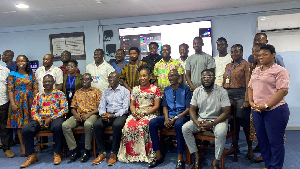 The workshop brought together journalists from across Ghana to explore how the media