The Pro Vice Chancellor of the University of Mines and Technology (UMaT), Professor Grace Ofori-Sarpong Akuffo, has underscored the crucial role of empowering women in Ghana's cocoa, petroleum, and mining value chains.
She explained that empowering women, particularly in Ghana's cocoa sector, must not only be seen as a matter of social justice but also as a strategic imperative for sustainable economic growth.
Professor Ofori-Sarpong Akuffo advocated for dismantling the systemic hurdles that have historically marginalised women, creating an environment where women can thrive, innovate, and take on leadership roles.
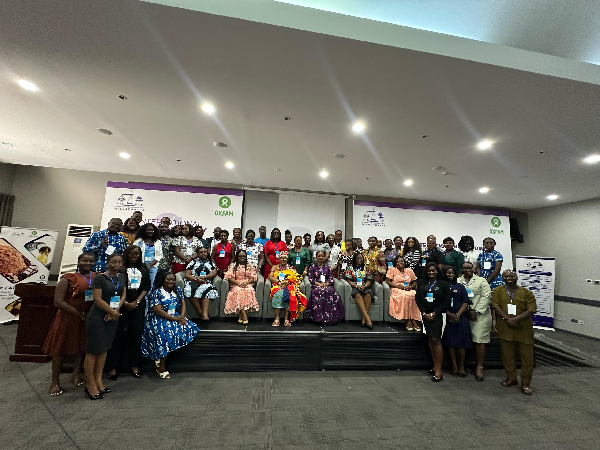
Professor Ofori-Sarpong Akuffo made the call during her keynote address at a one-day women's stakeholders' forum in Accra on March 5, 2025.
The forum, themed "Accelerate Action and Empower Excellence: Women Leading the Way in the Extractives and Cocoa Value Chains in Ghana," was organised by Women in Law and Development (WiLDAF) in Ghana, in collaboration with Oxfam in Ghana, to commemorate International Women's Day (IWD), celebrated every year on March 8. This year's IWD global campaign theme is "Accelerate Action."
The event brought together key stakeholders in the cocoa, mining, and petroleum sectors, civil society organizations (CSOs), and various women's groups. It had two key objectives: to educate participants on the linkages between Ghana's Affirmative Action (Gender Equity) Act 2024 (Act 1121) and the United Nations' Women's Empowerment Principles (UNWEPs), and to showcase the achievements and experiences of trailblazing women in Ghana's mining, petroleum, and cocoa value chains.
Professor Ofori-Sarpong Akuffo averred that women play a crucial role in the cocoa sector, with approximately 25% of cocoa farmers being women.
Despite their crucial role, she noted that women in the cocoa sector often face substantial barriers, including limited access to land ownership, credit, and technology.
"The cocoa sector, a vital artery of Ghana's economy, needs the full force of women's talent and expertise. We must dismantle the systemic hurdles that have historically relegated women to the sidelines. Let's proactively create spaces where women not only participate but thrive, innovate, and lead," she said.
She stressed the need for concrete actions, such as targeted training programs, equal access to essential resources, and challenging cultural norms and biases that perpetuate gender inequality.
According to Professor Ofori-Sarpong Akuffo, research has consistently shown that empowering women leads to increased productivity, improved resource management, and stronger communities.
While acknowledging that some gains have been made, she stated that progress was slow, hence the need to accelerate action. She therefore challenged Ghanaian women to strive, lead, and become advocates for themselves.
"We encourage women to overcome barriers, restrategize as needed, and transcend expectations to excel, even in male-dominated fields. Now is the time to rise, advocate, network, and build emotional intelligence to create a better world. Aspiring leaders must deliver, stand up, and actively drive progress," she stated.
She used the opportunity to commend CSOs like WiLDAF Ghana and Solidaridad, among others, that are already empowering women in Ghana's cocoa industry.
"By working together, we can create a more just and equitable system where women are not just participants but leaders, innovators, and drivers of sustainable development," she noted.
In her welcoming address, the National Coordinator of WiLDAF Ghana, Ms. Melody Darkey, urged women leaders in the cocoa, mining, and petroleum sectors to advocate for, inspire, and empower more women.
She stressed that women should take a more proactive role in promoting gender equality across various economic sectors, emphasizing that women must be given opportunities to make meaningful contributions to the economy.
The event featured a panel discussion and two presentations: Dr. Stephen Duku's discussion on UNWEPs in the Extractives and Agriculture Value Chain, and Ms. Becky Enyonam Ahadzi's presentation on the Affirmative Action (Gender Equity) Act, 2024 (Act 1121), focusing on the Extractives and Agriculture.
Editorial News of Thursday, 6 March 2025
Source: Ato Keelson, Contributor
Prof Ofori-Sarpong Akuffo urges action on women's empowerment
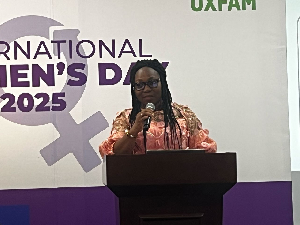 Professor Grace Ofori-Sarpong Akuffo is Pro Vice Chancellor of the UMaT