As the Pan-African community gets set for the commemoration of the 80th anniversary of the Manchester Congress, the event has been hailed as a significant milestone that should provide a reflection on alternatives for Africa and a redefinition of Pan-Africanism.
The Chairperson of the National Media Commission (NMC) of Ghana and an Associate Professor at the Department of Labour and Human Resource Studies of the University of Cape Coast, Professor Akua Opokua Britwum, said the commemoration also provides the opportunity for the continent to write the new Panafrican history.
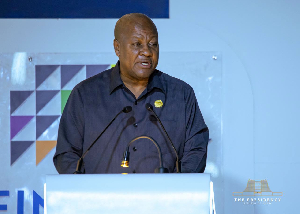
She said that while the 5th Manchester Congress in 1945 was attended by the first panafricanist activists such as Dr Kwame Nkrumah, George Padmore, and WEB Dubois, the 80th anniversary will be led by people having real leadership positions, including Ghana’s President, John Dramani Mahama, and other Presidents and dignitaries, marking a significant development since the Manchester Congress.
Giving an interview, the researcher with deep academic insight on historical labour developments and Pan-African activism, Prof Britwum, said the Manchester Congress of 1945 was the actual catalyst for the Pan-African struggle for independence, racial equality, among other rights.
The International Conference of Pan-African Progressive forces commemorating the 5th Pan-African Congress will be held in Accra, the capital of Ghana, from November 18 to 19, 2025, on the theme, "From Historical Memory to Economic and Political Justice."
It will be climaxed by the signing of the Accra Declaration, a document that will project Africa’s interests and demands in respect of reparations for colonization and slavery, and other issues.
The historic event is being organized by the Pan-African Progressive Front (PPF), an international non-governmental organization with headquarters in Accra.
Prof Britwum said there had been several meetings in the Panafrican struggle pioneered by Henry Sylvester Williams, a lawyer from Trinidad, and others around the beginning of the 20th century, but the turning point was the Manchester Congress in 1945 because of the personalities involved.
She said the involvement of Dr Kwame Nkrumah of Ghana, Peter Abrahams of South Africa, Jomo Kenyatta of Kenya, among other early-day activists known on the African continent and African labor unions, including the farmers’ association, marked a significant change from the previous meetings.
“The fifth Manchester Congress was the turning point because of the heavy representation from the continent of Africa. It had Africans from Africa. Trade unionists, farmers’ organisations, students, among others, were well represented,” Prof Britwum said.
Coming at a time when both political and economic conditions were dire on the continent, she said the event became a rallying ground to escalate growing Panafrican mobilization for the common objective.
At that point, what was started by Henry Sylvester Williams, HA Nurse, and other Africans in the diaspora around 1900, had been inherited by a new generation of Pan-Africanism activists who believed in equal rights, Africans’ capability to manage their own affairs, and the need to rid the continent of foreign influences, including military troops.
“The initial four conferences were elitist. They thought they could mobilise from among them,” Prof. Britwum said.
She said it was at the fifth congress in Manchester that the group drafted a resolution that demanded, among others, independence from British and French rule in Africa, the removal of foreign troops from the continent, and the right to vote for blacks in America, with Kwame Nkrumah a central figure in the drafting of the resolution.
“There was an ideological clarity that Nkrumah had that others did not have. You talk of the demand for immediate independence for African nations, while others talked about a gradual process,” she said.
Prof Britwum, however, maintains that Panafricanism in today’s context demands frank discussions about credible leadership in Africa, and alternatives to the adopted governance structures that have yielded little development in foreign territories.
“The standard liberal democracy has not yielded the desired results, at least, in Africa,” she said.
Prof Britwum is among the prominent African scholars and activists who will take part in the conference.
Others are Comrade Irvin Jim, General Secretary of the Metal Workers Union of South Africa; Chairperson of the National Media Commission; Dr Gamal Nasser Adam, former Vice President of the Islamic University College, Ghana; and Joe Ajaero, General Secretary of the Nigeria Labour Congress.
The impressive gathering is also expected to attract delegates from over 50 African and Caribbean countries, including political parties, trade unions, youth and women’s organisations, student movements, and mass-based civil society groups.
They will have to work out the political and economic programs of the pan-African progressive forces that will determine the overall development of Africa for the decades to come.
General News of Tuesday, 21 October 2025
Source: Edmund Addo, Contributor
Pan-Africanism needs fresh thinking – Prof Britvum at 80th Manchester Congress anniversary
 Professor Akua Opokua Britwum is the Chairperson of the NMC