The University of Essex in the United Kingdom, in collaboration with the Office of the Head of the Local Government Service (OHLGS), hosted a one-day workshop focused on integrating child maintenance tools into Ghana’s Social Welfare Information Management System (SWIMS).
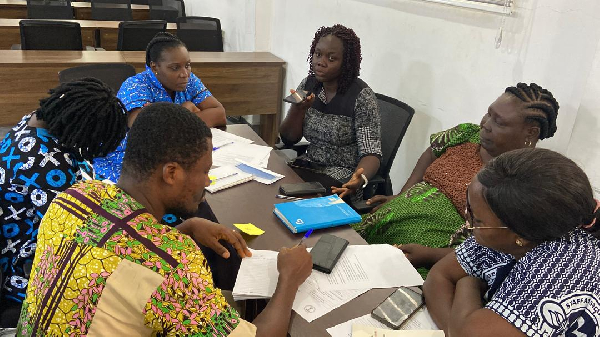
Held on April 11, 2025, at the Institute of Local Government Studies in Ogbojo–Madina, the workshop brought together selected officers from the Department of Social Welfare across the Greater Accra, Ashanti, and Northern Regions.
Themed "Exploring the Potential of Embedding the Child Maintenance Assessment Tool (CMAT) into a National Web-Based Case Management System," the event aimed to evaluate how social welfare professionals utilize SWIMS in managing child maintenance cases and to explore opportunities for improving the system based on practitioner feedback.
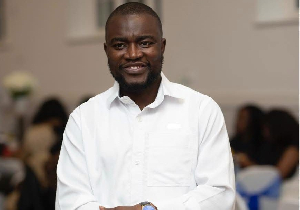
Speaking at the event, Brian Tsikpor, Acting Director for Research, Statistics, and Information Management at OHLGS, emphasized the ongoing research collaboration with the University of Essex.
He stated, “Since 2015, we have operated the SWIMS platform, built on the ISS system. Last year, the research team focused on the child maintenance checklist, and we are now looking at integrating these components into SWIMS.”
SWIMS, the Social Welfare Information Management System, is a digital platform used by the Department of Social Welfare to manage case records from the point of identification through follow-up and resolution.
According to Tsikpor, the workshop was designed both to refresh and train social welfare officers on the new child maintenance components of the system.
Abena Dufie Akonu-Atta, Head of Monitoring and Evaluation and National Case Manager for SWIMS at the Department of Social Welfare, underscored the importance of the workshop.
“This initiative, funded by the University of Essex and supported by OHLGS, allows us to reflect on the experiences of frontline social workers using SWIMS, particularly in managing child maintenance cases,” she said.
Touching on child abuse, Abena emphasized the importance of a coordinated, multi-agency approach in protecting vulnerable children.
“In Ghana, we say no to abuse,” she stated. “When we identify a case, we don’t work in isolation. We collaborate with key partners such as the Ghana Police Service’s DOVVSU unit, Ghana Health Service, the Judicial Service, and others including Traditional Authorities, FBOs, CSOs, and NGOs to ensure that the child’s best interest is always at the center of every intervention.”
The research is led by Dr. Ebenezer Cudjoe (University of Essex), along with Professor Kwabena Frimpong-Manso (University of Ghana), Dr. Alhassan Abdullah (Charles Sturt University), and Dr. Yu Zhao (University of Essex), building on earlier work examining child maintenance assessment tools.
This workshop marks the second phase of the project, focusing on incorporating the CMAT into SWIMS and gathering firsthand accounts from social welfare officers using the system. In a presentation, Dr. Ebenezer Cudjoe stressed the need for the co-produced Child Maintenance Assessment Tool (CMAT) to standardize the assessment of such cases.
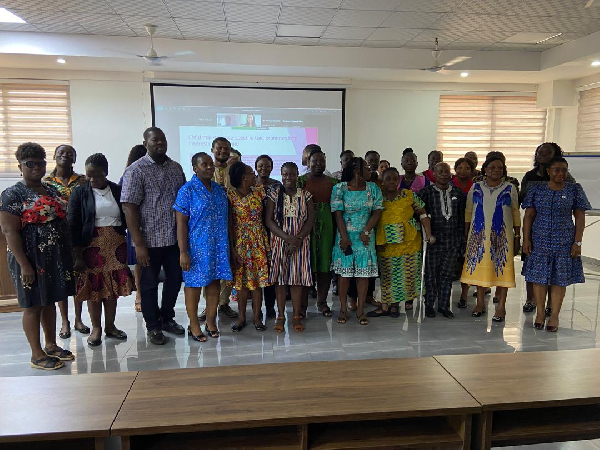
Among the 25 participants were district officers from the Greater Accra, Ashanti, and Tamale Metropolitan, Municipal, and District Assemblies (MMDAs).
Discussions centered on practical experiences in managing child maintenance cases before and after the introduction of SWIMS, challenges faced in using the system, opportunities for improvement, and feedback on the co-produced CMAT.
Elijah Mensah, a social welfare officer from the Accra Metropolitan Assembly, said the workshop offered a valuable platform for knowledge exchange.
“We’re focusing on child maintenance and SWIMS, a work-based tool. This workshop gives us confidence that, with consistent use, SWIMS can offer reliable data to inform national resource allocation,” he said.
He also highlighted systemic challenges, noting, “In other countries, a social welfare officer is even more powerful than the police. But here, we’re not given enough recognition. The government should empower and adequately resource the Department of Social Welfare and its workers.”
Love Amoaben, a caseworker from the La Nkwantanang Municipal Assembly, appreciated the workshop’s practical components.
“Listening to others’ experiences helped me. It also improved how I enter data into SWIMS, which is regularly updated,” she shared.
AM/
Meanwhile, watch GhanaWeb's tour of Fort Victoria and the Cape Coast Lighthouse below:
General News of Wednesday, 16 April 2025
Source: www.ghanaweb.com
OHLGS partners University of Essex to host a workshop on strengthening child maintenance through SWIMS
 This workshop marks the second phase, focusing on incorporating CMAT into SWIMS