General News of Thursday, 26 March 2026
Source: www.ghanaweb.com
President Mahama signals next move after UN reparatory justice victory

President John Dramani Mahama has outlined a new roadmap for reparatory justice following a landmark UN vote.
He asserts that the focus must now shift to securing reparations and formal apologies, ensuring the global recognition of slavery as a crime against humanity translates into meaningful justice.
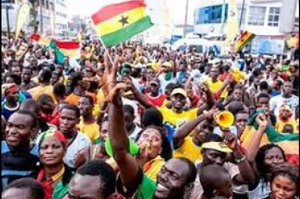
Breakdown of Vote on Ghana’s UN Slavery Motion: The countries who voted no and 53 who abstained
Speaking at an event after the vote in a video shared by the Media Relations Officer for the Foreign Affairs Ministry, Fred Duhoe, on March 25, 2026, the President expressed appreciation for the overwhelming support for reparatory justice; a concept that largely bothers on the sensitive subject of human rights.
“Our ancestors must be rejoicing in their graves and all the torture and adversity they went through; they must be happy that this day the world has recognised that they are not forgotten and that the pain they went through and the torture they went through has been recognised by the United Nations, the world's highest body that we all ascribe to,” he said.
According to him, the successful push for the recognition is a moment of justice not only for the country but for the entire African continent and people of African descent.
The President attributed the victory to the ancestors, indicating that prior to the vote, Ghana’s delegation paid homage at the African burial grounds, performing a series of spiritual rites to seek guidance and support.
“Before we went to the UN today, we went to the African burial grounds and we all know the history behind the African burial grounds. We said Christian prayers, we said Muslim prayers, we said traditional African prayers, we poured libation and called on our ancestors to stand behind us in what we are going to do today and today I think that they answered our call and we achieved success,” he added.
Mahama, however, cautioned that the victory marks only the beginning of a broader struggle for justice, particularly in the area of reparations.
“But this is not the end, this is the beginning. What we've achieved today creates a platform for the struggle for reparatory justice and so we must not rest because we have achieved this success,” he stated.
He further urged sustained global collaboration to ensure that the historical injustices of slavery are not denied or erased.
“We must take this success and begin to work so that those who deny their ancestors their humanity, those who deny their ancestors their dignity, can accept the truth that this is what happened. The revisionists and all those who would seek to erase them out of the footnotes of history, today we've accepted that this was a grave crime against humanity, the gravest indeed,” he noted.
Why US voted against Ghana’s resolution to declare slavery a crime against humanity
According to him, the next phase of the struggle must focus on concrete outcomes, including reparations, justice, and formal apologies.
“And that the next steps in terms of reparations, in terms of justice, in terms of apology, are what we need to work on and we need to keep this coalition. We can't achieve it alone. This victory is not for Ghana, we did it for the whole Africa and all people of African descent,” Mahama emphasised.
MAG/VPO
Tension in UK Parliament over Ghana's slavery reparations push at UN