A Ranking Member of Parliament’s Health Committee, Nana Ayew Afriye, has described as mischievous the assertion by President John Dramani Mahama that the current administration has introduced prompt payments to National Health Insurance Scheme (NHIS) service providers.
According to the Effiduase-Asokore legislator, the claim creates the false impression that the previous administration had defaulted in payments to service providers under the National Health Insurance Scheme.
Contributing to the debate on the State of the Nation Address delivered in Parliament, Dr Ayew Afriye insisted that the previous government under Nana Addo Dankwa Akufo-Addo had maintained regular payments to health service providers.
He explained that by the time the government handed over power, payments to NHIS service providers had been settled up to October.
He added that records from the NHIS accounts showed that adequate funds had already been set aside to clear the remaining months.
“As at the time the NPP administration was leaving office, the NHIS account had in excess of one billion cedis.
On average, about GH¢220 million is paid to service providers every month.
This means that funds covering the remaining four months were already available in the account for payment,” he noted.
The ranking member therefore argued that the current government merely processed payments using funds that had already been secured by the previous administration.
His comments come in response to remarks by President Mahama in his State of the Nation Address, where the President indicated that his government was ensuring prompt payment of NHIS claims to service providers, unlike the previous administration which he said delayed payments for over five months.
Meanwhile, watch GhanaWeb’s exposé on the 'dark side of Kayamata' and its devastating impact
Health News of Friday, 6 March 2026
Source: www.ghanaweb.com
Mahama's claim on NHIS prompt payments misleading – Nana Ayew Afriye
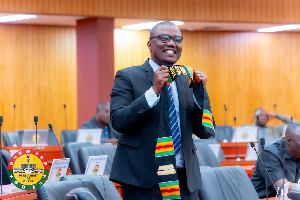 Ranking Member of Parliament’s Health Committee, Nana Ayew Afriye