The Online Publishers Association of Ghana (OPAG) has learnt with apprehension of the attempt to carry through with the Misinformation, Disinformation, Hate Speech and Publication of Other Information (MDHI) bill by the government.
The proposed bill, while it aims at curbing misinformation, disinformation, and harmful publications, does not only present significant risks for journalists but also a threat to free speech within the media ecosystem.
The definition of misinformation — “the publication of false or inaccurate information regardless of the intention to mislead” — is overly broad and ambiguous.
By ignoring intent, it could penalise honest reporting errors, discourage investigative journalism, and encourage self-censorship, undermining the media’s watchdog role.
The definition of disinformation — “the publication of false or inaccurate information intended to mislead, manipulate, or guide people in a particular direction” — is narrower, but its vague terms, such as “manipulate” and “guide people,” could still allow authorities to misinterpret critical or investigative reporting as disinformation, particularly on politically sensitive matters.
This also contributes to potential self-censorship and limits the diversity of public discourse.
It is important to state that Ghana's current legal framework, including the 1992 Constitution, the Defamation Act, the Criminal Offences Act, and the Electronic Communications Act, already provides adequate mechanisms to safeguard privacy, promote responsible speech, and prohibit hate speech.
Therefore, this MDHI Bill only comes to aggravate the suffocation of journalists which already exists.
OPAG would, however, like to advise the government that instead of relying on censorship and punitive measures, it should rather focus on promoting digital literacy and fact-based information by partnering with CSOs in the online space, such as OPAG and others, to build the capacity of members.
By doing so, practitioners in the space can be empowered to make informed decisions and effectively navigate the complex information landscape.
OPAG, in view of the aforementioned, would like to appeal to the government to reconsider its decision on the Bill, as it would do more harm than good to Ghana’s fledgling democracy.
It is our considered view that any bill aimed at criminalising misinformation and disinformation would be a significant threat to free speech and expression.
We want to assure the government of our unwavering commitment to whip our members in the online space into line and adhere to the tenets of the practice anchored by good faith and professionalism.
Regional News of Monday, 3 November 2025
Source: Michael Mawugbe, Contributor
MDHI Bill will stifle free speech; government must re-consider it - OPAG President
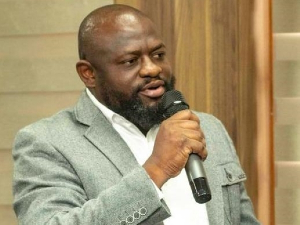 OPAG President, Michael Petit Mawugbe




Entertainment