The Lower Manya Krobo Municipal Assembly in the Eastern Region has approved its 2027 Annual Action Plan, containing 114 programmes and projects aimed at addressing development needs across the municipality.
The plan, prepared by the Municipal Planning Coordinating Unit (MPCU) as part of the Assembly’s Medium-Term Development Plan for 2026–2029, was approved at the Assembly’s sitting on Tuesday, September 29, 2026.
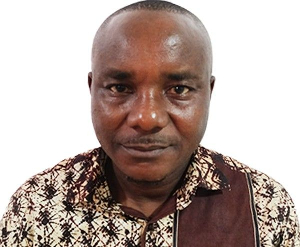
The meeting was attended by the Municipal Chief Executive (MCE), John Atter Matey, Municipal Coordinating Director, heads of departments, Assembly members and representatives of institutions.
Presiding Member George Lawer Amatey, who is also the Assembly Member for the Akutue Electoral Area, said the 2027 plan brought together activities of the various departments and would be funded through sources including the District Assemblies Common Fund (DACF), Internally Generated Funds (IGF), Government of Ghana allocations and support from development partners.
He, however, said the Assembly could not categorically confirm that adequate resources would be available to finance all the activities.
He expressed hope that the approved plan would translate into tangible projects and services for residents during 2027.
One of the major projects captured in the plan is the completion of the 24-Hour Economy Market at Kpong, estimated at GH¢36.62 million.
The Assembly also plans to undertake several education projects, including the provision of 600 octagon tables and chairs for kindergarten pupils, 750 dual desks for public primary schools, 1,083 mono desks for junior high schools and 570 mono desks for senior high schools.
Other education projects include the completion of a two-storey, six-unit classroom block at Mount Mary Demonstration Basic School at Atua, construction of classroom blocks at Kpong West and Methodist Basic School at Agormanya, and rehabilitation of selected basic schools.
The Executive Committee has further recommended that the 2027 Composite Budget make provision for the renovation of old school buildings and, where necessary, the construction of new facilities.
In the health sector, the Assembly plans to complete CHPS compounds at Amedeka, Partehunya, Abusakorpe and Okwenya, construct a new CHPS facility at Odumase and renovate the Kpong West CHPS compound.
The Assembly also intends to support the procurement and maintenance of health equipment, including a proposed CT Scan machine.
The Executive Committee recommended that the Agbom CHPS facility operate temporarily from the new facility at the Agormanya Market while efforts are made to secure land for a permanent CHPS compound. It also directed that the Wawase CHPS facility be fumigated to address the presence of bats.
Security emerged as another major concern during discussions on the plan.
The Executive Committee recommended that the Assembly support security agencies with logistics before, during and after the Ngmayem festival.
It also recommended the repair of faulty streetlights ahead of the festival to improve visibility at night and urged collaboration with the Small Arms Commission to educate residents on the registration and proper use of firearms.
The Agormanya Zonal Council also called for security posts at strategic points in the market, improved streetlighting and collaboration with the Police to address small ghettos within the market.
On roads and drainage, the Assembly plans to reshape, grade and patch community and town roads, construct and repair drains, culverts and footbridges, and dredge selected channels.
Assembly members, during discussions, raised concerns about road safety and the need for adequate resources to address dangerous routes and other infrastructure challenges.
The plan also targets an increase in sanitation coverage from 73 per cent in 2025 to 100 per cent by December 2029.
Measures include household toilet enforcement, market sanitation, food vendor screening, solid and liquid waste management, regular dislodging of public toilets and the provision of sanitation equipment.
The Executive Committee has urged the Assembly to work with NGOs to support communities in constructing household toilets. It also recommended collaboration between Environmental Health Officers and YEA Community Police Officers to strengthen enforcement of food vendor registration and screening.
The Assembly further plans to construct and maintain boreholes, with the Executive Committee recommending partnerships with NGOs to repair broken facilities.
Electricity coverage is targeted to increase from 82 per cent to 100 per cent by December 2029, while streetlighting and extensions to underserved communities are also included in the plan.
The Zonal Councils called for capacity building for their members, renovation of the Akuse Zonal Council office and public education to encourage residents to pay taxes and tolls to the Assembly.
The Assembly also intends to strengthen revenue mobilisation, improve property data, support road safety education, maintain Assembly vehicles and enhance collaboration with security agencies.
The MCE, John Atter Matey, said implementation of some projects depended on the availability of funds and the necessary administrative approvals.
He said the Assembly would continue pursuing projects carried over from previous years while working to secure the documentation and clearances required for projects outside its direct control.
The approved action plan is therefore expected to serve as the Assembly’s principal development roadmap for 2027, subject to the availability of funds and other implementation requirements.
Regional News of Thursday, 1 October 2026
Source: www.ghanaweb.com
Lower Manya Krobo approves 114 projects for 2027 as Assembly adopts action plan
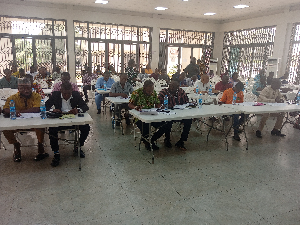 A cross section of the Assembly members