Private legal practitioner, Martin Kpebu, has expressed strong support for the impending Legal Education Bill.
This new legislation, if passed, aims to decentralise professional legal training and Bar examinations, allowing universities with accredited LLB programs to offer these services directly.
The bill, recently announced by Majority Chief Whip Rockson Dafeamekpor, was met with enthusiasm by Kpebu.
In an exclusive interview with GhanaWeb on May 29, 2025, he highlighted the extensive benefits he believes the bill will bring.
Martin Kpebu emphasised that Ghana is in dire need of more lawyers, and by empowering additional universities to provide legal training, the country will see a significant increase in the number of legal professionals.
"The Legal Education Bill has finally arrived after considerable sensitisation aimed at breaking the monopoly of the Ghana School of Law, also known as Makola, in training lawyers.
"So, basically, it has the potential of increasing legal education. When you increase that, we will get more lawyers. We need more lawyers because Ghana, being a developing country, has a lot of activities that require the services of lawyers," he added.
He further lamented the current shortage, which has created a significant gap in legal representation, particularly in rural areas.
"Currently, we don't have enough lawyers to take care of some of these transactions, etc. It's very serious because there are many communities in Ghana that don't have a single lawyer resident there at all. In my own village, I donuh't remember any lawyer being resident there. In case of anything, when they need to rush and get a lawyer, there would be none," he lamented.
When asked if lawyers avoid rural communities due to a lack of amenities, Martin Kpebu acknowledged it as a factor but proposed a solution.
He suggested that as the number of lawyers increases, some could operate from neighboring cities and travel to serve these communities.
"It's a mix of the two. If we talk about amenities, if the lawyer is not going to be present, then it should be possible for the lawyer to drive to those communities to offer consultations. It is just like a medical clinic," he explained.
Drawing inferences from how medical clinics operated, Kpebu added, "He can travel to the community to work the whole day or for hours and then go back to his city in the evening. If you live in Madina and drive to Accra to work, it's more or less like 8 kilometers. It is the same as if you’re stationed at Nkawkaw and say I drive further to the hinterland for about 10 km, to offer services. So, when our numbers increase, we will go into the hinterlands to serve even the deprived communities."
VPO/EB
After the heavy rains over the weekend, a lot of debris have been left across many parts of Accra. Watch some of the destructions below:
General News of Sunday, 1 June 2025
Source: www.ghanaweb.com
Legal Education Bill: It is a welcoming development – Martin Kpebu
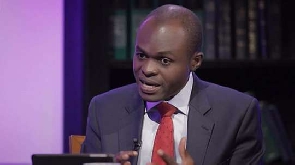 Martin Kpebu, Private legal practitioner