Environmental Civil Society Organisations (CSOs) in a presser have revealed that the revoked Legislative Instrument (L.I) 2472 exposed up to 89 percent of the country’s forest reserves to mining.
L.I 2462 is the Environmental Protection (Mining in Forest Reserves) Regulation, 2022. It was a Ghanaian law passed on 23rd June, 2022, that permitted mining in forest reserves, if authorization is giving by the president.
After sparking up major environmental backlash, this regulation was officially revoked in December, 2025, banning mining in protected forest areas and nullifying all permits granted under it.
Before the introduction of L.I 2462, mining was allowed in only two percent of gazetted production forest areas — while the remaining 98 percent were legally protected from mining, according to them.
“Under L.I 2463, the protection of forest reserves was significantly weakened. Forest reserves, including Globally Significant Biodiversity Areas, were opened to large-scale mining activities,” they stressed.
The group also indicated that the regulation undermined sustainable forest management and contradicted the Forest Development Master Plan (2016–2036), which seeks to phase out mining in forest reserves by 2036.
It also weakened forest governance and conflicted with the country’s international environmental commitments, including the Paris Agreement and the Convention on Biological Diversity.
Data cited by the CSOs indicates that more than 50 out of the country’s 288 forest reserves came under intense pressure from mining activities when the regulation was in force.
Although there was an amendment in 2025, the risk remained high and 80 percent of forest reserves were still considered vulnerable to mining activities according to them.
CSOs including Coalition Against Galamsey- Ghana; Taylor Crabbe; A Rocha Ghana; Client Earth; Kasa Initiative Ghana; Civic Response; Eco-Conscious Citizens; Ghana Institute of Foresters; BRACE; Ghana Environmental Advocacy Group; Nature and Development Foundation; General Transport; Petroleum; Wacam; Chemical Workers’ Union of TUC (Ghana); OXFAM; Peasant Farmers Association; Christian Council of Ghana and SDG Civil Society Platform Ghana are pleased with the revocation, and described it as a major step toward restoring the integrity of Ghana’s forest reserves.
However, they have warned that threats to forests still persist and called on government to take further actions, including the review of Act 703 to explicitly ban mining in mining forest reserves.
General News of Tuesday, 23 December 2025
Source: thebftonline.com
L.I. 2462 exposed 89% of forest reserves to mining - CSOs
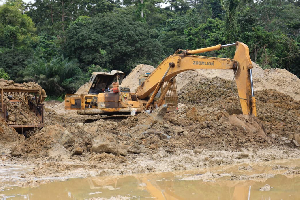 L.I 2462 is the Environmental Protection (Mining in Forest Reserves) Regulation, 2022








Opinions