Dr Joseph Siaw Agyapong, owner of the Jospong Group of Companies, has denied obtaining any supply contract from the Ghana Cocoa Board (COCOBOD).
He had been linked to a jute sack supply contract reportedly valued at US$48 million.
Speaking to The Herald in a phone interview, Agyapong said that for the past 25 years he had had no dealings with COCOBOD, including the supply of jute sacks for bagging cocoa beans.
Agyapong called for a thorough investigation into COCOBOD’s records to confirm whether he had engaged in any such dealings.
He also said he had neither been contacted nor received any written communication regarding any investigation connected to COCOBOD following the queries raised by the Ghana Audit Service after examining the Board’s accounts relating to transactions undertaken during the administration of Joseph Boahen Aidoo.
The audit reportedly examined a GH¢32.9 billion debt left behind by the immediate past management.
Insiders say attempts by the auditors to obtain responses from Mr Boahen Aidoo’s team have proved futile, compelling the current management to refer some of the alleged infractions to the Economic and Organised Crime Office (EOCO) for criminal investigation and possible prosecution.
Dr Siaw-Agyapong, who was mentioned as one of the suppliers, particularly in relation to jute sacks, told The Herald that although he owns a jute sack factory, the facility has been idle and is currently not in production.
Meanwhile, the current Chief Executive Officer of COCOBOD, Dr Randy Abbey, has been explaining circumstances surrounding the US$48 million jute sack contract, which he said was signed in December 2024 despite the existence of 110,000 unused bales.
Dr Abbey described the award of the contract as a clear act of recklessness that has worsened the financial challenges facing the Board.
Speaking on Joy News’ PM Express Business Edition on Thursday, June 5, Dr Abbey expressed shock at how COCOBOD was managed under the Akufo-Addo administration.
“I’m sure you’ve heard about the jute sacks,” he told host George Wiafe, without disclosing the names of the suppliers.
“They issued an irrevocable letter of credit for $48 million in December 2024, when the documents show that they had already imported jute sacks and that more than 110,000 bales had remained uncleared for three years.”
Despite the existing stockpile of unused sacks, COCOBOD still proceeded to award another contract for 80,000 bales valued at $48 million.
“Yet they still decided to award a contract for 80,000 bales of jute sacks,” Dr Abbey stressed.
“They also issued an irrevocable letter of credit in December 2024 on our account at the Ghana International Bank in London.”
According to Dr Abbey, some of the bales have already begun arriving, and under the terms of the irrevocable letter of credit, payment must be made once the bill of lading is presented.
“Once the bills of lading are presented to us and forwarded to the bank, by the structure of the irrevocable LC, the $48 million will be paid to the company,” he revealed. “That is how this place was run.”
Dr Abbey also painted a grim picture of COCOBOD’s current financial position.
He disclosed that the Board owes agrochemical suppliers more than $400 million. “The last time I checked, the total debt was close to GH¢33 billion,” he said.
Dr Abbey also sought to clarify widespread confusion surrounding the Cocoa Roads project, noting that many people believed the GH¢21 billion Cocoa Roads cost formed part of the GH¢33 billion debt.
“No, it is not,” he explained. “It is only GH¢4.4 billion, which represents certificates that have been raised and are currently sitting at our cash office.”
He said the amount represents work that has been executed and certified for payment.
“The others relate to contracts that have been awarded but for which certificates have either not been raised yet or the works have not been executed.”
On Wednesday, The Herald reported that former COCOBOD managers are facing mounting scrutiny after failing to respond to a series of audit queries from the Audit Service since last year.
According to sources within the current administration, the former officials declined to provide explanations regarding procurement and financial management decisions taken under the previous leadership headed by Joseph Boahen Aidoo, which reportedly left GH¢32.91 billion in liabilities when it exited office in January 2025.
The failure to respond to the audit queries has prompted the present management, led by Dr Randy Abbey, to refer some of the alleged infractions to EOCO for further investigation and possible criminal prosecution.
The Audit Service is understood to have identified serious irregularities after examining the Board’s accounts.
However, the former administration reportedly failed to respond to the queries, leaving them unresolved.
Among the key issues under review is the procurement of farm inputs and equipment worth hundreds of millions of dollars during Mr Aidoo’s tenure.
These included slashers, pruners, jute sacks, insecticides, fertilisers, solar lanterns, and Wellington boots, which were ostensibly distributed free of charge to cocoa farmers.
Sources indicate that some of the items, particularly the slashers and pruners, were rejected by farmers, who reportedly considered them unsuitable and instead preferred to use traditional cutlasses, suggesting that little due diligence had been conducted prior to their procurement.
The current administration has also disclosed that it inherited debts exceeding GH¢32 billion from the previous management.
It is further alleged that although the audit queries were initially raised, there was little effort to compel the former officials to respond before the matter was escalated.
Government officials were reportedly divided over whether to await responses from the individuals concerned or formally capture the issues in the Auditor-General’s report for submission to the Public Accounts Committee of Parliament for scrutiny, where it would have been left within the meaningless partisan debate.
Business News of Thursday, 5 March 2026
Source: theheraldghana.com
Jospong rejects claims of involvement in US$48m COCOBOD jute sacks deal
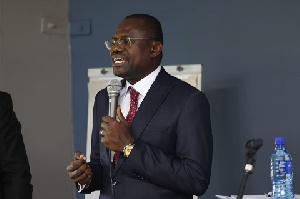 Dr Joseph Siaw Agyapong, founder of Jospong Group of Companies



![A file photo of the private jet [Image Credit: Yaw Pare via Facebook]](https://cdn.ghanaweb.com/imagelib/pics/153/15348139.295.jpg "A file photo of the private jet [Image Credit: Yaw Pare via Facebook]")