The leadership of Jehovah’s Witnesses has announced a significant shift in its medical doctrine, now permitting members to have their own blood collected, stored, and re-administered during surgical procedures.
While this update marks a major change in how the organization handles "autologous" (self-donated) blood, the core prohibition against receiving donated blood from others remains strictly in place.
According to a graphic.com.gh report on March 21, 2026, Gerrit Losch, a member of the group’s Governing Body, announced the policy change, emphasising a move toward individual responsibility.
Why JJ Rawlings banned Latter Day Saints and Jehovah Witnesses in 1989
"Each Christian must decide for himself how his blood will be used in medical and surgical care," Losch stated.
Historically, the religious movement, which claims nine million members globally and 144,000 in the UK, has maintained that both the Old and New Testaments command believers to "abstain from blood."
This has led to decades of complex legal and medical battles over life-saving interventions.
Despite the update, some former members and medical advocates argue the policy does not address the most dire clinical scenarios.
Come Let Us Reason: Jehovah’s Witnesses And Blood
Mitch Melon told the LA Times that the new rule offers little help in unpredictable crises.
"If one of Jehovah's Witnesses faces a medical emergency with significant blood loss, or if a child requires multiple transfusions to treat certain types of cancers, this policy change does not grant them complete freedom of conscience to accept potentially life-saving interventions involving donated blood," Melon argued.
The policy change follows high-profile legal clashes between religious freedom and medical necessity.
The Edinburgh Ruling (December 2025): A Scottish court recently intervened in the case of a 14-year-old Jehovah's Witness who refused a transfusion during an operation.
Judge Lady Tait granted an order allowing doctors to administer blood if the girl's life was at risk.
The court ruled that while the teenager's views were given "appropriate weight," the preservation of life was in the child’s "best interests."
A spokesperson for the organization clarified that this is an adjustment in application, not a change in fundamental theology.
"Our core belief regarding the sanctity of blood remains unchanged," the spokesperson noted.
Under the new guidelines, planned surgeries may now include "cell salvage" or pre-operative blood storage, but the use of a stranger's blood remains an offense within the community.
VPO/EB
General News of Saturday, 21 March 2026
Source: www.ghanaweb.com
Jehovah’s Witnesses update blood policy to allow transfusions
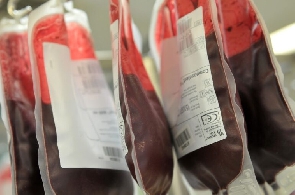 File photo of a blood bank