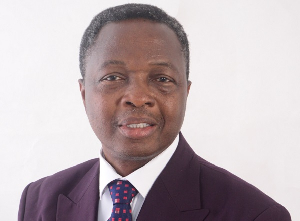
The Regional Director of Pure Earth, Rev Dr Esmond Quansah, has revealed that it could take Ghana between 10 to 15 years to restore its contaminated soils back to their natural state.
He made this remark in response to a question on how long it would take to rehabilitate Ghana’s soils and water bodies destroyed by illegal mining activities.
Pure Earth, in partnership with the Environmental Protection Agency (EPA) and the British High Commission, has launched the Mercury Impact Assessment Study Report.
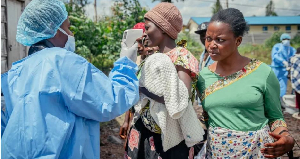
The new environmental study revealed widespread contamination from mercury, arsenic, lead, and other heavy metals across Ghana’s artisanal and small-scale gold mining (ASGM) regions.
In Konongo Zongo (Ashanti Region), mercury levels in soil reached 1,342 ppm, over 130 times the safe limit. Airborne mercury at Wassa Kayianko (Western Region) peaked at 150 µg/m³, which is 150 times above Ghana’s permissible level.
The study also found dangerous arsenic levels in nearly all regions. Soil in Konongo Zongo recorded 10,060 ppm—4,000% above safe levels—while water in Konongo Odumase showed concentrations of 3.3 mg/L, far exceeding drinking water standards.
Lead concentrations in fish from Akwaboso (Central Region) and Konongo Zongo also surpassed WHO safety limits, with some samples reaching 2.8 mg/kg. Vegetables such as pumpkin leaves in the Western North Region showed lead levels as high as 3.1 mg/kg.
Further tests detected mercury, arsenic, and lead in kontomire (cocoyam leaves), tomatoes, cereals, legumes, and tubers, with several values exceeding international food safety thresholds.
Commenting on these findings, Rev. Quansah stressed that the situation calls for urgent interventions to prevent further damage. He warned that illegal mining has created an alarming health and environmental crisis, threatening Ghana’s food security.
He assured authorities that Pure Earth is ready to provide technical support to help address the crisis.
On the timeline for restoration, he explained, “The restoration of the soil is doable. The technology is available. There are some plants we can plant, and these plants can absorb the toxins in the soils. This process, known as phytoremediation, can take between 10 and 15 years.”
He further noted that while phytoremediation is effective for soils, water bodies will require advanced cleaning technology.
“Our organization has worked on similar projects in Peru, Mexico, and Colombia. If it can be done there, it can also be done in Ghana. We are prepared to provide technical support if the government is ready to act on our report,” he added.
In a related development, Ankrah highlighted Dr. Kwame Nkrumah’s industrialisation efforts, lamenting that most of them have been abandoned or dismantled.
He cited Nkrumah’s initiatives to make Tema an industrial hub, including the establishment of the Tema Steel Works, Tema Harbour, and the Accra-Tema Motorway to boost trade and transportation.
Nkrumah also championed food processing to maximize Ghana’s agricultural potential.
This led to the creation of the Nsawam Cannery, Wenchi Tomato Factory, Pwalugu Tomato Factory, Zuarungu Meat Factory, State Distilleries Corporation, and the Komenda Sugar Factory.
Other ventures included the Abosso Glass Factory, Bonsa Tyre Factory, Kumasi Shoe Factory, and the Kade Match Factory.
Additional enterprises such as Akosombo Textiles Limited and the GIHOC Fibre Products Company supported agriculture through sack production for cocoa and other goods. Nkrumah also founded the Ghana Black Star Line Shipping Company and the Ghana Airways Corporation.
Ankrah lamented that most of these factories have been dismantled, blaming successive governments for failing to safeguard Nkrumah’s legacy.
He argued that foreign companies have since taken over Ghana’s markets, repatriating profits abroad, worsening unemployment, and leaving the nation with no sustainable solutions.
He warned that Ghana has reached a point where greed, partisan politics, and selfishness have replaced the spirit of nationalism.
Calling for continued recognition of Ghana’s first President, he insisted, “Celebrating the late Dr Kwame Nkrumah is in order and should not be scrapped. While other individuals contributed to Ghana’s independence, Nkrumah was the key figure whose efforts led to our freedom on March 6, 1957.
"Recognising his role does not undermine the contributions of others—it simply acknowledges the truth.”
General News of Tuesday, 23 September 2025
Source: rainbowradioonline.com
It will take us 15 years to restore our contaminated soils to their natural state – Pure Earth
 Regional Director for Pure Earth, Rev. Dr. Esmond Quansah