GhanaWeb Feature by George Ayisi
President John Dramani Mahama, seized with the power under Article 146(9) of the 1992 Constitution, on Monday, September 1, 2025, signed a warrant for the removal of Justice Gertrude Araba Esaaba Sackey Torkornoo as Ghana's Chief Justice.
The removal, occasioned by a petition alleging stated misconduct, has led to legal discussions about the fate of the former Chief Justice and her position as a Justice of the Supreme Court.
In the aftermath of the removal, two leading constitutional law experts and lecturers have shared divergent views on whether the former Chief Justice could still be a member of the apex Bench, following her removal as the leader of the Supreme Court and administrative head of the nation’s third arm of government.
Professor Kwadwo Appiagyei-Atua of the University of Ghana School of Law believes Torkornoo can remain a member of the Supreme Court Bench despite her removal as Chief Justice.
According to the University of Ghana professor, this position is grounded in the variance within the defined procedure for the removal of a Chief Justice and a Justice of the Supreme Court.
FULL TEXT: Daniel Ofori's 15-page petition that led to the removal of Chief Justice Torkornoo
“The case was not against her as a Justice of the Supreme Court, but as a Chief Justice. The procedure for removing a Chief Justice is slightly different from the removal of a Justice of the Supreme Court.
“As it stands now, Justice Torkornoo can go back and assume her position as a Justice of the Supreme Court,” the constitutional law expert is quoted in a report by graphic.com.gh to have said.
In direct opposition to the view of Prof Appiagyei-Atua, Albert Quashigah of the University of Professional Studies, Accra (UPSA), argues that the former Chief Justice, having been found unfit to hold office as head of the Bench, cannot remain a member of the Supreme Court.
“The question is the optics.
“The judiciary must exude confidence, so if she has been removed for stated misbehaviour, that tag follows her, making her unfit for the Bench,” the report quoted the UPSA lecturer.
Read Justice Torkornoo's full response to Daniel Ofori's petition
In a similar reasoning, the Majority Chief Whip of Parliament, Rockson-Nelson Dafeamekpor, argued that the procedure for the removal of a Chief Justice holds overbearing implications on the removal of a Supreme Court Justice.
“Since the CJ removal announcement by the Prez, the opposers have gone into overdrive, urging upon us a new genre of reasoning in constitutional law against the existing panoply of legal jurisprudence on the matter.
“Let them hear this: Art. 146 of the Constitution is a very interesting compendium of a watchdog provision on the Judiciary. The grounds for the removal of a CJ apply mutatis mutandis to the removal of a Justice of the Supreme Court. So the sudden reasoning that the dismissed CJ can continue as a Supreme Court judge is, with all due respect to those proponents, a misapprehension of Art 146," he stated.
Thus, the point of variance on the subject is the procedure for the removal of a Chief Justice and a Justice of the Supreme Court and whether an outcome of the latter does have a bearing on the former.
But what does the law say about the appointment and removal of a Chief Justice and a Supreme Court Justice?
The 1992 Constitution of Ghana provides clear guidelines for the appointment and removal of Supreme Court Justices, including the Chief Justice, as outlined in Articles 144 and 146.
The Chief Justice is appointed by the President, acting in consultation with the Council of State and subject to parliamentary approval.
Other Supreme Court Justices are appointed by the president on the advice of the Judicial Council, in consultation with the Council of State, and also require Parliament’s approval.
To qualify, a candidate must be a lawyer with at least 15 years of experience, possess high moral character, and proven integrity. Notably, the Chief Justice does not need to be a sitting Supreme Court Justice or a judge of a superior court prior to appointment.
The removal of a Supreme Court Justice, including the Chief Justice, is governed by Article 146 and is a rigorous process designed to ensure accountability, while protecting judicial independence.
Kwesi Pratt reacts to President Mahama's removal of CJ Torkornoo
A Justice can only be removed for stated misbehaviour, incompetence, or inability to perform duties due to physical or mental infirmity. The process begins with a petition submitted to the president, though the constitution does not specify who may file it.
For Justices other than the Chief Justice, the Chief Justice determines whether a prima facie case exists. In the case of the Chief Justice, the president, in consultation with the Council of State, appoints a committee to assess the petition.
If a prima facie case is established, a committee is formed to investigate. For the Chief Justice, this committee includes two Supreme Court Justices (one as chairman, appointed by the president) and three non-members of the Council of State, Parliament, or lawyers, also appointed by the president.
For other Justices, the committee consists of three Superior Court Justices or Regional Tribunal Chairmen, appointed by the Judicial Council, and two non-members appointed by the Chief Justice on the advice of the Council of State.
The removal proceedings are conducted in camera, ensuring confidentiality, and the Justice in question has the right to defend themselves, either personally or through a lawyer or expert of their choice.
The committee then submits its recommendations to the president, who must act in accordance with them.
In the case of other Justices, the recommendations are routed through the Chief Justice.
During the investigation, the president may suspend the Chief Justice on the advice of the Council of State or another Justice on the advice of the Judicial Council, as witnessed in the case of Justice Gertrude Torkornoo.
President John Dramani Mahama suspended Chief Justice Torkornoo on April 22, 2025.
This unprecedented action, the first of its kind under Ghana’s 1992 Constitution, was triggered by three petitions filed against the Chief Justice, alleging misconduct and incompetence.
The petitions, submitted by Kingsley Agyei of Shining Stars of Ghana, Assistant Commissioner of Police Ayamga Yakubu Akolgo, and private citizen Daniel Ofori, prompted President Mahama to act under Article 146, which governs the removal of superior court justices.
What Ama Governor said about ex-CJ Torkornoo's law license after her removal
Following consultations with the Council of State, President John Dramani Mahama established a prima facie case, leading to Justice Torkornoo’s suspension and the formation of a five-member inquiry committee chaired by Justice Gabriel Scott Pwamang.
The committee, which included Justice Samuel Adibu-Asiedu, former Auditor-General Daniel Yao Domelevo, Major Flora Bazaanura Dalugo, and Professor James Sefah-Dzisah, began hearings in May 2025, with Justice Paul Baffoe-Bonnie appointed as Acting Chief Justice.
The allegations against Justice Torkornoo centered on several contentious issues. One petition accused her of misusing public funds, specifically GH¢261,890 and US$30,000, for personal family trips abroad.
Justice Torkornoo countered that Judicial Service policy requires the Chief Justice to travel with a companion for security, and she returned $9,600 of a $14,000 per diem, providing receipts for the remainder.
Another petition claimed she improperly transferred cases, which she defended as routine administrative actions aligned with judicial policy.
Additionally, allegations of tampering with court records have surfaced, which the Chief Justice denied, noting that Supreme Court decisions are collective and records are managed by court staff, not individual judges.
Reports from the committee hearing indicate that the Chief Justice and her character witnesses, including former Chief Justices Sophia Akuffo and Kwasi Anin Yeboah, argued that the process lacks transparency, particularly as she was initially denied access to the petitions and the President’s prima facie findings.
Gertrude Torkornoo’s case was handled as a treason trial – Sophia Akuffo fumes
Legal luminaries such as Nana Dr SKB Asante and Sam Okudzeto, alongside the Ghana Bar Association, also testified before the committee in August 2025, defending her actions as consistent with judicial norms.
Her witnesses emphasised that her recommendation of five Supreme Court judges followed consultations with the Judiciary, Attorney General, and GBA.
Justice Torkornoo vigorously challenged her suspension, filing an unsuccessful injunction with Ghana’s Supreme Court in May 2025 and escalating the matter to the ECOWAS Court in July 2025.
Her ECOWAS suit claimed violations of her rights to a fair hearing, dignity, and fair working conditions under the African Charter, seeking $10 million in compensation and the reversal of her suspension.
The case drew international attention, with the Bar Council of England and Wales and the Commonwealth Lawyers Association urging her reinstatement prior to her dismissal.
However, government officials, including the Attorney General, Dr Dominic Akuritinga Ayine, maintained that the president’s actions aligned with the dictates of the country’s constitution and the processes for the removal of a Chief Justice.
On Monday, September 1, 2025, the investigative committee, having concluded on the first of the three petitions, submitted a report and recommendations to President John Dramani Mahama.
A few hours after receiving the report, the Minister for Government Communications, Felix Kwakye Ofosu, announced the removal of Justice Torkornoo by President John Dramani Mahama on the basis of stated misbehaviour established by the investigative committee.
Amidst public discussions and opinions about the fate of the former Chief Justice as a member of the Supreme Court, a copy of the warrant for her removal, signed by President John Mahama, has since become the answer to the subject matter.
In rather explicit language, the warrant stated that Gertrude Torkornoo has lost her position as both Chief Justice and a Justice of the Supreme Court.
“NOW THEREFORE, KNOW YE ALL MEN that I, JOHN DRAMANI MAHAMA, President of the Republic of Ghana, in pursuance of the said Article 146(9), do hereby REMOVE the said Chief Justice Gertrude Araba Esaaba Sackey Torkornoo, from the office of Chief Justice and Justice of the Supreme Court, with immediate effect from this date thereof,” the warrant dated Monday, September 1, 2025, and signed by President Mahama read.
GhanaWeb's latest documentary, Sex for Fish, that explores the plights of teenage girls in coastal communities, all in an attempt to survive, is out. Watch it below:
General News of Wednesday, 3 September 2025
Source: www.ghanaweb.com
Is Torkornoo still a Supreme Court Judge after her removal as Chief Justice?
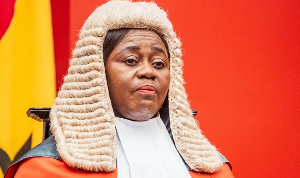 Justice Gertrude Torkornoo was removed from office on Monday, September 1, 2025