The world is, once again, celebrating International Human Rights Day and at the forefront of these celebrations is Amnesty International, a global movement of more than 10 million people in over 150 countries and territories.
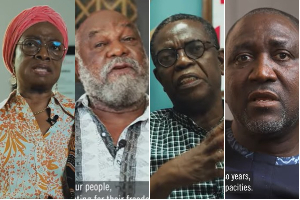
As part of its work in projecting the activities for the year, Amnesty International Ghana has produced a documentary titled, ‘Protect the Protest,’ in which it speaks with some prominent people who, historically, have been involved with protests, or whose works have concerned the protection of human rights.
One of such people is a former Chief Justice of Ghana, Sophia Akuffo.
According to her, “In law and in jurisprudence, these rights are not even considered as rights that are conferred. These are rights that is innate. You are a human being; therefore, you have the right to disagree. Because protests is what? You’re disagreeing, of course there will be parameters to exercise that.
“You cannot pick up a stick and go and bash somebody on the head because that person also has the right to life. So, any system that does not assure it and that also does not allow channels for disagreeing, that is also a huge flaw.”
Kwesi Pratt Jnr, veteran journalist and a man well-known for spearheading major protests in Ghana, explained that
“It is important to understand that leaders - national leaders, political leaders and all, always want to prevent protests. Always. And that trend continues. One of the machinations, indeed, was the introduction of the Public Order Law, which I think is an affront to the 1992 Constitution.
“The Public Order Law says that for public events, you need to give the police 5 days’ notice, the route you’re going to use for the protest, an estimate of the number of participants and so on… and when there’s a disagreement between the police and the organisers, the matter then goes to the High for determination.”
He further stated that; “There’s one particular High Court judge who actually stated in a ruling that every demonstration is potentially violent and, therefore, demonstrators need police permission to be able to demonstrate. This is a clear affront to the provisions of the 1992 Constitution.”
The documentary, which breaks down the need for protests to be encouraged as a form of human rights, also shares solutions on how they can be done effectively.
Watch the full documentary on GhanaWeb TV below:
AE
General News of Wednesday, 10 December 2025
Source: www.ghanaweb.com
International Human Rights Day: Why Sophia Akuffo, Kwesi Pratt, others believe protests are necessary



Entertainment