Professor Samuel Kweku Dadzie, an Associate Professor of Medical Entomology, University of Ghana, says technology-driven Larval Source Management (LSM) remains critical to accelerating malaria elimination in Ghana and across Africa.
He said vector-borne diseases, including malaria, posed a major public health challenge in tropical regions, noting that West Africa was no exception, adding that technology-driven intervention was key in achieving the elimination status.
Prof Dadzie was speaking at a regional workshop organised by Sora Technology in collaboration with the National Malaria Elimination Programme in Accra on the theme: “From Mapping to Action: Tech-Enabled LSM for Malaria Elimination.”
The two-day workshop brought together participants from 13 African countries to share best experiences and leverage on best practices to eliminate malaria in the region.
The countries are Ghana, Nigeria, the Democratic Republic of Congo, Uganda, Burkina Faso, Côte d’Ivoire, Cameroon, Mali, Benin, Tanzania, Ethiopia, South Sudan, and Zimbabwe.
The meeting aimed at sharing lessons learned from different countries, while showcasing Ghana’s progress in leveraging technology to support malaria elimination efforts.
It also highlighted the growing importance of LSM, particularly in the face of invasive mosquito species such as Anopheles stephensi, which thrive in urban environments and present new challenges to malaria control.
Prof Dadzie explained that LSM focused on controlling mosquitoes at their breeding stages by treating water bodies where the larvae developed, a process known as larviciding, alongside other complementary interventions.
The Medical Entomologist disclosed that Ghana began implementing the Larval Source Management about five years ago as part of the National Malaria Elimination Programme.
The initiative was fully funded by the Government, a key factor in its sustainability, he said.
Prof Dadzie said the LSM had been integrated into Ghana’s malaria strategic plan, with the programme gradually adopting innovative technologies, including drone-based mapping developed by SORA Technologies.
“One of the major challenges with larval source management has been implementation. It is very labour-intensive because people have to physically search for mosquito breeding sites,” he said.
The use of emerging technologies such as artificial intelligence (AI) and drones has transformed the process, making it easier to map breeding sites, identify mosquito habitats, and even detect mosquito species with greater accuracy, he said.
“Instead of deploying large numbers of people, drones can now be used to map breeding sites efficiently and support targeted interventions,” he added.
Dr. Samuel Kaba Akoriyea, the Director-General of the Ghana Health Service, said Ghana had made significant progress, recording 74 malaria deaths in 2024, down from 146 the previous year. Innovative interventions must be sustained and improved.
“Our National Malaria Elimination Strategic Plan for 2024–2028 is ambitious, and to achieve it, we must embrace every effective tool available, including tech-led larval source management,” he said.
Dr. Fiona Braka, the World Health Organization (WHO) country Representative, noted that vector-borne diseases continued to contribute significantly to the global burden of communicable diseases, with climate change, environmental variability, and population movement driving their spread.
She emphasised that vector control accounted for a substantial proportion of the reduction in global malaria burden since 2000 and called for data-driven, evidence-based LSM.
This includes using affordable and innovative tools such as AI, drones, and remote sensing in achieving the elimination status.
What some cocoa farmers said aboutthe government's new reforms
Health News of Friday, 13 February 2026
Source: GNA
Innovative technology remains critical to accelerating malaria elimination
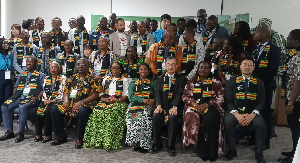 Photo of participants of the worksop