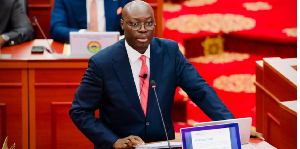
“Our focus is on giving subscribers better value and access to the entertainment they love,” says Alex Okyere, CEO of MultiChoice Ghana.
“DStv's strength is the combination of African entertainment, leading international content and unrivalled live sport in one place,” he continued. “We've reimagined our packages to better reflect how customers watch today, with tailored options specifically for general entertainment and sports fans.”
It was on the rooftop of the MultiChoice Group building in the heart of Ghana's capital, Accra.
For a moment, it felt surreal because the statement, which drew applause from attendees at the launch of the new pricing structure of Africa's biggest pay-TV platform, captured a significant shift in the story of a television brand that has spent more than three decades bringing the world into Ghanaian living rooms.
One needed to be a bourgeois to experience the excitement of international football and blockbuster movies, as well as children's entertainment and compelling African stories.
Some of these stories were ones many could not relate to. The ultimate challenge for many, however, was affordability. But in their quest to transform how Ghanaians watch television, they found an inclusive way to bring everyone closer.
From Accra to Tamale, Kumasi to Takoradi, the quality of its content has attracted loyal viewers, but subscription costs have equally attracted criticism. Customers wanted the football, the films and the family entertainment without the financial burden.
Even the strongest brands must listen, learn and adapt.
On Thursday, November 5, 2026, DStv responded with one of its biggest package overhauls, replacing six existing bouquets with four simpler, cheaper options.
The new line-up features Starter at GHC 50, Select at GHC 100, Sports at GHC 250 and Ultimate at GHC 570 monthly.
The Starter package, formerly known as Access, cost GHC 98, while the Family package was priced at GHC 188.
The decoder and dish are now available for GHC 99.
Take a step back two paragraphs above and read that again.
This is more than a price adjustment. It is a rethink of how people watch, what they want and what they can afford.
For football fans, the biggest attraction is the new Sports package. At GHC 250, subscribers can access all the football content available on DStv, including the UEFA Champions League, English Premier League, La Liga and Serie A, as well as WWE, Formula 1, Ligue 1 and more.
Previously, accessing DStv's full football offering required a Compact subscription costing GHC 563. The new arrangement represents a monthly saving of GHC 313.
The Ultimate package, meanwhile, drops from GHC 854 to GHC 570, retaining premium sporting attractions such as Formula 1, MotoGP, tennis and golf, alongside a wider entertainment offering.
If you're not a sports fan, DStv has also announced additional content across its packages, including a new Kick Off channel on the Starter package, which will broadcast selected football matches.
The company is also introducing changes to its movie channels, with M-Net Movies One and Two merging into M-Net Movies Plus, while M-Net Movies Three and Four will become M-Net Movies Stars and M-Net Movies Legends, respectively.
DStv has 12 major dealers and about 1,500 points of sale across the country to improve access to its products and services.
MultiChoice also has more than 350 direct sales representatives operating across the country to support customer acquisition and distribution.
To understand the significance of this development, one must revisit the evolution of pay television in Ghana.
Before satellite television became widespread, many households depended on free-to-air broadcasting for their daily dose of drama, news and entertainment.
MultiChoice established its joint-venture operations in Ghana in 1993, before becoming MultiChoice Ghana Limited in 1995. DStv subsequently became a major force in introducing premium satellite television to Ghanaian audiences.
For football lovers, it was a particularly exciting transformation. The English Premier League and UEFA Champions League became regular fixtures in homes, pubs and viewing centres. International entertainment was no longer something reserved for overseas audiences.
DStv had changed the experience, expectations and excitement surrounding television.
Its expansion into local programming, including platforms such as Akwaaba Magic, further strengthened its connection with Ghanaian audiences. The introduction of GOtv in 2013 also broadened its reach.
Today, its distribution network stretches across Ghana's regions, supported by dealers, installers and customer service channels. Its five strategically located offices in Accra, Tema, Kumasi, Takoradi and Tamale complement that nationwide presence.
However, longevity has not insulated the company from criticism.
Rising subscriptions, economic pressures and concerns about affordability have repeatedly tested customer loyalty. Government engagements in 2025 brought the pricing debate into sharper focus, eventually leading to renewed discussions involving MultiChoice and the Ministry of Communication, Digital Technology and Innovations.
The latest restructuring reflects that engagement and the company's recognition that great content must be matched by accessible pricing.
Reducing six packages to four also simplifies the selection process, giving sports enthusiasts, families and general entertainment viewers clearer choices.
The integration of MultiChoice into CANAL+ brings additional global scale and content partnerships, while the company says its commitment to African storytelling remains central.
DStv's journey has not been without competition. Other operators have entered the market with ambitious propositions, but sustaining a pay-TV business requires more than attractive prices. It demands substantial investment in content, technology, infrastructure and distribution.
More than 30 years after establishing its presence in Ghana, DStv remains a significant player in the industry.
Its latest move reinforces an important business lesson: brands must evolve with their audiences or risk being left behind.
From introducing international television to redefining access to premium sport, DStv has continually influenced the Ghanaian viewing experience.
Now, with lower prices, fewer packages and more tailored choices, it is attempting to write another chapter in that story.
The challenge is no longer simply bringing the world into Ghanaian homes. It is making sure more Ghanaian homes can afford to let it in.
Business News of Monday, 9 November 2026
Source: Multichoice Ghana
How DStv redefined the Pay-TV market
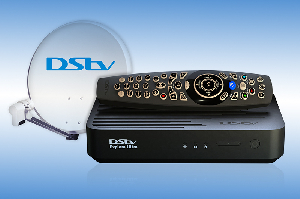 Digital Satellite Television (DSTV)