Correspondence from the Eastern Region
Traditional leaders, members of Guan communities from across Ghana, cultural groups, and residents gathered in Anum in the Eastern Region on Friday, June 5, 2026, for the official media launch of the Guan Congress Anum 2026, a major cultural and development-focused gathering aimed at promoting unity and sustainable development among Guan communities.
The colourful launch, held under the theme “Harmonising Resources in Guan Communities for Inclusive and Sustainable Development,” showcased the rich cultural heritage of the Guan people through traditional drumming, dancing, and displays of indigenous customs.
The three-day congress is scheduled to take place from August 14 to 16, 2026, at the Anum Palace Grounds, under the auspices of Akusiaku-Brempong Kumi Sasraku VIII, Paramount Chief of the Anum Traditional Area.
Ghana's President, John Dramani Mahama, is expected as the Special Guest of Honour, while Deputy Minister for Finance and Member of Parliament for Asuogyaman, Ampem Nyarko, will serve as Guest of Honour.
Speaking at the launch, the National President of the Guan Congress and Ankobeahene of Larteh Ahenease, Enyineh Gyadu Nkansah III, said the event seeks to bring Guan communities together to harness their collective resources for development.
He noted that although the Guan people are regarded as some of the earliest settlers in present-day Ghana, many Guan communities have remained underrepresented in national discourse.
“We want the world to know who the Guan people are and what we can achieve when we unite. The congress provides an opportunity for us to identify our strengths, harmonise our resources and work together towards the development of our communities,” he said.
According to Enyineh Gyadu, the congress will also serve as a platform to reconnect many people of Guan ancestry who may not be fully aware of their heritage. He explained that Guan communities are spread across several regions of Ghana, including parts of the Savannah, Oti, Central, Western, Eastern, and Greater Accra regions.
He appealed to Guan citizens both at home and abroad, corporate institutions, development partners, and philanthropists to support the congress through financial contributions and in-kind donations.
Barima Dr Obeng Dompreh, Chairman of the Local Organising Committee and Akyempemhene of the Anum Traditional Area, described the congress as an important platform for fostering unity among Guan communities nationwide.
He said the gathering would feature conferences, youth engagement sessions, and development discussions aimed at identifying solutions to challenges facing Guan communities.
“The resources are available within our communities. What we seek to do is to bring our people together and develop practical strategies for harnessing these resources for sustainable development,” he stated.
Dr Dompreh indicated that special attention would be given to youth participation, stressing that many young people of Guan descent have limited knowledge of their roots and cultural identity.
He added that the congress would not only focus on development but would also celebrate the rich cultural traditions of the Guan people through cultural performances, exhibitions, and tourism-related activities.
The LOC Chairman further highlighted the historical significance of hosting the congress in Anum, noting the area's close cultural and historical ties with nearby Boso, one of the communities associated with the origins of the Guan Congress movement.
Organisers used the occasion to invite all Ghanaians, regardless of ethnic background, to participate in the congress and experience the diverse cultural heritage of the Guan people.
They also called on businesses, non-governmental organisations, and individuals to partner with the Guan Congress to ensure the successful organisation of the event.
The launch ended with renewed calls for unity, cultural preservation, and collective action towards advancing development across Guan communities throughout Ghana.
Regional News of Saturday, 6 June 2026
Source: www.ghanaweb.com
Guan Congress 2026 launched in Anum with focus on sustainable development
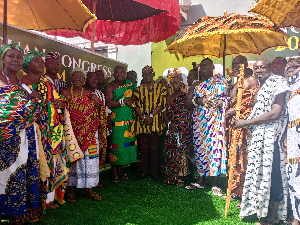 The launch showcased Guan culture through traditional drumming, dancing, and indigenous customs.



Entertainment