Government has earmarked GH¢100.4 billion for capital expenditure in 2027, signalling a stronger shift towards infrastructure development and productive investment as it seeks to transform Ghana’s economic structure and accelerate job creation.
The allocation, equivalent to 5.6 per cent of Gross Domestic Product (GDP), forms part of total expenditure of GH¢389.2 billion outlined in the 2027 Budget presented by Finance Minister Dr Cassiel Ato Forson to Parliament on Thursday, November 12, 2026.
It comprises GH¢88.4 billion in domestically financed projects and GH¢12 billion in externally financed projects.
The increased prominence of capital expenditure is central to the government's strategy of moving beyond economic stabilisation towards investment-led expansion, with emphasis on building productive capacity, reducing import dependence and increasing exports.
Presenting the budget, Dr Forson highlighted the significance of the allocation, noting that capital expenditure exceeds both the provision for public-sector wages and salaries and the allocation for interest payments on public debt.
The investment programme will be anchored by the New Economy initiative, which has been allocated GH¢30 billion in its first year.
The initiative forms part of a four-year programme backed by the cedi equivalent of US$10 billion, covering commercial agriculture, energy infrastructure, critical minerals processing, tourism and creative industries, textiles and garments, pharmaceuticals and bio-manufacturing, and technology.
The government intends to use these interventions to stimulate domestic manufacturing, strengthen value chains, create employment and improve Ghana’s competitiveness in regional and international markets.
The wider Big Push infrastructure programme will receive approximately GH¢28 billion, while education and health will also benefit from substantial sectoral allocations.
An additional GH¢13.9 billion has been provided for arrears clearance, including GH¢4.3 billion for outstanding obligations to independent power producers.
The capital expenditure programme is expected to complement efforts to attract private-sector investment, particularly in sectors where infrastructure deficits, high operating costs and limited access to essential services have constrained business expansion.
However, the scale of the proposed investment will require effective project preparation, procurement discipline and timely execution to ensure that allocations translate into completed infrastructure and measurable economic benefits.
The programme will also have to be implemented without undermining the government’s fiscal consolidation commitments.
Total revenue and grants are projected at GH¢323.4 billion, against expenditure of GH¢389.2 billion, resulting in a cash deficit of GH¢65.8 billion, or 3.6 per cent of GDP.
Interest payments alone are expected to reach GH¢61 billion, while employee compensation will amount to GH¢104.1 billion.
The government is targeting real GDP growth of at least 5.2 per cent in 2027, with non-oil growth projected at 5.7 per cent.
The broader ambition is to achieve approximately eight per cent economic growth and unemployment below eight per cent by 2030.
Whether the investment-led strategy delivers these outcomes will depend not simply on the volume of public funds committed, but on the quality of projects, implementation efficiency and the extent to which public investment crowds in private capital and expands domestic productive capacity.
Business News of Saturday, 14 November 2026
Source: businesspostonline.com
Government to spend GH¢100.4bn on projects to boost economic growth
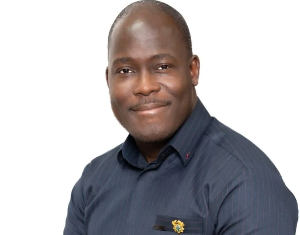
 Dr Cassiel Ato Forson is the Minister of Finance