Government is set to meet its 2026 fiscal target after keeping first-half expenditure below programme and revenue close to projections, despite capital spending falling 41% short of target.
Capital expenditure amounted to GH¢21.7 billion in the first half, against a programmed GH¢36.6 billion, leaving spending GH¢14.9 billion, or 41%, below target.
Revenue and grants amounted to GH¢124.8 billion in the first half, marginally below the programmed GH¢126.1 billion, representing a shortfall of about GH¢1.3 billion, or just over 1%.
Total expenditure on a cash basis stood at about GH¢136.9 billion against a programme of GH¢172.5 billion, representing a shortfall of approximately GH¢35.6 billion.
The lower spending helped keep the fiscal balance ahead of the programme despite mixed performance across some revenue lines and puts government in a relatively strong position to stay within its full-year fiscal framework.
Capital expenditure accounted for a sizeable share of the overall spending shortfall, bringing the pace of infrastructure execution into focus as government simultaneously pursues fiscal consolidation and an expansion of public investment.
Government has earmarked increased infrastructure spending under the Big Push programme, covering roads, transport and other projects across the country.
With GH¢21.7 billion of the GH¢36.6 billion programmed for capital expenditure in the first half actually spent, execution will have to accelerate during the remainder of the year if delayed projects and investment commitments are to catch up with the annual programme.
The pace of capital spending will therefore become key part of the second half fiscal outturn.
Faster capital expenditure in the second half would narrow some of the spending headroom accumulated during the first six months, while government remains committed to the 1.5%primary-surplus target.
The full-year revenue and grants projection remains around GH¢268 billion, while total expenditure is projected at more than GH¢300 billion, leaving the performance of revenue and the pace of expenditure during the final six months critical to the year-end fiscal outcome.
Maintaining the primary surplus is also central to government’s debt-reduction programme following the restructuring of domestic and external obligations.
The first-half outturn leaves government ahead of its fiscal programme, with revenue only marginally below target and expenditure substantially below projections.
Government enters the second half with its fiscal position ahead of programme, but with a sizeable investment bill still to execute. The GH¢14.9 billion capex shortfall provides room within the fiscal envelope, but that cushion will narrow as infrastructure spending picks up. The year-end test will be whether stronger project execution can be financed without compromising the 1.5% primary-surplus target that anchors Ghana’s fiscal consolidation and debt-reduction programme.
Ghana’s 2026 budget targets a primary surplus of 1.5% of gross domestic product on a commitment basis, the central fiscal anchor under the country’s fiscal responsibility framework. Government is also targeting an overall fiscal deficit of about 2.2% of GDP on a commitment basis.
At the end of the first half, the fiscal position was performing better than initially programmed. Government recorded a primary surplus of about 0.6% of GDP on a cash basis, compared with a programmed primary deficit of about 1.1% of GDP for the period.
The stronger-than-programmed balance was achieved even though some revenue categories fell short of their half-year targets.
Oil and gas receipts were about 31% below programme, while non-oil non-tax revenue was approximately 11% lower than expected. Non-oil tax revenue also fell about 2.6% short of programme, although stronger performance elsewhere limited the overall revenue and grants shortfall to just over one percent.
Apart from the GH¢14.9 billion shortfall in capital expenditure, interest payments were about 24% below programme, while grants to other government units were approximately 16% below their programmed levels.
Business News of Tuesday, 18 August 2026
Source: economytimesnews.com
Government on track for 2.2% deficit target despite capex shortfall
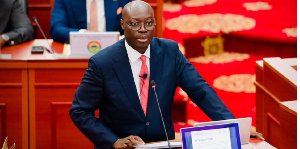 Dr Cassiel Ato Forson, Minister of Finance





Opinions