The Ghana CSOs Alliance on Mission 300 has questioned the government’s US$2.2 billion energy investment plan, raising concerns about its alignment with Ghana’s existing efforts to provide affordable and reliable electricity.
The Alliance says the 2027 Budget introduces new power projects without clarifying how they will relate to initiatives already outlined under Ghana’s National Energy Compact.
Speaking at a press conference organised by the Strategic Youth Network for Development (SYND) on Monday, November 23, 2026, the group noted that the new plan focuses on developing a 1,450-megawatt thermal power plant, 600 megawatts of solar power and preparations for a nuclear power plant.
Government begins GH¢28.8 billion early DDEP bond buyback
However, it pointed out that Ghana’s existing Energy Compact seeks to attract about US$2.6 billion in private investment to develop solar, hydro and wind power projects.
The Alliance questioned whether the government intends to abandon the earlier projects or implement both plans.
“It’s unclear whether these two very different generation strategies fit together,” it stated.
The group also expressed concern that the 2027 Budget makes no mention of Mission 300, an initiative supported by the World Bank and the African Development Bank to expand electricity access across Africa.
The Alliance further asked the government to clarify whether the US$500 million allocated to GRIDCo would cover the Accra-Kumasi and Ghana-Côte d’Ivoire power projects or whether separate funding would be provided for them.
It also wants to know whether the allocation will help address delays affecting the two projects.
Despite its concerns, the group welcomed plans to reduce electricity losses, improve bill collection and allow private companies to participate in electricity distribution.
“Our concern is coordination and transparency,” the Alliance stated.
Mauritius seeks Ghanaian workers to address labour shortage
It urged the government to ensure that the new energy projects complement existing plans and contribute to the delivery of reliable and affordable electricity.
DR/MA
BoG Cuts Policy Rate to 11% as Borrowing Costs Continue to Fall
Business News of Monday, 23 November 2026
Source: www.ghanaweb.com
Government must clarify US$2.2 billion energy plan, Mission 300 omission – CSOs
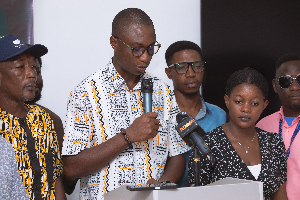 Members of the Ghana CSOs Alliance on Mission 300