Business News of Friday, 13 November 2026
Source: www.ghanaweb.com
Governance experts call for stronger board committees to boost accountability, performance

Corporate governance experts have called for stronger and more effective board committee oversight, urging organisations to empower directors to scrutinise management decisions, assess risks and improve institutional accountability and performance.
They said effective board committees were essential to good corporate governance because they provided the platform for directors to examine management proposals, assess technical issues and make informed recommendations before matters were presented to the full board for approval.
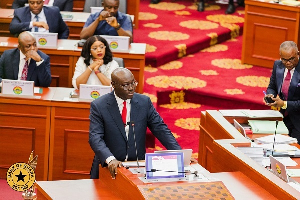
The experts made the call during a panel discussion on the theme, “Committees: The Boardroom’s Best-Kept Open Secret,” at the 2026 Boardroom Governance Summit held in Accra.
The summit, convened by international chartered director and industrialist, Professor Douglas Boateng, in collaboration with the Office of the Chief of Staff brought together board members, business leaders, governance professionals, academics and policymakers.
Held under the theme, “Board Committees: From Oversight to Impact, The Conversations Every Board Must Have,” the event also featured the launch of Professor Boateng’s book, Practical Perspectives on the Committees of the Board.
Professor Douglas Boateng, Convenor of the summit, said effective boardroom governance was essential to improving institutional performance and advancing Africa's development.
He noted that decisions taken in boardrooms had far-reaching consequences for the quality of public institutions, services and the overall well-being of citizens.
“Unless we do it, we’ll have this vicious cycle whereby we’ll be talking and doing presentations and promises and whatnot. It all starts in the Boardroom,” he said.
Prof Boateng, an international chartered director, industrialist and business strategist, said poor roads and inadequate healthcare affected citizens irrespective of their political affiliations.
Here are the 9 charges court has ordered Adu-Boahene, wife to open defence for
He consequently urged leaders to put partisan interests aside and prioritise effective governance and solutions to the country's development challenges.
Citing Singapore, South Korea and Rwanda as examples of countries that had leveraged governance to advance national development, he called for sustained leadership commitment and policies that extended beyond electoral cycles.
Dr Ekwow Spio-Garbrah, Presidential Special Envoy on Reparations, identified the reluctance of leaders to challenge proposals and express dissenting opinions as a major weakness in Ghana's governance system.
Chairing the summit, he said concerns about public opinion, political interests, religious expectations and social pressures often discouraged decision-makers from expressing legitimate reservations, thereby weakening institutional deliberations and accountability.
Recounting an experience from his time as a Cabinet member, Dr Spio-Garbrah said a matter presented for discussion once remained unattended for more than 15 minutes after the chairman invited ministers to contribute.
He said he eventually asked whether financial advisers were available, prompting a further 40 minutes of discussion.
According to him, the experience demonstrated how silence among decision-makers could deprive institutions of critical perspectives and undermine the quality of decisions.
He therefore urged board members to express their reservations respectfully but firmly and subject proposals to rigorous scrutiny before decisions were taken.
Reverend Angela Carmen Appiah, Chief Executive Officer of the Africa Corporate Governance Network and immediate past President of the Institute of Directors-Ghana, highlighted the importance of emotional, social and psychological intelligence in boardroom engagements.
She said directors needed to ask difficult questions tactfully while possessing the professional knowledge to identify weaknesses and assess whether committees were effectively fulfilling their responsibilities.
Rev Appiah urged board members to prepare adequately for meetings, read extensively and independently examine issues before engaging in discussions.
She also encouraged humility among directors, noting that no individual possessed all the knowledge required to make sound decisions.
Otunba Adetunji Oyebanji, President and Chairman of the Chartered Institute of Directors, Nigeria, said corporate governance principles were universal and centred on accountability, integrity and the appointment of individuals with the appropriate skills and capabilities to serve on boards.
He described governance as a continuous process of improvement, urging boards to regularly update their knowledge and practices to respond to emerging challenges, particularly artificial intelligence and cybersecurity.
Otunba Oyebanji warned that repeated referrals of committee reports by full boards for further analysis could indicate ineffective committee work, often resulting in prolonged discussions and duplication of efforts.
Chief Alhassan Andani, Chief Executive Officer of LVS Africa Limited and Chairman of the Board of Ecobank, said much of the critical work in corporate governance took place at the committee level, where directors examined issues in detail and obtained the technical information needed to guide board decisions.
He said effective committees required deliberate composition, bringing together individuals with diverse professional backgrounds, skills and experience to ensure thorough examination of issues.
Chief Andani also stressed the importance of maintaining strong working relationships with functional executives, including finance officers and other subject-matter specialists, to enable committees to access relevant information.
AM
Samira Bawumia Stuns Audience with ‘Asaase Yaa’ Poem at Literary Night