Increased dollar sales by the Ghana Gold Board are expected to keep the cedi stable in the coming weeks, as the Board plans to supply US$1 billion to commercial banks in October, up from US$700 million in September, with the Bank of Ghana ready to add up to US$500 million to the market.
The Board has already sold at least US$407 million to banks this month through its GoFX digital platform: about US$125 million on October 6, US$197 million on October 13 and US$85 million on October 15. In the October 13 sale, all participating banks received the full amounts they requested, at GH¢11.70 to the dollar.
The steadier supply has started to show. The cedi gained marginally on the interbank market for a second straight week, rising just under 1 per cent against the dollar, according to market estimates, after near-weekly losses in September.
This reversal matters. The currency came under sustained pressure from the third quarter as businesses bought dollars to finance imports ahead of December and the Bank of Ghana made energy-related payments. By October 13, the cedi had lost more than 11 per cent against the dollar this year, trading at GH¢11.78 on the interbank market and an average of GH¢12.10 at forex bureaus.
The sales are made under GoldBod’s Spot FX Sales and Intermediation Framework, announced on October 5, which channels foreign exchange from small-scale gold exports to authorized banks, usually on Tuesdays and Thursdays. When demand exceeds supply, banks receive proportional allocations. The Bank of Ghana monitors the platform in real time.
Dr Theo Acheampong, Technical Advisor at the Ministry of Finance, said the aim was “a clear and transparent process” that allows firms to plan their foreign exchange needs in advance. He said the central bank “would step in if they see excessive volatility.”
The predictability is new. Intermittent dollar supply was among the factors blamed for the cedi’s weakness in recent weeks, alongside seasonal import demand and higher energy costs.
The source of the dollars has also grown. GoldBod generated US$1.871 billion from its gold trade in September, well above its monthly target of US$1.4 billion, giving it more room to sell to banks.
The Bank of Ghana has said it expects the cedi “to remain relatively stable” over the medium term, helped by foreign exchange intermediation and remittance inflows, and that it is ready to intervene to keep the market orderly.
Some commercial banks told Joy Business they expect the cedi to stay fairly stable if the improved liquidity support continues.
Analysts are more cautious. Databank Research expects GoldBod’s spot sales and central bank interventions to provide near-term support, with the dollar trading between GH¢11.60 and GH¢12.10.
But it warned that the durability of any recovery depends on whether inflows can keep pace with seasonal demand without undermining the central bank’s reserve-building target.
The pressures are real. Demand for dollars typically rises in the final quarter as traders stock up for Christmas, and the country’s oil import bill has risen sharply this year on higher global prices.
There is also a trade-off. Every dollar GoldBod sells to banks to support the cedi is a dollar not added to the country’s reserves.
For now, a larger, scheduled dollar supply and a central bank ready to step in, give the cedi firmer backing than it had in September, heading into the busiest period of the year.
How long that holds will depend on whether GoldBod can sustain September-level inflows through November and December, when import demand is at its peak.
Business News of Wednesday, 21 October 2026
Source: economytimesnews.com
GoldBod FX sales boost expected to make cedi stable in coming weeks
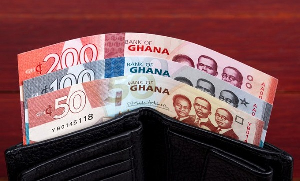 File photo of Ghana cedi notes







Opinions