Business News of Tuesday, 9 December 2025
Source: Labi Ansah-Koi, Contributor
Global leaders at WTDC stress connectivity as key to inclusive and sustainable growth

The International Telecommunication Union’s World Telecommunication Development Conference (WTDC) concluded in Baku, Azerbaijan, with a resounding call for nations to accelerate universal, meaningful, and affordable connectivity as a foundation for inclusive and sustainable digital growth.
The high-level gathering, attended by government delegations, policy leaders, and technology experts from across the world, underscored that access to reliable digital infrastructure is now a prerequisite for economic competitiveness, social participation, and national development.
Centered on the theme “Universal, Meaningful, and Affordable Connectivity for an Inclusive and Sustainable Digital Future,” the conference highlighted widening digital inequalities and urged countries, particularly in emerging markets, to adopt bold strategies that lower broadband costs, expand network coverage, and strengthen the resilience of critical communications systems.
Stakeholders stressed that connectivity must go beyond mere availability and must translate into real, equitable access that empowers people, businesses, and institutions.
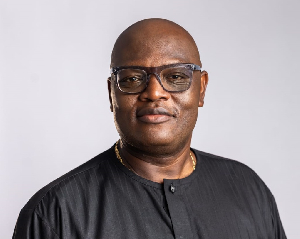
Amongst Ghana’s Representation at the summit was network engineer Joy Selasi Agbesi, whose participation attracted attention due to his parallel influence in advanced AI-driven network systems in the United States and large-scale connectivity initiatives across Africa.
Selasi, currently serving as a Network Engineer in Global Operations with one of the United States’ leading technology companies, has contributed to the development of hyperscale artificial intelligence and cloud infrastructure supporting next-generation digital platforms.
His work includes supporting high-capacity data center networks and advanced compute environments, now widely regarded as critical foundations of global digital transformation.
In addition to his impact across North America, Selasi remains deeply committed to advancing Africa’s telecommunications and network infrastructure.
As a Network Consultant for MTN, he has played a pivotal role in strengthening Ghana’s national backbone systems, including engineering work supporting Capacity Provisioning readiness for MTN/Bayobab, one of the consortium members behind the 2Africa subsea cable, the world’s longest open-access cable system.
Once fully operational, 2Africa is expected to massively expand international bandwidth, reduce broadband costs, and enhance network reliability for millions of users across Africa, Europe, the Middle East, and Asia.
Observers at the conference noted that this kind of cross-continental expertise positions Selasi as part of a small but impactful group of African technologists shaping the architecture of modern global connectivity.
Selasi’s background also includes engineering roles with Huawei Technologies, where he contributed to DWDM, OTN, and IP network deployments in West Africa, projects that helped strengthen broadband availability and national digital infrastructure.
Beyond industry work, he has authored more than sixteen research papers on cybersecurity, cryptography, artificial intelligence, machine learning, optical networks, and IP systems, reflecting a scholarly commitment to secure, intelligent, and scalable network design.
His standing in the global engineering community is further underscored by his Senior Membership in IEEE, the world’s largest and most prestigious technical professional organization dedicated to advancing technology for humanity, and his service as a peer reviewer for Institute of Electrical and Electronics Engineers (IEEE), Association for Computing Machinery (ACM), Elsevier, Information Systems Audit and Control Association (ISACA), and the European Conference on Information Systems 2026 (ECIS26 – AIS) roles typically reserved for recognized subject-matter experts trusted to evaluate high-impact research.
Discussions in Baku emphasized that for countries like Ghana, universal connectivity can no longer be treated as a long-term aspiration but as an urgent national priority.
Delegates referenced the growing demands placed on networks by cloud computing, digital services, and emerging AI applications, noting that without strong backbone infrastructure, developing economies risk falling further behind.
The debates also highlighted the importance of security and resilience, with experts warning that as digital dependence increases, so too does vulnerability to cyber threats and service disruptions.
As the WTDC ended, the overarching message was clear: meaningful and affordable connectivity is no longer a privilege but a developmental necessity.
The outcomes of the conference signaled that Africa has an opportunity not only to benefit from global infrastructure advances, but to contribute to them through its emerging technical talent and growing participation in international policy forums.
With experts like Selasi positioned at the intersection of global innovation and African development, Ghana enters the next chapter of digital transformation with a stronger voice and a clearer mandate.