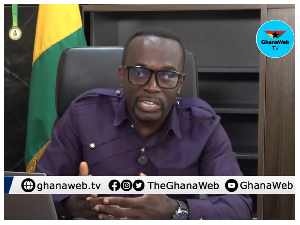
The Acting Chief Executive Officer of the Ghana Hydrological Authority (HYDRO), Dr Sylvester Darko, has expressed worry that the country’s drainage infrastructure has been failing to keep pace with rapid urban development, worsening flooding across several parts of Ghana.
Speaking in an interview with GhanaWeb’s Etsey Atisu on January 15, 2026, Dr Darko said the authority remains responsible for providing flood control mechanisms nationwide but faces growing challenges as flooding risks continue to intensify.
“Over the past year, or less than one year that I’ve been in office, work has been ongoing in a few locations where we had earlier intervened, and those works continued into 2026. However, there is still a lot to be done,” he noted.
According to Dr Darko, the key challenge is that while urbanisation is accelerating, the expansion of drainage infrastructure has not matched the pace of development.
Accra is choked with congestion, needs new master plan – Ga Mantse
“The problems giving rise to flooding keep aggravating. We have to up our game in providing drainage infrastructure, but unfortunately, the rate at which we are building is not keeping pace with the rate at which the country is developing,” he explained.
He attributed the situation largely to rapid and unplanned urbanisation, particularly in flood-prone areas, compounded by weak development control and management.
Dr Darko disclosed that although HYDRO has clear plans and technical solutions to address flooding, limited funding remains a major constraint.
“Every year, almost every year, government supports us with what we call the Flood Control Programme, which funds flood relief works in selected areas across the country. This has been ongoing, but the problems continue to compound, largely because of human behaviour,” he indicated.
Poor drainage identified as main cause of Accra floods
He expressed concern over the increasing encroachment on floodplains and natural water retention areas, which are meant to absorb excess floodwaters and protect communities.
“Areas that should be left as floodplains are now being developed. Water retention and reservoir areas are being encroached upon and even filled,” Dr Darko lamented.
He further stressed that responsibility for curbing such practices lies primarily with local authorities, urging them to enforce planning regulations to prevent development in high-risk flood zones.
“That responsibility lies squarely with the local authorities to be able to curtail this sort of development,” he added.
Watch the video below:
Floods in Ghana caused by encroachment on water reservoir – Dr Darko
MRA/AE
One year on: Watch what some Ghanaians are saying about ORAL
General News of Friday, 16 January 2026
Source: www.ghanaweb.com