The Ghana National Fire Service (GNFS) in Adidome has trained staff of the Adidome Government Hospital in fire prevention and emergency response to strengthen safety at one of the Volta Region’s busiest health facilities.
The two-part exercise, comprising an inspection and a practical education session, formed part of the Service’s community safety programme aimed at reducing fire risks in critical public institutions.
Assistant Divisional Officer Grade I (ADO I) Felix Nunekpeku, Acting District Fire Commander, who led the initiative, said the exercise was necessary because the hospital served as a pivotal health centre for the three Tongu districts and must be adequately prepared to respond to emergencies.
He emphasised that fire safety in health institutions was non-negotiable, as any outbreak could have dire consequences for patients, staff, and critical medical infrastructure.
The inspection team, which included ADO II Christable Akorfa Akpetey, ASTN/O Perry Gabienu, and the duty crew, assessed fire escape routes, electrical installations, firefighting water sources, LPG usage, and the availability and condition of extinguishers.
The safety education session was chaired by Dr. Ahiavi, Medical Superintendent of the hospital, who lauded the GNFS for the training, describing it as timely and beneficial. He said the exercise had boosted the hospital’s preparedness to handle emergencies and enhanced staff confidence in responding to incidents.
Mr. Perry Gabienu, an Assistant Station Officer, educated participants on the nature of fire and the fire triangle — fuel, heat, and oxygen. He advised on the safe handling of gas cylinders, switching off electrical mains during outbreaks, and the importance of promptly contacting the Fire Service.
ADO II Akpetey spoke on kitchen and electrical safety, demonstrating how wet blankets could extinguish burning cooking utensils, the dangers of overloading circuits, and the need for safe wiring practices. She urged staff to view fire prevention as a daily responsibility.
ADO I Nunekpeku rounded off the session by teaching staff about different types of extinguishers, their parts, and specific uses. ASTN/O Gabienu led a practical demonstration in which staff used Dry Chemical Powder (DCP) and Carbon Dioxide (CO₂) extinguishers to put out flames.
Participants were further encouraged to extend fire safety education to their households, teach children to avoid unsafe practices, and comply with the Fire Precaution (Premises) Regulations, 2003 (L.I. 1724).
The programme concluded with a clean-up exercise in Adidome township, led by Mr. Guggisberg Fiagbenu, Assemblyman for the Adidome Central Electoral Area, who commended the GNFS for combining fire education with community sanitation, describing it as a commitment to holistic safety.
Health News of Saturday, 30 August 2025
Source: GNA
GNFS trains Adidome Hospital staff on fire safety
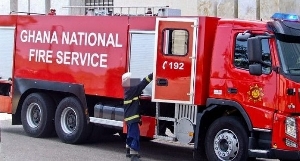 File photo of a Fire Service truck




Entertainment