Government is positioning stronger fiscal discipline, deeper capital markets and institutional reforms as central pillars of its economic transformation strategy as it seeks to attract long-term investment amid tightening global financial conditions and shifting capital flows.
Speaking at the ACI Financial Market Association (FMA) World Congress 2026 in Accra, Deputy Finance Minister Thomas Nyarko Ampem said Ghana’s recent macroeconomic reforms under the IMF-supported Extended Credit Facility programme have helped restore market confidence, improve sovereign risk perceptions and strengthen investor sentiment after one of the country’s most difficult economic periods in recent history.
Ampem said government’s economic adjustment programme over the last 17 months focused on restoring macroeconomic stability, rebuilding investor confidence, strengthening public finances and protecting the foundations for long-term growth.
“These reforms were to stabilise the economy, restore credibility, strengthen market confidence and reposition Ghana within an increasingly competitive global economic environment,” he said.
According to him, recent assessments by international credit rating agencies indicate improving perceptions about Ghana’s sovereign risk profile, a development government believes could gradually lower borrowing costs and improve access to financing.
“Macroeconomic stability has been restored. Investor sentiment has actually strengthened. Importantly, sovereign risk perceptions have improved as well,” Ampem said.
The deputy minister linked fiscal credibility directly to financial sector resilience, arguing that weak sovereign fundamentals tend to transmit stress into financial markets through tighter liquidity conditions, elevated borrowing costs and declining investor confidence.
“When sovereign fundamentals weaken, financial systems come under pressure. Borrowing costs rise. Liquidity conditions tighten. Investor confidence weakens,” he said. “When fiscal discipline is restored and policy credibility is strengthened, confidence returns to markets. Capital flows increase.”
These remarks come as emerging and frontier markets continue to navigate elevated global interest rates, geopolitical tensions, climate-related risks and tighter global liquidity conditions which have increased pressure on debt sustainability and external financing.
Ampem said Ghana’s transition from the IMF-supported financing arrangement into a non-financing Policy Coordination Instrument reflects government’s intention to move from economic stabilisation toward a phase focused on sustaining growth, strengthening institutions and accelerating structural transformation.
Government is now seeking to reposition the economy through what Ampem described as a “new economy agenda” – aimed at shifting Ghana from an extraction-driven economy toward value addition, productivity growth, competitiveness and resilience.
The strategy places significant emphasis on building stronger financial markets capable of mobilising long-term domestic and international capital.
“None of these transformations can happen without strong and sophisticated financial markets,” he said.
According to the minister, Ghana’s transformation agenda will require deeper and more integrated bond markets, blended finance structures, venture capital financing, private equity investment and sustainable finance instruments capable of funding industrialisation, infrastructure and technology-driven growth.
Government also wants local financial markets to support entrepreneurship, digital finance expansion and export-oriented industries while creating opportunities for young people beyond traditional employment pathways.
“We want African capital to finance African transformation,” he said. “We want our financial markets to become engines of innovation, enterprise and long-term prosperity.”
He argued that Africa continues to receive a disproportionately small share of global capital flows despite its demographic advantages, rapid urbanisation and expanding digital ecosystems.
Citing estimates from the African Development Bank, Ampem said Africa faces an annual infrastructure financing gap estimated of between US$68billion and US$108billion, a challenge he said cannot be addressed through public sector financing alone.
“This challenge cannot be solved by governments alone,” he said. “It requires deep, credible and innovative financial markets capable of mobilising long-term capital at scale.”
Vice President Professor Naana Jane Opoku-Agyemang also stressed the importance of trust, institutional strength and ethical standards in building resilient financial markets.
Speaking at the same event, she said the global economy is still adjusting to the after-effects of inflation shocks, high interest rates, foreign debt pressures, geopolitical tensions and rapid technological disruption, all of which are reshaping investment conditions for emerging markets.
“We cannot build strong economies on weak markets. Resilient markets cannot be built without trust,” she said. “And trust cannot exist without competence, ethics and robust institutions.”
The vice president said discussions around financial markets must increasingly account for artificial intelligence and digitalisation as automation reshapes risk management, fraud detection, data processing and decision-making across the financial sector.
While technological innovation can improve efficiency, reduce costs and expand financial access, she warned that governments and regulators must also address accountability, cybersecurity and ethical concerns associated with increasingly automated systems.
“For countries like Ghana, the challenge is to build digital capacity while also building digital trust,” she said.
Professor Opoku-Agyemang said government is working to deepen domestic capital markets, strengthen foreign exchange markets, improve transparency and expand local currency financing as part of broader efforts to improve long-term investment capacity across Africa.
She added that stronger regional financial integration under the African Continental Free Trade Area will be critical to supporting Africa’s long-term economic competitiveness and reducing fragmentation across markets.
Business News of Tuesday, 26 May 2026
Source: thebftonline.com
Fiscal credibility, deeper capital markets to drive economic transformation
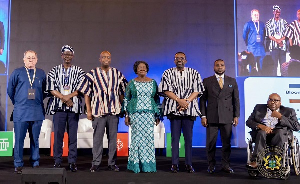 The deputy minister linked fiscal credibility directly to financial sector resilience