Business News of Tuesday, 17 February 2026
Source: thebftonline.com
Family businesses well-placed for regional leadership – IFC

Family-owned enterprises in Ghana are well placed to become regional champions and cross-sector market leaders, the International Finance Corporation (IFC) has said, highlighting strong global momentum behind family businesses and the importance of governance in driving sustainable growth.
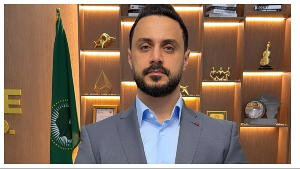
Speaking at IFC’s third Family Governance Workshop in Accra, Kyle Kelhofer, Senior Country Manager for Ghana and Liberia, said the institution stands ready to provide advisory support and capital for family firms prepared to scale beyond domestic markets.
“Ghana has some pretty amazing businesses and family enterprises that could potentially become big regional and cross-sectoral players. These businesses reach a point where they can choose to stay small or grow across sectors, expand regionally or even globally – and that’s where we can step in,” Kelhofer explained.
The workshop, part of an ongoing programme delivered under IFC’s Integrated Environmental, Social and Governance Advisory platform with support from the Swiss State Secretariat for Economic Affairs (SECO), focused on strengthening family governance frameworks to enable generational continuity and long-term resilience.
Continuing global force
Family-owned businesses are not only foundational to Ghana’s economy where they drive job creation, innovation and community development but also an increasingly powerful global economic force.
Globally, family businesses with revenues of at least US$100 million account for roughly 22 percent of all businesses and are projected to grow by 22 percent between 2020 and 2030.
Their total revenues are expected to climb from approximately US$21 trillion today to US$29 trillion by 2030, far outpacing non-family businesses’ projected growth.
According to industry analyses, the 500 largest family firms generate revenues of about US$8.8 trillion annually more than the Gross Domestic Product (GDP) of most countries and equivalent in size to the world’s third-largest economy.
Family enterprises also account for a majority of economic activity in many countries, with firms contributing significantly to GDP and employment across Europe, Asia and the Americas.
McKinsey & Company estimates that family-owned businesses contribute more than 70 percent of global GDP and roughly 60 percent of global employment.
Governance as a growth enabler
Despite their scale and importance, many family businesses face structural challenges, particularly around leadership transitions. Globally, studies show that only a small fraction of family firms survive multiple generations; the average family business lifespan is limited and succession planning gaps remain pervasive.
At the Accra workshop, participants from first, second and third-generation enterprises explored practical strategies for leadership preparation, conflict resolution, wealth preservation and governance frameworks that enable both family cohesion and professionalisation.
“Getting governance right is not governance for governance’s sake. It unlocks access to finance, markets and expertise that might otherwise remain inaccessible to family enterprises,” Kelhofer noted.
Lead facilitator Moez Miaoui echoed this, stressing the bilateral nature of succession: “Successors must be ready to lead and incumbents must be ready to let go. Passion cannot be forced, it must be cultivated and transferred authentically”.
Local momentum, global context
In Ghana and across emerging markets, local corporates many of which are family-owned are increasingly recognised as engines of job creation and innovation.
IFC’s experience shows that well-governed family enterprises often become the backbone of robust private sectors, catalysing inclusive growth and economic diversification.
The workshop series is demand-driven: participant interest remains strong and IFC has signalled its intention to continue programming as long as local business communities find value in peer-learning and governance enhancement.
“Like going to the gym, governance improvement is something we work on regularly. Feedback shows participants keep returning, which is a good sign,” Kelhofer said.
IFC commitment to multi-generational growth
Mr. Kelhofer stated that the initiative forms part of IFC’s broader development mandate, noting its focus on creating “more and better jobs”, particularly through strengthening private sector capacity.
“We have increased our focus on helping local corporates, including family businesses in Ghana, grow into cross-sectoral and regional players,” he said.
“That starts with governance; the foundation for sustainable growth, investment and legacy building,” he added.



Entertainment