Ghana’s international reserve accumulation strategy is facing a fresh challenge as falling global gold prices threaten to reduce the foreign-exchange proceeds expected from the country’s expanding artisanal and small-scale mining gold trade.
The development complicates the Ghana Accelerated National Reserve Accumulation Programme (GANRAP), which aims to raise international reserves to 15 months of import cover by the end of 2028, as the Bank of Ghana and the Ghana Gold Board (GoldBod) contend with less favourable market conditions.
Gold closed September at US$4,176 an ounce, down 8.5 per cent during the month, amid rising United States Treasury yields and a stronger dollar.
The decline has weakened the assumptions underpinning the reserve programme, which uses a benchmark gold price of US$5,000 an ounce to estimate annual gross receipts of approximately US$25.3 billion from its targeted weekly gold purchases of 3.02 tonnes.
At US$4,176 an ounce, the same annual volume would generate approximately US$21.1 billion before costs, representing a shortfall of about US$4.2 billion against the programme’s price-based projection.
The pressure comes despite strong operational performance by GoldBod. The Board generated US$1.871 billion in foreign exchange from artisanal and small-scale mining gold trading in September, exceeding its US$1.4 billion target.
It transferred US$1.170 billion to the Bank of Ghana for reserve accumulation and sold US$701.3 million to authorised commercial banks.
In August, GoldBod generated US$1.315 billion, including US$646.59 million supplied to the central bank.
However, higher gold volumes may not fully compensate for weaker prices, particularly when programme costs and the foreign-exchange needs of the domestic economy are considered.
Bank of Ghana Governor Dr Johnson Pandit Asiama has acknowledged that international gold prices pose a risk to Ghana’s reserve-building efforts, noting that the country cannot control global price movements.
The rise in US Treasury yields presents an additional consideration for reserve management. Higher yields make dollar-denominated securities more attractive, potentially increasing the opportunity cost of holding gold, which does not generate interest income.
Gold remains valuable as a diversification asset and protection against certain financial and geopolitical risks. However, its market value can fluctuate, and it cannot always be converted into immediately available dollars without transaction costs or exposure to market conditions.
Ghana’s authorities must therefore balance continued gold accumulation with the need to maintain liquid foreign-currency assets for debt servicing, energy payments and foreign-exchange market operations.
The challenge will be to sustain gold exports, contain programme costs and strengthen non-gold sources of foreign exchange while adjusting reserve projections to reflect prevailing market prices.
Without these measures, weaker bullion prices could make the country’s ambitious reserve targets significantly harder to achieve.
Business News of Friday, 23 October 2026
Source: businesspostonline.com
Falling gold prices threaten Ghana’s foreign reserves target
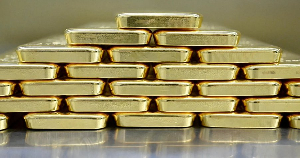 File photo of gold bars