The Bank of Ghana (BoG) on November 26, 2025, lowered its monetary policy rate by 350 basis points, reducing it from 21.5 percent to 18 percent, following the conclusion of its 127th Monetary Policy Committee (MPC) meeting.
According to the BoG Governor, Dr Johnson Asiama, the decision was reached after a majority vote by members of the MPC.
The policy rate guides the interest rates at which banks extend credit to businesses and households, making it a critical tool for managing inflation, investment, and overall economic activity.
Read the Governor's address below:
The Monetary Policy Committee (MPC) held its 127th meeting from November 24 – 26, 2025, to evaluate recent economic developments and assess risks to the outlook for inflation and growth.
This briefing summarises the key discussions and the Committee's decision on the Monetary Policy Rate.
In the global context, growth has held steady despite major policy shifts, supported by easing financial conditions and fiscal stimulus in many countries. Notwithstanding the steady growth conditions, the outlook remains fragile amid a still volatile trade environment and ongoing geopolitical tensions. Global headline inflation has eased further on the back of lower energy and food prices.
However, the pace of ease in inflation remains uneven, especially for countries adversely impacted by the volatile trade environment. The ease in global financing conditions since April 2025, driven in part by declining long-term bond yields and stronger equity markets has helped moderate external financing risks. Central banks are monitoring these developments closely and policy decisions in the months ahead will be driven by incoming data, especially on the trajectory of inflation.
On the domestic front, growth continues to gain momentum. Following the strong GDP outturn of 6.3 percent in the first half of the year, the Monthly Indicator of Economic Growth, recently released by the Ghana Statistical Service, point to a provisional growth of 5.1 percent in August 2025 compared with 4.9 percent in same month of last year, driven by the services and agriculture sectors.
The Composite Index of Economy Activity is also posting strong gains. At the end of September, the Bank’s updated Composite Index of Economic Activity (CIEA) recorded a strong growth outturn of 9.6 percent, compared to 2.9 percent growth for the corresponding period of 2024. Industrial production, international trade activities, credit to the private sector, and consumption contributed to the increase in the Index over the period.
The latest confidence surveys, conducted in October 2025, reflected continued optimism on current and future economic conditions. Also, Ghana’s Purchasing Managers’ Index improved on account of new orders in response to the increased pace of economic activity. Taken together, these gains indicate that the negative output gap is closing. The expectation is that, should this momentum be maintained in September 2025, the GDP growth outturn for the year will remain strong.
BoG cuts policy rate further from 21.5% to 18%
Inflation decline in the year has been steady and on target. From 23.5 percent in January 2025, headline inflation has eased to the Bank’s central target of 8.0 percent in October. The decline was broad based as both food and non-food inflation are currently in single digits, the first since July 2021. The sustained disinflation has been driven by the continued maintenance of a tight monetary policy stance, sustained fiscal consolidation efforts, a stable currency, and relative improvement in food supply.
Also, the Bank’s core inflation measure, which excludes energy and utility, has declined, reflecting significant moderation in underlying inflationary pressures. Price expectations by consumers, businesses, and the banking sector for the next year signalled well-anchored inflation expectations.
The Bank’s latest near-term forecasts show that inflation will continue to decline and settle between 6-8 percent by the end of the year.
Interest rates have generally declined in line with the reduction in the Monetary Policy Rate. The interbank weighted average rate declined to 21.0 percent in October 2025, from 27.7 percent in the same month of 2024. The interest equivalent of the 91-day benchmark rate eased to 10.6 percent in October 2025, from 25.8 percent in October 2024.
Also, average bank lending rate declined to 22.2 percent compared with 30.5 percent in the same comparative period. This has triggered a gradual recovery in private sector credit growth. From 7.1 percent contraction in May 2025, private sector credit growth, in real terms, has improved to 5.4 percent in October 2025.
Budget performance over the first nine months was marked by strong fiscal consolidation. Revenue and grants fell below the target by 4.7 percent, while expenditure was below the target by 15 percent. This resulted in an overall fiscal deficit on commitment basis of 1.5 percent of GDP, better than the target deficit of 3.2 percent of GDP.
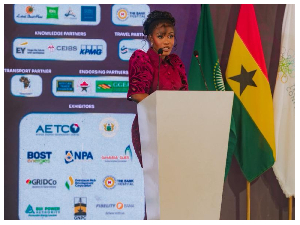
LIVESTREAMED: Bank of Ghana holds 127th MPC press briefing
The primary balance on commitment basis, recorded a surplus of 1.6 percent of GDP, compared with the target of 1.0 percent. As at end-October 2025, the total public debt stock was at 45.0 percent of GDP, compared with 61.8 percent of GDP at end-December 2024. The decline in the public debt was attributed to effective debt management, reduced borrowing costs, and appreciation of the local currency.
Deposit money banks remain sound, profitable and well capitalised. The financial soundness indicators, including solvency, profitability, asset quality, and efficiency indicators all point to relative improvement in year-on-year terms. The Non-Performing Loan (NPL) ratio declined to 19.5 percent in October 2025, from 22.7 percent in October 2024, driven by pickup in bank credit and contraction in the stock of NPLs.
However, credit risks remain elevated and looking ahead, policy actions to recapitalise the few undercapitalised banks and full implementation of the new regulatory guidelines aimed at reducing NPLs would further strengthen the banking industry. The external sector conditions remain favourable.
The current account improved significantly in the first nine months of 2025 to a surplus of US$3.8 billion compared to US$553.6 million for the same period in 2024. The trade surplus increased to US$7.5 billion on the back of a surge in gold and cocoa export earnings. Private inward transfers remained high at U$6.0 billion at the end of the third quarter.
The current account surplus, together with favourable balances in the capital and financial accounts, translated into an overall balance of payment surplus of US$1.8 billion and supported an accumulation of reserve assets to US$11.4 billion in October 2025, equivalent to 4.8 months of import cover. Reserves are projected to increase further by year end.
The reserve accumulation efforts have helped provide cushion for the currency, with the cedi strengthening against the major trading currencies. In the year to 21st November 2025, the cedi recorded an appreciation of 32.2 percent against the US dollar.
In taking the policy decision, the view of the Committee was that overall macroeconomic conditions have broadly improved. Given the anticipated significant decline in inflation by the end of the year, the tight monetary policy stance, the significant build-up of reserves which is providing anchor for exchange rate stability, the Bank projects a continued stable inflation profile around the target and well into the first half of 2026. This is against the backdrop that current risks in the outlook to shift the path of inflation away from target have moderated significantly.
Hence, the prevailing high real interest rates provides some scope to ease policy to further boost the growth recovery efforts.
Given these considerations, the Committee, by a majority decision, voted to lower the Monetary Policy Rate further by 350 basis points to 18.0 percent. The Committee will continue to monitor developments and take the appropriate policy decisions to ensure sound and stable macroeconomic conditions.
Additional Measure
In addition to the policy rate reduction, the Bank will return to the use of the 14-day bill as its main instrument for conducting Open Market Operations.
Business News of Wednesday, 26 November 2025
Source: www.ghanaweb.com
FULL TEXT: BoG lowers monetary policy rate from 21.5% to 18%
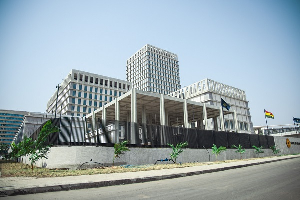 Bank of Ghana headquarters