Skin bleaching, once widely condemned and pushed into the shadows in Ghana, is making a quiet but noticeable comeback; this time in more sophisticated and less obvious forms.
While the era of visibly over-bleached skin and crude whitening creams appeared to decline following public health campaigns and government crackdowns, a new generation of skin-lightening products has emerged under the guise of “glow,” “tone correction,” and “brightening.”
From expensive cosmetic treatments and glutathione injections to imported skincare serums promoted by influencers on social media, the practice has evolved beyond traditional bleaching creams sold in open markets.
Beauty experts and health professionals warn that many of these modern products still contain harmful chemicals capable of causing severe skin damage, despite being marketed as safe or medically approved.
This Ghanaweb article bring back to readers an article on this subject from April 30, 2004 titled 'Skin Bleaching: a Growing Epidemic'.
Read the article below.
Skin Bleaching: a Growing Epidemic
A survey conducted in Accra between 2003 and 2004 revealed that about 26.6 per cent of the population practice skin bleaching.
Out of this number, 81 per cent use only hydroquinone- the most common bleaching agent, which is not proven to be safe even in concentrations of 2%.
However, most bleaching creams found in Ghana contain hydroquinone concentrations of 4 to 6 per cent. These were contained in a presentation made in Accra on the topic: "Skin Bleaching in Accra: A Growing Epidemic" by Ms. Kathleen Robinson a U.S. Fulbright Research Student.
The presentation was about findings of a survey that she did of over 600 market women, interviews with persons bleaching their skin, government and medical experts in Accra.
The purpose of the study was among others, to assess the prevalence and severity of skin bleaching in Ghana, uncover its socio-economic determinants and explore ideologies underlying the behaviour.
Also among the objectives of the study is to determine if action must be taken against the epidemic, as well as make recommendations to the Ghana Standards Board, the Food and Drugs Board and other branches of government.
According to the survey, people bleach for different reasons- to find boyfriends and husbands, because they think it is okay to tone, they accidentally bleach, to get a job, to appear to be of higher class, or because of influence from friends and adverts among others.
Meanwhile the search for beauty does not appear to be an important factor. The survey revealed that the unemployed and unskilled workers bleach more while the educated bleach less.
According to Ms. Robinson some of the common medical consequences of skin bleaching include dyschromia, irritant dermatitis, scabies, acne, striae, and thinning and weakening of the skin among others.
She said of those bleaching, 40.1 per cent complained of side effect. She mentioned some of the side effects as discoloration, burning, rash, pimples, and texture change or stretch marks among others.
To check the epidemic Ms. Robinson noted that Ghana has already banned the use of hydroquinone with a concentration greater than 2 per cent in creams but recommended the government to enforce regular testing of creams at the manufacturer's expense.
She recommended the government to enforce prescription legislation more effectively and enforce border controls. She advised adverts to be limited in terms of frequency and contents and should be related to medically necessary cases.
To check the epidemic Ms. Robinson noted that Ghana has already banned the use of hydroquinone with a concentration greater than 2 per cent in creams but recommended the government to enforce regular testing of creams at the manufacturer's expense.
She recommended the government to enforce prescription legislation more effectively and enforce border controls. She advised adverts to be limited in terms of frequency and contents and should be related to medically necessary cases.
She advised the government also to publish a list of creams that are unsafe in the interim while working to get them off the market because "this will help people to avoid accidental bleaching".
VPO
General News of Tuesday, 2 June 2026
Source: www.ghanaweb.com
FLASHBACK: Skin bleaching making a quiet but noticeable comeback
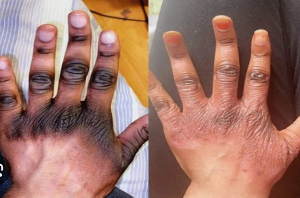 A file photo depicting an aftermath of skin bleaching




Entertainment