The Deputy Minority Leader in Parliament, Patricia Appiagyei, has challenged the government’s narrative of economic recovery, arguing that the lived reality for many Ghanaians contradicts official claims of stability and renewed investor confidence.
Her remarks came during debate on the 2026 State of the Nation Address delivered by President John Dramani Mahama, in which the president told lawmakers that Ghana was “open for business” and firmly back on a path of economic stability.
But speaking on the floor of Parliament, Appiagyei said the administration’s emphasis on macroeconomic indicators risked overlooking the everyday hardships faced by citizens. “The president presented figures,” she said.
“But figures without dignity are meaningless. You cannot eat GDP. You cannot pay rent with projections. You cannot settle hospital bills with optimism,” she added.
According to the Asokwa MP, the government has embraced what she described as “statistical governance” — a situation in which economic numbers appear to improve on paper while living conditions deteriorate.
“Growth without jobs is jobless growth. Recovery without relief is rhetorical recovery,” she said.
“The true state of the nation is measured not in statistics but in the daily dignity of the Ghanaian people.”
Purchasing power under pressure
Appiagyei argued that the country’s economic debate should focus less on headline figures and more on the erosion of purchasing power across households and small businesses.
“When purchasing power disappears, markets collapse,” she told Parliament. “Farmers harvest their produce but cannot find buyers. Market women sit from morning until evening and return home with unsold goods. Small businesses are quietly collapsing.”
She added that the informal sector — which employs the majority of Ghana’s workforce — is under severe pressure from weak consumer demand. “Low inflation driven by weak demand is not economic success,” she said. “It is economic distress disguised as stability.”
Fiscal policy and public spending
Appiagyei further criticised what she described as a mismatch between the government’s calls for fiscal restraint and its own spending behaviour. “This government preached austerity to the Ghanaian people,” she said.
“But where is the shared sacrifice?”
She cited what she characterised as an expanding bureaucracy, increased political appointments and growing administrative expenditure. “This is not fiscal discipline,” she said. “It is fiscal hypocrisy. Leadership must lead by example.”
Electricity, water bills to drop from April 1
Agriculture and food security risks
Turning to agriculture, Appiagyei said farmers across the country continue to struggle with high fertiliser costs, limited access to credit and weak market structures.
“When farmers cannot recover their investment, they reduce production the following season. That is how food insecurity begins — not with drought, but with failed markets and failed policy,” she said, warning that many cocoa farmers were under mounting financial pressure, with some abandoning farms or selling land to illegal miners.
Illegal mining and environmental damage
The MP also highlighted the environmental impact of illegal mining, commonly known in Ghana as galamsey. “Our rivers are dying, our forests are disappearing and our farmlands are being destroyed,” she said, arguing that the persistence of illegal mining reflects deeper structural problems in the economy.
“When young people see illegal mining as the only viable livelihood, it is not a youth failure. It is a policy failure.”
Youth joblessness remains one of the most pressing economic concerns, Ms Appiagyei said, noting that many graduates continue to struggle to find work. “Graduates roam the streets with certificates but no opportunities,” she said. “Entrepreneurs face crippling interest rates and technical trainees lack start-up capital.” She warned that fading economic hope among young people could carry wider social consequences if not addressed.
Flagship policy questions
She also questioned the government’s flagship economic initiatives, including the proposed 24-hour economy programme, arguing that the plan risks duplicating the functions of existing agencies such as the Ghana Investment Promotion Centre, the Ghana Free Zones Authority and the Ghana Export Promotion Authority. “Creating another secretariat risks institutional duplication and bureaucratic expansion,” she said.
She also cited other campaign promises — including a women’s development bank and farmer service centres — which she said had yet to materialise.
Business News of Friday, 13 March 2026
Source: thebftonline.com
Economic recovery not felt on the streets - Minority
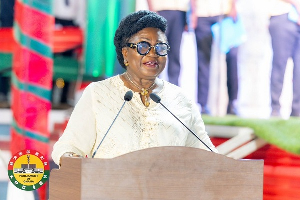 Patricia Appiagyei is the Deputy Minority Leader in Parliament