In a nation celebrated for its stable democracy, Ghana's 1992 Constitution remains the cornerstone of governance, human rights, and civic duties. Yet, despite its prominence, many citizens grapple with its intricacies, leading to misconceptions that can affect everyday life, political engagement, and even legal compliance.
Recent discussions on constitutional reforms have spotlighted areas where public understanding falls short, prompting experts to call for greater civic education.
This article delves into some of the most commonly misunderstood provisions, drawing from legal analyses, reform proposals, and lesser-known obligations that often surprise Ghanaians.
Constitutional review may strip entrenched status from Presidency, Police, Army and other laws
1. Dual Citizenship: A Right with Strings Attached
Article 8 of the 1992 Constitution allows Ghanaians to hold dual citizenship, but many assume it's an automatic entitlement without formalities. In reality, those acquiring another nationality must declare it to the Ministry of the Interior and obtain a certificate, or risk complications in travel, voting, or legal matters.
This provision, intended to embrace the diaspora while maintaining national loyalty, often catches people off guard, especially young professionals abroad who return home without proper registration.
Failure to comply can lead to perceptions of statelessness or exclusion from certain rights, as highlighted in civic awareness campaigns.
2. Presidential Powers: Extensive Authority Often Seen as Unchecked
Under Article 57 of the 1992 Constitution, the President wields broad executive powers, including the appointment of ministers and the influence over policy, but citizens often misunderstand the built-in checks, such as parliamentary oversight.
Reform proposals suggest reevaluating these powers to prevent abuse, such as introducing stronger legislative vetoes.
Many Ghanaians view the presidency as overly dominant, leading to election debates about "winner-takes-all" politics.
This misconception fuels calls for reforms, like capping ministerial appointments at 57 to promote efficiency and reduce cronyism, as recent committee recommendations emphasise.
2. Fundamental Human Rights: Broad Protections, Narrow Awareness
Chapter 5 of the 1992 Constitution outlines extensive rights, from freedom of speech (Article 21) to protection from arbitrary arrest (Article 14), yet surveys show many citizens don't fully grasp their enforceability.
For instance, the right to be informed of arrest reasons in an understandable language is often ignored in practice, leading to abuses during detentions.
Misunderstandings arise around equality (Article 17), where discrimination based on gender or ethnicity is prohibited, but cultural norms sometimes clash with constitutional mandates.
Educational handbooks stress that these rights are enforceable in courts, empowering individuals to challenge violations through bodies like the Commission on Human Rights and Administrative Justice (CHRAJ).
3. Duty to Assist Law Enforcement: Civic Obligation Overlooked
Embedded in broader constitutional duties under Article 41, citizens must aid police in preventing crimes or apprehending suspects, a rule that surprises many who view it as optional.
Refusal can result in legal repercussions, yet public hesitation stems from fears of involvement or mistrust in authorities.
This provision aims to foster community responsibility but is often misunderstood as vigilante encouragement, which the Constitution explicitly discourages. Reform advocates argue for clearer guidelines to balance this duty with personal safety.
4. Emergency Powers: Safeguards Against Abuse Not Widely Known
Article 31 grants the President emergency powers during crises, but with strict parliamentary approval and time limits that many citizens overlook.
Misconceptions portray these as tools for indefinite rule, especially in health or security emergencies like the COVID-19 era. The Constitution requires judicial review for detentions under emergencies (Article 32), protecting against overreach.
However, low awareness contributes to public anxiety, as seen in calls for reforms to insulate institutions like the Electoral Commission from political interference during such periods.
5. Electoral Rights and Campaign Regulations: Hidden Complexities
The right to vote (Article 42) is universal for adults, but provisions around election petitions and campaign spending are frequently misunderstood.
Many don't realise disputes must be filed within 14 days post-election, with resolutions in 30 days, to ensure transparency.
Proposed reforms include capping campaigns at 120 days and enforcing spending limits to curb money's influence, a response to perceptions that elections favour the wealthy. This lack of understanding often leads to post-election distrust and low voter turnout among youth.
These provisions underscore the Constitution's role in balancing power and protecting freedoms, but gaps in public knowledge hinder their effectiveness.
Read the full report of the Constitutional Review Committee
As Ghana approaches potential reforms, experts like those from the Constitutional Review Committee urge enhanced civic education through schools and media.
"A well-informed citizenry is the best defense against democratic erosion," notes a recent report on human rights practices.
For Ghanaians like those in Accra navigating daily life, understanding these clauses isn't just academic; it's essential for active citizenship.
NA/VPO
Watch as Angel Asiamah prays for President Mahama, Lordina, and Veep
General News of Monday, 9 March 2026
Source: www.ghanaweb.com
EXPLAINER: Key constitutional provisions many citizens misunderstand or overlook
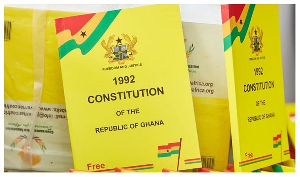 The 1992 Constitution of Ghana