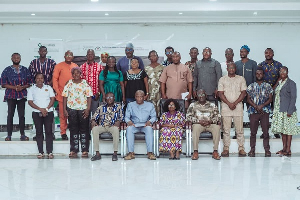
The Ghana National Chamber of Commerce and Industry (GNCCI), the Presbyterian University of Ghana, and the European Union convened over 80 policymakers, training institutions, and small businesses in Wa, Upper West Region, on February 10-11, 2026, to advance green skills reform and enterprise grant support for women and youth across Northern Ghana under the GreenGrowth Ghana Project.
The two-day programme, held at Blue Hill Hotel, opened on February 10 with a strategic policy dialogue attended by 45 institutional and government stakeholders, focused on reforming Ghana’s Technical and Vocational Education and Training (TVET) system to align with emerging green economy priorities.
On February 11, 35 agricultural cooperatives and small and medium-sized enterprises (SMEs) participated in hands-on enterprise training covering sustainable agriculture, cooperative governance, digital business tools, and market access strategies.
Launched in October 2024, the GreenGrowth Ghana Project is a three-year initiative designed to expand economic opportunities for women and youth in green and circular economy sectors across Northern Ghana.
The project promotes sustainable agriculture, agroforestry value chains, circular production systems, and environmentally responsible enterprise development while addressing structural barriers that limit the participation of women and young people in emerging green markets.
Since its inception, the initiative has progressed from stakeholder consultations to structured policy dialogue, enterprise training, and targeted grant financing for emerging green businesses.
“This project demonstrates how policy reform, skills development, and enterprise financing must work together to create sustainable jobs for women and young people. Northern Ghana has enormous potential in sustainable agriculture and circular production. The GreenGrowth Ghana Project is helping translate that potential into real economic opportunities,” Kabutey Ceasar, National Treasurer, at GNCCI said.
The policy dialogue examined how Ghana’s TVET system can better align with green economy needs. Participants identified key structural challenges, including outdated equipment in training workshops, limited financing for skills delivery, weak industry linkages, and insufficient enforcement of quality standards.
Stakeholders emphasised the importance of work-based learning, stronger partnerships between training institutions and industry, and investment in modern tools that support environmentally compliant production systems.
“Green skills development must go beyond theory. Institutions must equip young people with practical competencies that allow them to build sustainable enterprises while protecting the environment,” Christopher Addy-Nayo, Team Leader, GreenGrowth Ghana Project said.
Addy-Nayo added that regional engagements, training programmes, and grant support windows will continue across Northern Ghana to strengthen inclusive green enterprise ecosystems.
The second day’s enterprise training sessions equipped agricultural cooperatives and SMEs with practical tools for sustainable growth. Topics included soil and water management, cooperative governance, entrepreneurship development, digital tools for business growth, and strategies for accessing domestic and international markets.
Participants also received guidance on environmental compliance, responsible waste management, and circular production approaches that reduce resource use while improving productivity.
A central component of the GreenGrowth Ghana Project is its targeted grant support mechanism for women- and youth-led enterprises operating in green sectors. Through the programme, eligible businesses receive financial support alongside technical mentoring and business development services to strengthen production capacity, improve environmental standards, and expand market access.
The grant facility forms part of a broader project strategy targeting 1,000 women and youth facing economic vulnerability while generating community-level impact through job creation and sustainable enterprise development.
Participants at the Wa engagement underscored that a successful transition to a green economy requires coordinated action across government institutions, training providers, private sector actors, and development partners.
Regional News of Monday, 9 March 2026
Source: www.ghanaweb.com
EU pushes Green Jobs Agenda for women and youth in Northern Ghana
 The project promotes sustainable agriculture, agroforestry value chains and more



Entertainment