Business News of Tuesday, 10 March 2026
Source: purefmonlinegh.com
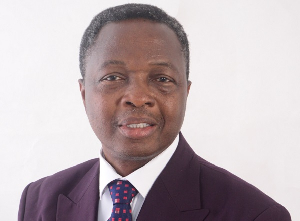
Dr Kwaku Aning champions nuclear technology for development at KNUST lecture

Former Deputy Director-General of the International Atomic Energy Agency, Dr Kwaku Aning, has urged Ghana and other developing countries to embrace the responsible use of nuclear technology as a powerful tool for national development, stressing that the technology holds enormous potential beyond electricity generation.
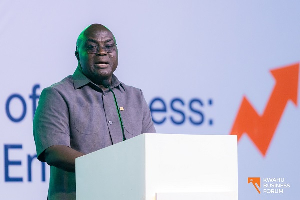
Speaking at a public lecture hosted by the Kwame Nkrumah University of Science and Technology (KNUST) on Tuesday, Dr Aning delivered a compelling presentation on the theme “Application of Nuclear Technology for Development,” drawing attention to how nuclear science is already transforming sectors such as medicine, agriculture, water management and industry.
Addressing an audience of academics, students and policy thinkers at the College of Engineering, the seasoned diplomat and nuclear expert challenged the widespread fear often associated with the word “nuclear,” arguing that while the technology has destructive capabilities, its peaceful applications have saved and improved millions of lives across the world.
“A form of it can destroy Kumasi killing hundreds of thousands of people,” he said, pausing before adding that “another form can tell whether a six-month-old baby is getting the right nutrients from its mother for a healthy, non-stunted growth.”
Dr Aning noted that nuclear technology quietly underpins many everyday innovations people rely on, from life-saving cancer treatments to food preservation and environmental protection.
In medicine, he explained, nuclear techniques are widely used in diagnostic imaging and radiotherapy to detect and treat cancer, while radioisotopes also support research in drug development and human physiology.
He further highlighted how nuclear science supports agriculture and food security through techniques such as food irradiation, which eliminates harmful bacteria and pests while extending the shelf life of food.
Scientists also use isotopes to track fertilizer absorption and improve irrigation methods, helping farmers boost crop yields while conserving water resources.
According to him, the technology also plays a critical role in environmental monitoring and water management. Nuclear isotopes, he said, help scientists trace groundwater movement, detect pollution sources and identify sustainable aquifers, an innovation that has become particularly important for regions facing increasing water stress.
Dr Aning also turned attention to nuclear power as a reliable source of clean electricity, noting that nuclear energy currently contributes roughly 10 percent of global electricity generation and about a quarter of the world’s low-carbon power supply.
With Ghana preparing to introduce nuclear power into its energy mix, he emphasised the need for strong regulatory systems and safety mechanisms to guide the technology’s use.
“The application of nuclear technologies for development in one form or another is pervasive and may be found in almost all sectors of human activities,” he said, stressing that safety, security and safeguards must remain central to its deployment.
University authorities described Dr Aning as one of the world’s leading voices in nuclear diplomacy whose work at the IAEA helped expand international cooperation in the peaceful use of nuclear science, particularly in developing countries.
Dr Aning, a Ghanaian diplomat and technologist with more than four decades of experience, has played a significant role in shaping global nuclear governance. He served as Deputy Director-General of the IAEA from 2010 to 2015 and previously made history as the first African to serve as Director and Secretary of the agency’s Board of Governors and General Conference.
Throughout the lecture, he repeatedly returned to a central message: that nuclear technology, when responsibly managed, can be one of the most powerful instruments for human progress.
“The atom is not just a source of power,” he told the audience. “It is a source of progress.”
The lecture formed part of ongoing academic engagements at KNUST aimed at deepening discussions on science, innovation and emerging technologies capable of driving sustainable development in Ghana and across Africa.
It was chaired by the Vice Chancellor of the University, Professor Rita Akosuah Dickson.