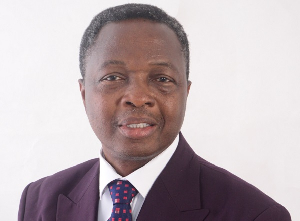
Ghanaian businessman and philanthropist, Dr Kofi Amoah, has weighed in on U.S. President Donald Trump’s recent remarks following the killing of conservative activist Charlie Kirk in Utah, urging a deeper reckoning with America’s racial history.
In a tweet posted on X, President Trump said; “Anyone else notice that when one of our heroes was assassinated in cold blood in front of thousands of people including his wife and young kids that not a single store in America had to board up their windows? That tells us everything you need to know.”
The President’s statement, referencing the absence of riots or looting in the aftermath of Kirk’s death, sparked widespread debate across U.S. media and online platforms.
Many critics saw it as an implicit contrast with past unrest in response to police killings of Black Americans, such as Rodney King in the 1990s and George Floyd in 2020.
Charlie Kirk’s killing occurred on September 10, 2025, while he was speaking at Utah Valley University in Orem, Utah, during an outdoor event that was part of his “American Comeback Tour.”
He was shot in the neck by a suspected sniper firing from a rooftop some 150–200 yards away.
Ghanaian-American journalist fired over Charlie Kirk social media post
The primary suspect, 22-year-old Tyler Robinson, has been charged with aggravated murder and multiple other counts, including obstruction of justice and witness tampering, with prosecutors indicating they will seek the death penalty.
Authorities allege Robinson was politically motivated, claiming in private messages that he “had enough of [Kirk’s] hatred.”
Dr Amoah, in response argued that the “underlying racial tensions in America” stem from the legacy of slavery and its enduring social and economic consequences for African Americans.
“The descendants of these slaves are still in many ways treated as second class citizens,” Dr Amoah wrote, citing mass incarceration, unemployment, poor education, and continued police brutality as examples of systemic inequality.
He noted that riots in past decades were a “natural reflex of people tired and exhausted of the harsh realities of racism for centuries with no seeming ends in sight.”
Dr Amoah contrasted Kirk’s case in which a white youth was killed by another white youth in conservative Utah with how America might have reacted had the assailant been Black, Latino, Jewish, or an immigrant.
“Obviously if Charlie Kirk were to have been killed by a black man, Mexican, a Jew, an immigrant, a El Salvadoran, Venezuelan or Guatamalan immigrant… the story of the aftermath of Kirk’s assassination would be different, won’t it Sir?” he asked.
Balancing critique with praise, Dr Amoah highlighted America’s immense contributions to science, technology, liberty, and global progress.
He also shared his personal journey as a legal immigrant educated in U.S. universities and an entrepreneur who employed Americans and paid taxes. But he underscored that as a man with dark skin, he had also “lived and experienced the ugly side of America.”
Calling on Trump to embrace leadership that unites, Dr Amoah concluded, “Mr President, when I listen to you, I sometimes sense this inkling of the human excellence beckoning… Sir, can we all get along under your leadership? I deeply deeply hope so.”
For many observers in Africa and the wider world, Trump’s framing of the incident and Dr Amoah’s pointed response highlight the enduring global stakes of America’s unfinished racial conversation.
Watch the latest edition of BizTech below:
General News of Monday, 22 September 2025
Source: www.ghanaweb.com
Dr Amoah responds to Trump's comment on Charlie Kirk's death
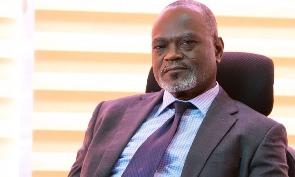 Dr Kofi Amoah is a businessman and a philanthropist