The Inquirer’s investigations have revealed that somewhere in 2019, government, through the Ministry of Health’s National E-Health Project, entered into a contract with a private foreign company Lightwave Health Information Management System (LHIMS), to manage the nation’s health data—records that include medical details of some of the country’s most powerful figures.
The contract’s rationale, insiders say, was to enhance efficiency in delivering healthcare and supporting the Free National Health Insurance Scheme. But several analysts and legislators now question why such a sensitive function was outsourced in the first place.
The decision, The Inquirer has learned, was not just controversial—it was quietly executed. With a price tag of $100 million, the deal ceded control of Ghana’s health data ecosystem to a single private entity, with $66 million already disbursed by the state, yet only four hundred (400) facilities out of the eight hundred (800) agreed on with the government has been done, almost eight years since the contract was handed to them.
The contract, The Inquirer can report, was for Lightwave to train locals and hand over the operations of the health data service to the ministry in four years (2019-2022). Insiders say Lightwave could not meet the deadline and demanded an extension, which was given from 2022 to 2024.
Since the contract’s inception, Lightwave has reportedly lobbied aggressively for payment of the remaining $34 million. At one point, it threatened legal action to compel payment, raising the spectre of a judgment debt that could cost the taxpayer even more. Government insiders now fear that, should relations deteriorate, the company could leverage sensitive medical information to apply political pressure or even trigger data leaks.
“This is not merely a data management issue,” one policy analyst familiar with the deal to this paper on condition of anonymity, adding that, “This is a matter of national security. You don’t outsource the health records of your president, your judges, and your monarch to a third party—especially without parliamentary oversight.”
“The possibility of blackmail is not far-fetched,” said a senior civil servant whom we clothe with the garb of anonymity. “If this goes south, we’re looking at a national scandal involving weaponised private health data.”
Despite growing concerns, officials have remained tight-lipped. Requests for comment from relevant ministries have gone unanswered. Meanwhile, sources say the situation is approaching a breaking point, with the government under increasing pressure to either resolve the payment matter or risk facing the fallout of the agreement.
Private sector participation in strategic sectors of a national economy, including infrastructural development, industry and manufacturing, is desirable, particularly for developing or emerging economies such as Ghana.
Lightwave had not responded to the story as of the time of going to press yesterday [June 16, 2025].
General News of Tuesday, 17 June 2025
Source: theinquirerglobal.com
Data at Risk: Inside the Ministry of Health's controversial $100m partnership - Report
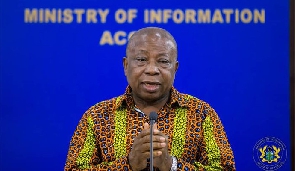 Former Minister of Health, Kwaku Agyeman Manu